When a former Navy SEAL tells millions that “every day is the best day to be a gun‑owning, meat‑eating, kickass American,” he is tapping into pride and pain that run far deeper than one viral clip.
Story Snapshot
- Carl Higbie ties American greatness to guns, veterans, and raw patriotism, not health or equality.
- His message resonates with many who feel the government and “elites” ignore everyday Americans.
- Real data on life expectancy and health paint a more troubling picture of American strength.
- Both right and left see a system that serves itself first, while media battles distract from the numbers.
Carl Higbie’s Patriotism Message and Why It Hits a Nerve
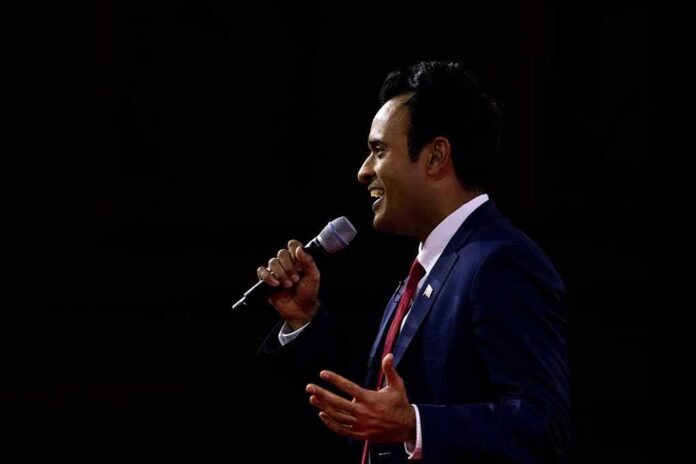
Former U.S. Navy SEAL Carlton “Carl” Higbie IV has built a media brand around fierce patriotism and gun rights. In recent remarks, he celebrates the United States as the “greatest country” because it has over 20 million able-bodied veterans and what he portrays as unmatched private gun ownership. He argues that this armed citizenry and veteran strength mean Americans do not live in fear and can handle threats themselves, not wait on distant officials or bureaucrats. For many viewers, this sounds like a long‑lost promise of the American Dream.
Higbie’s resume gives his words weight in certain circles. He enlisted during the war on terror, completed two combat deployments to Iraq, and later held a senior presidential appointee role under Donald Trump before moving into conservative media. He served as director of advocacy for America First Policies, promoting Trump’s agenda, and now hosts a prime-time show on Newsmax. To frustrated citizens, he looks like the kind of “real American” who has sacrificed, seen war, and come home angry at how the country is being run.
Guns, Liberty, and the Fear of Government Overreach
In his gun commentary, Higbie claims “gun-free zones do not work” and insists that taking guns from citizens will not prevent tragedy but will strip liberty. He praises Gun Owners of America as a “no compromise, no retreat” group fighting on the “front lines of the Second Amendment battle,” and frames armed citizens as a last line of defense against bad actors and even bad governments. This lines up with a broader nationalist message that “patriots need guns” to protect what they see as the true Constitution from untrustworthy elites.
Higbie often speaks in broad strokes instead of hard numbers. When he says “we own half the world’s firearms” or “gun bans do not work,” he is not backing those claims with crime data, studies, or comparisons to other nations in the clips and posts available. He blasts mainstream outlets like CNN for pushing a “narrative that violence is across the spectrum,” and suggests the right is not the only side armed. Supporters hear courage against a biased media; critics hear slogans without evidence. Both sides see the same gap: a government and information system they do not fully trust.
The Other Measure of Strength: How Long and How Well Americans Live
While Higbie points to veterans and guns as proof of national strength, public health data tell a different story. U.S. life expectancy hit about 79 years in 2024, but that is 3.7 years lower than the average in other similar wealthy countries. Americans spend more on health care than almost anyone, yet they die younger and often live many years in poor health. In 2019, healthy life expectancy here was just over 66 years, far below total life expectancy, meaning many people struggle with illness for more than a decade.
Inside the United States, the picture is even more uneven. States like Mississippi have life expectancy under 74 years, while Hawaii tops 81 years. A Yale study found that for men born after 1950 in many Southern states, life expectancy gains have barely moved, rising less than two years over many decades. These gaps track with poverty, weak local health systems, and limited opportunity. They cut across party lines. Conservatives see broken promises to workers and veterans. Liberals see a safety net full of holes. Both see a country where elites preach greatness while millions die younger than they should.
Patriot Rhetoric, Polarized Media, and a Failing System
Higbie’s style fits a wider trend in American politics where leaders use nationalist language to define who counts as a “real American.” Researchers show that, especially since 2016, Republican rhetoric leans on loyalty, authority, and in‑group pride, while Democratic rhetoric stresses care and fairness. Both sides now frame the other as a danger to the nation’s true identity. That makes it easy to turn hard questions about health, wages, or war into simple battles over patriotism and loyalty.
Commentators on the left have mocked Higbie’s speeches as “bizarre theatrics of late‑stage patriotism,” more performance than serious policy. On the right, many see mainstream outlets as part of an entrenched “deep state” that attacks anyone who challenges its control. What almost everyone agrees on, though, is this: the federal government feels distant, self‑protective, and slow to fix the problems that shape real lives. Guns and flags cannot hide the numbers on life, health, and trust. Whether you cheer Higbie or roll your eyes, his message lands because it speaks to a country that knows something big is broken and is tired of being told to simply salute.
Sources:
youtube.com, facebook.com, tiktok.com, gunowners.org, battleborne.substack.com, worldpopulationreview.com, ysph.yale.edu, en.wikipedia.org, reddit.com, academicworks.cuny.edu, jstor.org
© patriotspotlight.org 2026. All rights reserved.