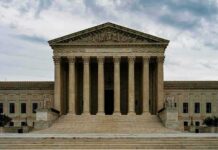

A federal judge froze work on President Trump’s 250-foot arch for 14 days, signaling real legal risk to a rushed project at the doorstep of Arlington National Cemetery.
Story Snapshot
- Judge Tanya Chutkan ordered a two-week pause and tight advance notice if work restarts.
- Virginia and D.C. say the arch needs new, specific approval from Congress under federal law.
- The planning commission still approved the project by an 8-4 vote after hours of public comment.
- The dispute centers on whether a 1925 law for 166-foot columns covers a 250-foot arch today.
What the Court Did and Why It Matters
Judge Tanya Chutkan issued a 14-day order blocking construction after the District of Columbia and Virginia sought emergency relief. She required the government to give notice within one hour of a key commission decision and 30 minutes before any construction step. Those steps show the court saw a real chance of imminent harm and aimed to keep the status quo while it reviews the case. This is not a final ruling, but it forces a timeout the government did not want.
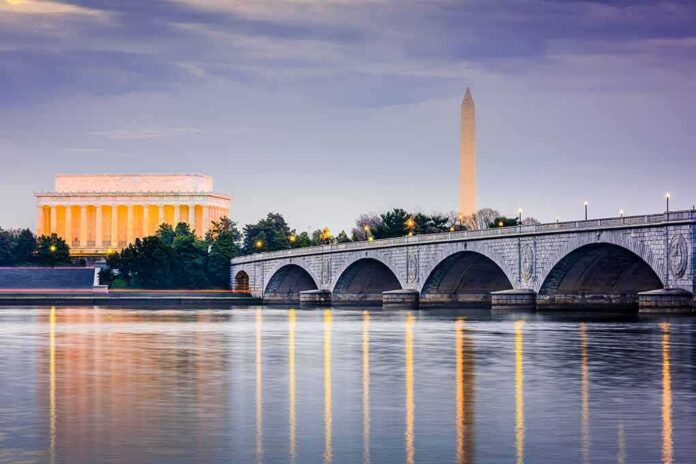
The order lands at a sensitive site. Memorial Circle sits at the approach to Arlington National Cemetery, linking it to the Lincoln Memorial. Veterans and a retired architectural historian also sued earlier, saying the project lacks legal approval. Their challenge and the states’ lawsuit argue the plan cannot move forward until federal law is satisfied. The court’s pause helps ensure digging does not outpace the law.
The Core Legal Fight Over Who Must Say Yes
Virginia and D.C. argue the Commemorative Works Act requires Congress to specifically authorize this type of permanent monument on federal land in the capital region. They also say the proposed 250-foot height would break a federal height limit that they place at 130 feet. Their filings claim the administration skipped needed steps and cannot point to a fresh act of Congress that allows this exact structure in this exact place. These are direct, testable legal claims, not just design complaints.
The administration answers that Congress already gave permission. Officials point to a 1925 law tied to the Arlington Memorial Bridge that allowed a pair of 166-foot memorial columns near Memorial Circle. They say that authorization never expired, that design discretion exists, and that the new arch completes the original intent. The National Capital Planning Commission’s chair echoed that view and framed the arch as a long-delayed gateway that also adds security value.
Rapid Approval Amid Public Pushback
While lawsuits were pending, the National Capital Planning Commission voted 8-4 to give final site and building approval. That vote came late at night after more than 100 people spoke, many in opposition, but the panel still advanced the project. The timing created a race between agency action and court review. The government also circulated notice that work could begin after approval and Interior Department sign-off, which raised alarm for challengers.
The commission’s stance gives the administration a formal green light on planning terms. But court review now controls the pace. The judge’s order blocks ground work and forces more transparency on any next steps. That matters for both sides. If construction starts too fast, later court relief loses bite. If courts delay too long, elected leaders and agencies can claim process is gridlock while signature projects stall.
Why This Fight Resonates Beyond One Monument
This clash taps a deeper worry shared across the aisle: powerful insiders move big projects first and settle the rules later. Veterans and local officials argue that Congress, not a commission, must bless a 250-foot monument in the capital’s core. The administration counters that Congress spoke a century ago, and that modern leaders can carry that out today. The court is now the referee on what the law demands before steel rises.
BREAKING UPDATE:
A federal judge has promptly blocked construction of Trump's 250-foot triumphal arch near the entrance of Arlington National Cemetery after a panel stacked with Trump allies approved it. https://t.co/UJEmXVOLK8 https://t.co/Iqe1QZ31F6
— Kyle Griffin (@kylegriffin1) November 6, 2026
For readers who just want the bottom line: the judge’s pause is temporary but meaningful. The states and veterans raised concrete legal claims with real teeth. The administration holds an agency approval and a historical hook but must show that a 1925 plan for columns truly clears a 2026 arch. Until a court resolves that gap, the safest bet is that paperwork, not politics, will decide when shovels hit the ground.
Sources:
cbsnews.com, npr.org, cnn.com, thehill.com, archpaper.com, dallasnews.com, nbcwashington.com, abcnews.com, westhawaiitoday.com
© patriotspotlight.org 2026. All rights reserved.