

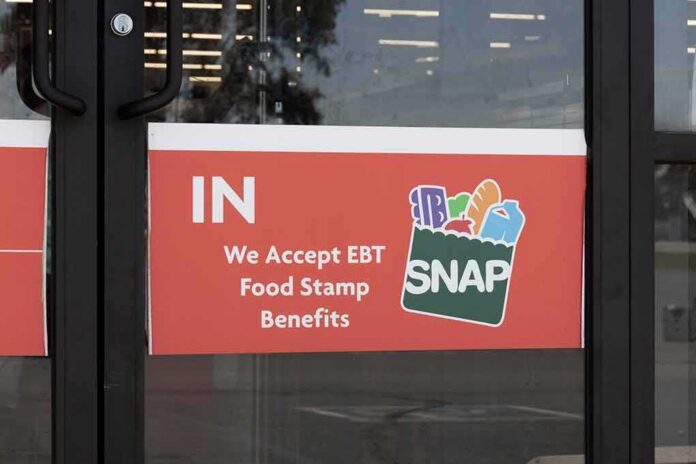
A sweeping change to food aid rules expanded work requirements up to age 64, and millions fewer people are now on SNAP according to several reports.
Story Highlights
- Federal guidance confirms broader time-limit rules now cover adults ages 18–64.
- Participants who do not meet 80 hours per month can receive only three months in 36.
- Analysts and reporters say national SNAP enrollment fell by 10–13 percent after the law.
- Exemptions for some veterans, homeless people, and former foster youth were removed or narrowed.
What Changed In Federal SNAP Rules
United States Department of Agriculture guidance states the One Big Beautiful Bill Act widened the group facing a time limit tied to work or program hours. The covered ages now run from 18 through 64. The guidance also says the law removed or narrowed several prior exceptions, including for some veterans, people experiencing homelessness, and young adults who aged out of foster care. These steps created a clear path for lower enrollment among older working-age adults, even without changes in need.
United States Department of Agriculture rules require covered recipients to work or join a qualifying activity for at least 20 hours per week, averaged to 80 hours per month. If they do not meet that level, they can only receive benefits for three months in a 36‑month window. The agency also explains these time-limit rules are separate from general work rules for other participants. These mechanics mean missed hours or paperwork can quickly end benefits.
How The Decline Is Being Framed By Both Sides
House Democrats argue the changes reduced food help while prices stayed high and seniors struggled. They point to a large drop in participation and say fewer geographic waivers make compliance tougher. News reports cite national data showing enrollment fell from about 42.2 million to 36.6 million in one year, a roughly 13 percent slide, and describe expanded requirements hitting groups that were once exempt. National Public Radio likewise reports sharp declines since mid‑2025 alongside the broader rule expansion.
Supporters of tighter rules say the law focuses aid on people who meet clear standards and can push more able-bodied adults to work. But the official guidance itself shows the main driver is policy exposure, not only jobs. It extended the time limit to ages 55–64 and narrowed exceptions for vulnerable groups. That leaves an outcome most Americans read in two ways: a win for accountability, or a sign that systems are dropping people who still need help.
Why Administration And Paperwork Matter
Maine’s own materials show how administrative steps can decide outcomes. The state requires certain applicants to register for work, respond to job contacts, and avoid cutting work hours without good cause. People working 30 hours weekly, or earning the same amount, are exempt from some rules. A separate state rule also requires some individuals ages 16–59 to maintain an active Maine JobLink account and outlines workfare provisions. Missed notices or account issues can lead to closures even when need remains.
The strongest neutral read is this: a falling caseload is an outcome, not a diagnosis. The United States Department of Agriculture documents confirm the legal levers that shrink enrollment—broader ages, stricter exceptions, and firm time limits. National outlets report large declines since the law took effect. What the public still lacks are verified counts tying exits to specific reasons, and follow‑up data on whether former recipients found steady work or returned hungry.
Sources:
thegatewaypundit.com, maine.gov, fna.usda.gov, usda.gov
© patriotspotlight.org 2026. All rights reserved.