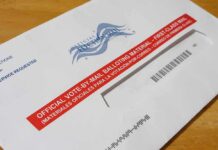

Federal officials charged 28 California green-card holders with election crimes while the Supreme Court refused to segregate up to 20,000 questioned ballots, revealing both real cases and real system gaps at once.
Story Snapshot
- Justice Department announced 28 defendants tied to alleged false voter registrations in California.
- All defendants were lawful permanent residents, not citizens, according to federal filings.
- Supreme Court denied an emergency bid to set aside up to 20,000 ballots flagged by the administration.
- A court-ordered review said 42% of names on the federal list did not match current voter rolls.
What Federal Prosecutors Allege In California
On October 19, the United States Department of Justice said 28 foreign nationals in California were charged with election crimes. Prosecutors alleged the defendants signed voter-registration forms that falsely claimed United States citizenship. The department said each name appeared on a federal list of more than 20,000 likely noncitizen registrants. The department added that some defendants obtained or returned ballots after registering. The charges are allegations, and the defendants remain presumed innocent until proven guilty.
National Public Radio reported the 28 people charged were lawful permanent residents. That detail matters because it shows these allegations are not only about people with no legal status. It also shows how confusing the system can be for people who are here legally but are not citizens. Under federal law, only United States citizens may vote in federal elections. States set many processes, but they must follow that rule.
The High Court’s Election-Eve Decision
As the cases surfaced, the administration asked the Supreme Court to order California to set aside ballots linked to the 20,000 flagged names until officials could verify citizenship. The department argued that counting ballots from noncitizens could dilute valid votes from citizens. The Supreme Court denied the emergency request in a brief, unsigned order. The ruling did not address every fact, but it kept ballot processing on track before Election Day.
CBS News reported that the Court’s denial left the administration without its requested mass remedy in California. That outcome signaled that sudden, broad changes to ballot handling days before an election face steep odds. Courts tend to resist remedies that could disrupt voting or confuse voters close to an election. The ruling did not end the criminal cases or the longer fight over list accuracy.
Why The Disputed 20,000-Name List Matters
The large federal list became the center of the dispute. The Justice Department said it “reasonably believes” the people were illegally registered. A federal judge ordered the department to provide the list to an immigrant-rights group so experts could test it. That order underscored the court’s interest in seeing how the data were matched and how many names might be wrong or outdated before any sweeping remedy is allowed.
Associated Press reported that an analysis filed in court said 8,880 names—about 42%—did not match anyone in California’s current voter file. The review also identified at least 22 people on the federal list who were likely naturalized United States citizens. If true, that points to database delays, identity mismatches, or status changes that can throw off large list-matching efforts and risk false positives.
Separating Real Crimes From System Noise
Two facts can be true at the same time. First, the federal charges are real and serious. Lying under oath on a voter-registration form is a crime, and officials say they have sworn statements to prove it in these 28 cases. Second, big cross-agency lists often have errors. People move, names are similar, and immigration status can change. That is why audits, transparency on matching methods, and timely corrections are crucial before upending election processes at scale.
THE TRUMP RECEIPTS *updated daily*
The running record of Trump 2.0 that America cannot afford to forget.Update date: November 2, 2026
Total receipts: 752• 11/1/26: Judge tosses DOJ Alaska election suit; appeal pending
• 11/1/26: DOJ seeks contempt probe of CHIRLA voter-list…— Randy Ferrell (@randyferrell) November 3, 2026
Past research shows documented noncitizen voting is rare across millions of ballots. National Public Radio cited a Brennan Center survey after the 2016 election that found about 30 suspected noncitizen-voting cases out of 23.5 million votes in 42 jurisdictions. That is about one in a million. Rare does not mean zero, and any illegal vote matters. But the data suggest risk of overreaction if large lists are treated as proof without careful checks.
What To Watch Next
Californians should watch for three things. First, the courts will test the 28 cases. Evidence in those files will show what happened on each registration and ballot. Second, independent review of the 20,000-name list should reveal the true error rate and how many people, if any, voted illegally. Third, state and federal agencies may update data-sharing rules to catch real problems faster and remove false matches before ballots go out.
Americans across the spectrum worry that insiders protect themselves while the system fails the public. This story shows why. When data are messy, trust erodes. When real cases exist, denial also erodes trust. The fix is not spin. The fix is verified facts, open methods, and speedy corrections. That means charging clear crimes, publishing error rates, and proving that every legal vote counts and every illegal vote does not.
Sources:
townhall.com, justice.gov, npr.org, nbc4i.com, law360.com, pbs.org, thehill.com
© patriotspotlight.org 2026. All rights reserved.