
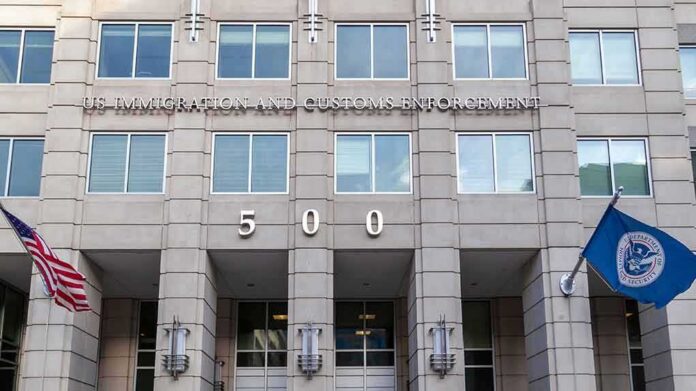
President Trump publicly questioned whether his own deportation push was “too tough” even as his administration moved to end key protections and expand removals, exposing a high-stakes split over how far federal power should go.
Story Highlights
- Trump said on 60 Minutes that mass deportations may have gone too far, while still backing removals of violent offenders.
- The Department of Homeland Security ended Temporary Protected Status for Haiti, effective February 3, 2026.
- The Supreme Court allowed the administration to end protections for Haitians and Syrians, clearing legal roadblocks.
- Advisers like Stephen Miller continue to press for large-scale arrests and faster removals across the country.
Trump’s Mixed Message on Scope of Deportations
President Trump told 60 Minutes that the government should remove “killers” and “drug dealers,” but he suggested people who have lived in the United States for 10 to 15 years might merit a work arrangement. He also conceded the deportation drive may have hurt Republicans in the midterms, signaling a possible rethink on scope while keeping a hard line on serious crime removals. That split message reflects pressure from voters who want order without sweeping family upheaval.
Policy aides closest to immigration enforcement remain firm. Public comments from adviser Stephen Miller describe a “floor” of arrests per field office and a plan to scale up federal, state, and local manpower for removals. Those ideas point to a broader net than just violent offenders, aiming at anyone living in the country without legal status. The contrast between Trump’s on-air caution and ongoing hard-line planning raises questions about the administration’s final path.
Termination of Temporary Protected Status for Haiti
The Department of Homeland Security published an official notice terminating Haiti’s Temporary Protected Status. The notice states the decision is based on current country conditions and becomes effective on February 3, 2026. After that date, people from Haiti who held Temporary Protected Status will no longer have that protection. The agency framed the move as following the law’s review process, which requires updates tied to changing conditions in the country of origin.
Courts no longer block such terminations as they did years ago. The Supreme Court allowed the administration to end protections for Haitians and Syrians earlier this year, removing a major legal barrier. That ruling affects hundreds of thousands of people who relied on the program during instability abroad. With the legal door open, the Department of Homeland Security and related agencies now face pressure to manage the transition at scale and on a clear timeline.
What the Law Requires—and What It Leaves Open
Temporary Protected Status was designed as short-term relief tied to disasters or conflict. The law requires regular reviews and does not promise permanent status. A recent Supreme Court opinion and related filings describe how the Secretary of Homeland Security must follow the statute’s country-condition test, which can lead to termination if risks ease. Supporters view the current actions as faithful to the law’s text, while critics say the reviews are too narrow for real-world turmoil.
Congressional researchers report that when President Trump began his second term, 17 countries were designated for Temporary Protected Status. Since then, the administration has moved to wind down several designations. That shift fits the executive’s reading of the program as truly “temporary,” yet it heightens anxiety for long-settled families and employers who built plans around renewals that lasted for years.
Nationwide Impact and the Voter Cross-Pressure
Economists warn that mass deportation would strain the labor market, raise costs for services, and cut overall economic output if carried out at large scale. Analyses estimate meaningful hits to gross domestic product and show wage effects that vary by skill level and time horizon. These projections suggest trade-offs that both parties must own, since higher enforcement can raise some wages short term but risk broader losses and disruption across many sectors.
Americans across the spectrum see a deeper pattern. Many believe the federal government lurches between extremes, reacts to court rulings, and rarely delivers steady, humane, and lawful results. Conservatives want secure borders, lower crime, and a government that keeps its word. Liberals want due process, worker protections, and family stability. Trump’s televised hesitation—paired with ongoing legal rollbacks and hard-line plans—captures that larger worry: policy is swinging fast, but not fixing the system.
Sources:
uscis.gov, federalregister.gov, reuters.com, congress.gov, newsweek.com, harvardlawreview.org, carsey.unh.edu
© patriotspotlight.org 2026. All rights reserved.