
Rachel Maddow warned on national television that new large migrant detention centers could be used to hold American citizens without trial, pointing to specific scale and powers she believes the government could wield.
Story Highlights
- Maddow described a scenario of seven to ten large facilities detaining up to 100,000 people without trial.
- News reports cited proposed mega-sites, including a Georgia location described as a high-capacity warehouse plan.
- Federal judges have ordered releases and bond hearings in recent immigration detention cases.
- No record in the materials shows citizens actually held indefinitely in such new facilities.
What Maddow Said And Why It Drew Attention
Rachel Maddow, a cable news host, said on The Daily Show that if the government builds seven to ten large detention centers, each holding about 10,000 people, then citizens could be next. She said these sites could hold people without trial or lawyers, and do so indefinitely. Her quote gave specific numbers and a clear scenario, which is why it spread fast across media. Coverage by The Gateway Pundit and Fox News highlighted her warning and its focus on citizens beyond migrants.
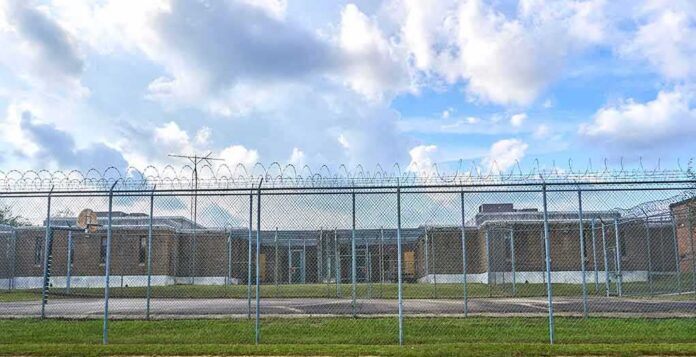
Maddow’s comments referenced reported plans for very large detention facilities. One report described a proposed site in Social Circle, Georgia, and cited ranges like five to fourteen thousand people per location. The reports tied her warning to these large, warehouse-style builds. The same coverage did not present an order or rule that would let officials hold citizens without lawyers or court review. The Georgia proposal was reported as a plan, not an operating site.
What Courts Have Recently Done In Detention Cases
Federal court filings show that people in immigration detention have won releases or court-ordered bond hearings. In a California City Immigration Processing Center case, a judge ordered a person’s release and required notice and a bond hearing before any re-detention. In a New Mexico case involving the Otero County Processing Center, a judge ordered release within twenty-four hours. Another California case from the same facility added to the pattern that judges are actively reviewing detention.
One habeas filing from Florida set out due-process claims tied to prolonged civil detention. The court summarized the argument that civil detention needs special reasons and that long custody raises constitutional concerns. These filings show that detention is not beyond review. Judges can and do step in. The cases are about immigration detention, not citizen detention in new mega-sites, but they show active legal checks on custody decisions.
Where The Record Is Clear And Where It Is Not
The record clearly shows that Maddow made a detailed prediction about scale and authority. The record also shows media reports about proposed high-capacity facilities, including the Georgia plan. The judicial filings confirm that courts are granting releases and hearings when they find due-process problems. What the record does not show is that seven to ten mega-sites are built and open, or that American citizens have been held indefinitely without lawyers in such sites under a new policy.
MSNBC host Rachel Maddow expressed concern during an appearance on The Daily Show that large-scale ICE migrant detention centers planned by the Trump administration could eventually be repurposed to imprison U.S. citizens without trial pic.twitter.com/VhawISqCx7
— Sandy (@SD73660) November 11, 2026
This distinction matters because the United States has long mixed expanding executive power with later legal pushback. People on the right and left worry that systems built for one purpose can spread to others. Many also believe powerful actors hide details behind red tape and slow disclosures. The available documents here show plans, warnings, and court actions on immigration detention. They do not show operational concentration camps for citizens. They do show that judges remain a check when detention lasts too long or lacks process.
Why This Debate Resonates Across Ideology
Conservatives see rising costs, border chaos, and a government that often fails basic duties. Liberals see civil rights risks, heavy-handed enforcement, and widening inequality. Both see a system that can expand first and explain later. Maddow’s claim struck a nerve because it named a large-scale system and alleged it could turn inward on citizens. The recent court orders prove that when people challenge detention, judges can force action. That is a key guardrail when trust in institutions runs low.
What To Watch Next
Watch for official documents on any new large facilities: capacity, categories of people held, rules for lawyer access, and how long someone can be kept. Look for contracts, site plans, and operating manuals that define guardrails. Follow new habeas cases that test limits on custody, and any orders that require speedy hearings. If more facilities are proposed, check local zoning files and federal procurement notices. These are the paper trails that show whether scale and authority match the warnings.
Sources:
thegatewaypundit.com, supreme.justia.com, supremecourt.gov, govinfo.gov, foxnews.com
© patriotspotlight.org 2026. All rights reserved.