
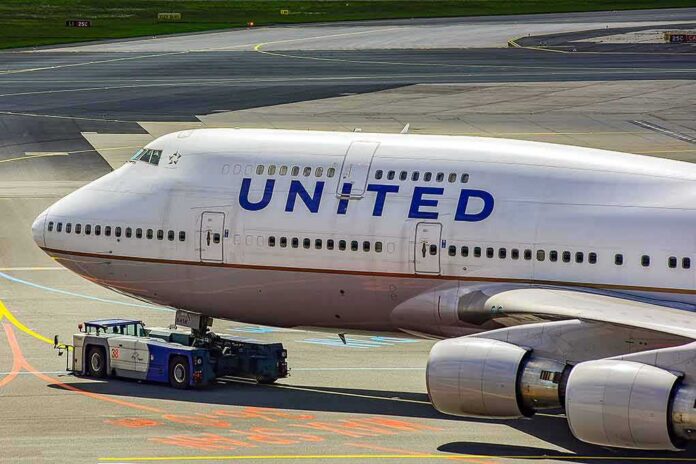
A United flight sent a hijack alert after a passenger claimed he had a bomb and moved toward the cockpit before crews contained him and police arrested him after landing.
Story Snapshot
- United Flight 2174 landed safely in New Orleans after a bomb claim and cockpit approach.
- Deputies arrested the 34-year-old suspect and booked him on felony charges, officials said.
- Pilots issued a hijack alert during the scare, which matched airline security protocols.
- Most aviation bomb threats prove false, but crews must treat each one as real.
What Happened Onboard United Flight 2174
United Flight 2174 from Newark to New Orleans reported a midair disturbance late Monday. Jefferson Parish officials said a 34-year-old passenger told crew members he had a bomb and moved toward the cockpit area around 11:20 p.m. The pilots sent a hijack alert as part of their emergency response. The aircraft, carrying 46 passengers and six crew, continued to Louis Armstrong New Orleans International Airport and landed safely. Deputies arrested the passenger at the gate without incident and began an investigation.
Local reports and airline accounts said the man’s statement about a bomb and his movement toward the cockpit triggered the alert. Authorities treated the threat as real until they could search the plane on the ground. Officials booked the passenger on charges tied to false reporting and terrorizing, which cover communicating a bomb claim that sparks an emergency response. The case will move through local courts. No injuries were reported among passengers or crew after the incident.
How Airlines And Crews Respond To Bomb Claims
Airlines and pilots follow strict steps when someone claims to have a bomb. Crews isolate the person if possible, alert the cockpit, and secure the flight deck door. Pilots notify controllers and can issue a hijack alert to speed law enforcement help on the ground. While the vast majority of bomb threats end up as false alarms, regulators and carriers require crews to treat each one as real until it is checked and cleared by authorities.
These calls come as unruly-passenger events stay a serious safety issue. The Federal Aviation Administration (FAA) reported 2,102 unruly-passenger incidents in 2024, with dozens of high-threat cases over the past decade. Those higher levels can include approaching or trying to breach the cockpit, making violent threats, or other actions that endanger the flight. That is why flight crews train to lock down the cockpit quickly and coordinate with law enforcement on arrival.
Why This Matters For Everyday Travelers
Passengers want a calm plane, a sealed cockpit, and a safe landing. This event shows how fast one claim can upend that. Crews must assume a worst-case risk even when most threats are hoaxes. That approach protects lives but also drains resources and rattles nerves. Repeated false threats can also strain the system. Experts warn that hoaxes, if frequent, can hide a real attack or tempt people to lower their guard, which would raise the danger for everyone on board.
For families, the bottom line is simple: modern cabins and trained crews are built to contain chaos. Locked cockpit doors, strict procedures, and close work with police stack many layers of defense. Pilots can declare an emergency or issue special alerts to get fast help. These steps can feel scary in the moment, but they are designed to keep flights stable and to bring planes down safely, as this flight did in New Orleans.
Shared Public Concerns And The Policy Gap
People across the political spectrum worry that basic safety and order are slipping while leaders argue. This case taps those fears. A single passenger’s threat forced a major response, burned public money, and put dozens of people on edge midair. Many readers will ask how often this happens and whether rules, enforcement, and court actions are strong enough to deter it. The incident underscores why predictable, firm consequences matter for safety in tight spaces like airplanes.
✈️ United flight triggers hijack alert after passenger claims bomb threat.
A suspect attempted to storm the cockpit on a flight bound for New Orleans.
Authorities arrested the individual following the mid-air security incident.#AviationSafety #UnitedAirlines pic.twitter.com/D8K8y4RPaD— WorldScopeX (@WorldScopeX2) November 11, 2026
Officials say crews did the job by the book: secure the cockpit, alert authorities, land, arrest, charge, and investigate. That is the system working. But it also shows a wider challenge. Aviation safety depends on steady policy, enough staff, and clear lines between airline duties and law enforcement roles. When threats flare, the public expects fast action and real accountability. That expectation will shape how local prosecutors and federal partners handle this case from here.
Sources:
en.royanews.tv, firstpost.com, timesnownews.com, kpel965.com
© patriotspotlight.org 2026. All rights reserved.