

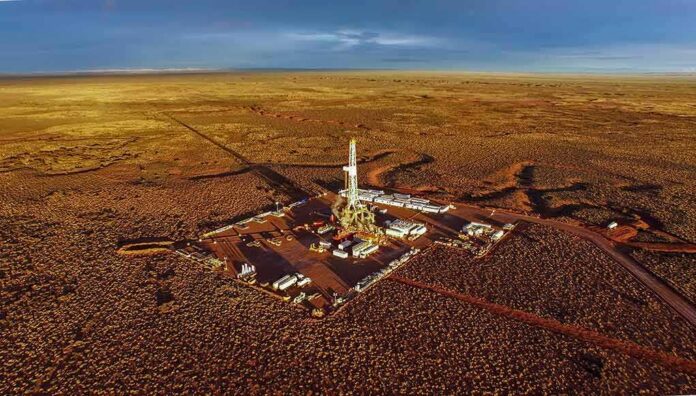
Kazakhstan reassigned two copper deposits to a newly formed local company after a foreign buyer says it had a signed deal to acquire the operators.
Story Snapshot
- CoreX says it signed a January 2024 deal to buy the companies running two Kazakh copper deposits, pending state approval.
- A government investment council reportedly told officials to give those rights to a different company, Altyndara, on a priority basis.
- CoreX called the move illegal expropriation and is preparing treaty arbitration; Kazakhstan has not published a detailed rationale.
- Kazakh law says subsoil belongs to the people and licenses are granted by the state under clear rules set in 2017.
What CoreX Claims Happened
CoreX, linked to Turkish businessman Robert Yüksel Yıldırım, says it signed a January 2024 agreement to buy all shares of Altai Polymetals and Terekty Ken Baiytu, the companies operating the Koktaszhal and Kyzylshoky copper sites in Kazakhstan. The deal required government approval to close. CoreX says a top-level investment council later told the Ministry of Industry and Construction to give the subsoil-use rights to a different company, Altyndara, “on a priority basis”.
CoreX publicly called the change an “organized, aggressive appropriation and illegal expropriation” of its investments. The company identified the affected local entities and said the licenses are now in dispute. CoreX says it is preparing a case under bilateral investment treaties, pointing to its Turkish and Dutch links as possible treaty paths. It has not published an arbitration filing number or formal registration yet, and no case docket is cited in the available material.
What We Can Confirm—and What We Cannot
The available record includes CoreX’s statements and reports summarizing them. The reports describe a signed share-purchase agreement and a later state instruction favoring Altyndara. However, the actual share-purchase contract has not been released. The public materials do not show payment records, closing conditions met, or the government’s written reasons for reallocating the rights. Without those documents, the legal status of CoreX’s claimed interest before approval remains unclear.
The reported profile of Altyndara as “about a week” old when selected has not been matched with corporate registry records in the sources provided. The ownership chain and capitalization of Altyndara are not disclosed in the materials. That gap matters because a very new operator, if confirmed, would raise fair-process questions for many readers. At the same time, the government may argue it followed its licensing rules. Those reasons have not been published in the sources we have.
How Kazakhstan’s Rules Shape the Fight
Kazakhstan’s code says subsoil belongs to the people, with the state managing it on their behalf. Mining rights are not land ownership. They are time-limited rights created by a state license or contract. In 2017, Kazakhstan set a system it describes as more transparent, including a “First Application” principle and clear requirements on finance, skills, reporting, and operations. The competent authority grants exploration and production rights under those statutes.
The United States State Department has noted that the 2017 code includes rules for strategic deposits and allows unilateral termination in certain national security cases. It also said the changes could improve the investment climate if applied well. Those points do not decide this dispute. They set the field of play. The main question is whether officials applied those rules fairly or acted in a way that broke treaty promises to foreign investors.
Why This Matters Beyond One Copper Deal
Copper feeds electric grids, vehicles, and defense gear. When a state moves a license from one party to another, it can chill global capital. Conservatives will see echoes of state favoritism and top-down control. Liberals will see the risks when big projects lack public sunlight and clear community benefits. Both sides share a core worry: powerful insiders make calls that regular people and honest builders cannot challenge in time or in full view.
Central Asia has the minerals.
That does not mean it will capture the money.
The region holds an estimated:
39% of global manganese ore reserves
31% of chromium
20% of lead
13% of zinc
9% of titanium
about 5% of copper, cobalt and molybdenumKazakhstan is the world’s…
— Roberto Balbino (@RobertoBalbinoX) November 1, 2026
Kazakhstan has faced investor-state fights before. Public databases list several cases over mining and resource rights. Some investors won steps in arbitration, while the state has also defended its actions. These cases can take years, outlasting news cycles and draining trust. If CoreX files at the International Centre for Settlement of Investment Disputes, expect a long path with document requests, jurisdiction tests, and arguments over whether the state acted for a valid public purpose or crossed the line.
What To Watch Next
Watch for four items. First, any release of the January 2024 contracts; those will show conditions, remedies, and governing law. Second, the ministry’s file and the investment council’s minutes explaining why Altyndara was chosen. Third, corporate records on Altyndara’s age, owners, and capacity. Fourth, a formal arbitration filing or a domestic court case that sets deadlines and forces disclosures. Without those, the narrative will remain driven by statements, not verified records.
Sources:
zerohedge.com, qazba.kz, erdem-erdem.com, akm.ru, gov.kz, globalarbitrationreview.com
© patriotspotlight.org 2026. All rights reserved.