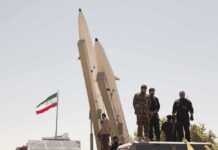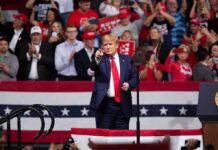

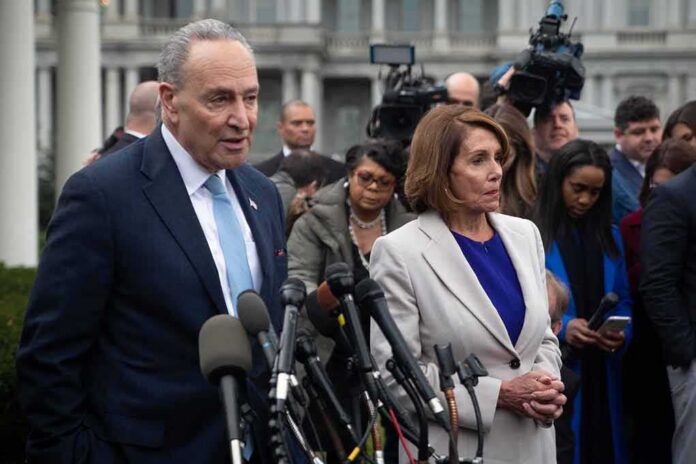
Senator Chuck Schumer vowed to “end the war” with Iran by using Congress’s power of the purse, setting up a direct clash over who decides when America fights.
Story Snapshot
- Schumer pledged to end U.S. hostilities with Iran and cited funding control as leverage.
- Democrats pushed war-powers measures, with limited but real Republican support.
- Senate Democratic leaders say both chambers passed a withdrawal resolution.
- Trump and allies defend ongoing strikes as necessary, limited, and lawful.
What Schumer Promised And Why It Matters
Senate Democratic Leader Chuck Schumer said Democrats will end the Iran war and will use Congress’s power over money to do it. He linked the plan to the Founders’ design that Congress can stop a president from waging war without public consent. This raises a core test of checks and balances. A pledge is not a plan, though. Schumer did not give a bill number, a deadline, or a dollar cutoff in his remarks, which leaves key steps open.
Democrats also moved a formal war-powers push. Senate Democratic leaders said both chambers passed a resolution telling President Trump to withdraw U.S. forces from hostilities with Iran, and argued the measure does not need the president’s signature to be effective. The Congressional Record shows Democrats pressing withdrawal language in floor debate this year. These moves give Schumer a vehicle, even if enforcement and compliance remain unsettled.
The Bipartisan Piece—And Its Limits
The Hill reported that four Republican senators—Rand Paul, Susan Collins, Bill Cassidy, and Lisa Murkowski—joined Democrats on a war-powers vote to direct withdrawal from hostilities with Iran. That is real, cross-party backing for congressional authority. It is also narrow. It does not prove broad Republican support to cut off funds, nor does it ensure votes to enforce a full drawdown. Bipartisan signals help the case, but they do not guarantee an end to operations.
History suggests funding limits often bite harder than resolutions. A Congressional Research Service review found Congress has proposed many funding cutoffs since Vietnam, with only a handful becoming law, but those enacted measures have shaped conflicts. That record explains why Schumer points to appropriations as the lever. Still, getting a binding restriction through both chambers and past united opposition is difficult, especially when security risks dominate headlines.
What The White House And Allies Say
President Trump and his backers defend the strikes as needed and targeted. The administration’s notice described action aimed at Iran’s nuclear program, to protect U.S. interests and in collective defense of Israel, and framed the operations as limited in scope and purpose. House Speaker Mike Johnson called the strikes necessary, lawful, and effective, signaling firm support from Republican leadership. That stance hardens the coming fight over any funding curb.
Security hawks also warn that Iran and its proxies keep attacking ships and partners, and that pressure must remain. Analysts have argued for a mix of economic pressure, forceful responses to attacks, and talks to open the Strait of Hormuz and curb Iran’s nuclear work. This frame puts urgency on deterrence and allies’ safety. It also makes congressional calls for withdrawal face questions about timing, risk to troops, and signals to adversaries—fair concerns across the spectrum.
The Risks, The Gaps, And What To Watch Next
Schumer’s vow channels a broad worry: too much war with too little say from the people who pay for it. Many Americans across left and right feel Washington answers first to insiders, not citizens. The legal fight here is clear, but the practical path is not. The record shows a passed resolution and a public pledge. It does not yet show executive compliance, court rulings, or an enacted cutoff that would halt operations on a date certain.
🚨🇺🇲 Hebrew Live | Breaking News:
Chuck Schumer, Senate Democratic leader: “I pledge to end the war in Iran with the help of the new Democratic majority in the Senate.” pic.twitter.com/JM94g9sWYc— The Daily Brief (@TheDailyBriefX) November 4, 2026
Watch three markers. First, the exact text and deadlines in any new appropriations rider that blocks funds for specific Iran operations. Second, the vote count, especially among Republicans beyond the four named on war powers. Third, the administration’s legal stance and operational tempo after Congress acts. These steps will show whether the purse can end a contested war—or whether America’s long tug-of-war between Congress and the Commander in Chief continues.
Sources:
apnews.com, democrats.senate.gov, congress.gov, thehill.com, washingtonpost.com, afp.com, blumenthal.senate.gov, iranintl.com, news24.com
© patriotspotlight.org 2026. All rights reserved.