
Searchers in northern Mexico uncovered 13 burial pits holding charred bone fragments, exposing yet another grim site in a country struggling to count its dead.
Story Snapshot
- Volunteer group Grupo Vida found 13 pits with burned skeletal fragments in Viesca’s Salitrillo Dunes.
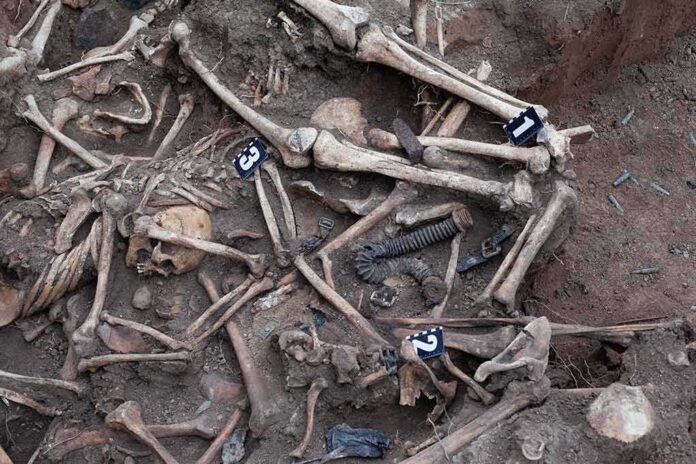
- Fragments include skull, ribs, long bones, teeth, and orthodontic parts, many calcined.
- Authorities will conduct anthropological and genetic testing in Saltillo; IDs are pending.
- Reports caution that the “13 victims” figure is a preliminary estimate, not a lab-confirmed count.
What Was Found in the Salitrillo Dunes
Grupo Vida, a volunteer search collective, reported locating 13 burial pits in the Salitrillo Dunes near Viesca, about 70 kilometers from Torreón. Reporters described charred skeletal fragments in the pits, including skull pieces, ribs, tibia, other long bones, and teeth. Some accounts noted orthodontic appliances among the items recovered. The group has searched the dunes since September 1, and it flagged the site to authorities for processing and lab work.
Journalists who covered the site said many fragments were calcined. That level of burning often destroys DNA and makes identification hard. Grupo Vida’s founder, Silvia Ortiz, said the condition would complicate any effort to name the dead. Reporters added that the fragments were small and brittle. These details match past cases in Coahuila where remains showed extreme heat damage, which can point to attempts to erase identities, though lab findings are still needed.
What Authorities Plan to Do Next
State and national search authorities, along with the office that handles missing persons cases, received the materials for review. Reports say the remains and items are headed to the Regional Center for Human Identification in Saltillo. There, teams will run anthropological exams and attempt DNA testing. Those steps are routine in Mexico’s forensic process. They aim to confirm whether all fragments are human and to seek any usable genetic profiles for potential matches.
Coverage stressed that the “13 people” figure is a working estimate tied to the number of pits, not a confirmed victim count. Sex and identities remain unknown. One outlet explained that claims about male and female victims came from possible clothing hardware, not from bone analysis or DNA. Reporters made clear that only lab results can confirm if fragments represent 13 individuals, more, or fewer, and whether sex can be determined from the remains.
Why This Site Matters in Mexico’s Forensic Crisis
This discovery fits a national pattern. Family-led groups often find suspected graves. Government teams then excavate, preserve, and test the evidence. Experts describe these as separate stages: find the site, count a minimum number of individuals, identify them, and determine what happened and who is responsible. Each step takes time. Severe burning, like the calcination reported here, can block DNA recovery and slow or stop the path to a name for families.
Local reports compared the dunes to prior sites in Coahuila where remains showed signs of fuel-burning. But they also noted that lab work has not yet established methods, timelines, or those responsible for these Viesca pits. Searchers said they will continue work as weather allows, since the desert terrain is harsh and recovery is hard. For many readers, this is another sign that families and citizens still carry much of the burden to find the missing and push the system to act.
Sources:
borderlandbeat.com, elsiglodetorreon.com.mx, eltiempomx.com, vanguardia.com.mx, telediario.mx, lado.mx, enlace13tv.com.mx, jornada.com.mx
© patriotspotlight.org 2026. All rights reserved.