
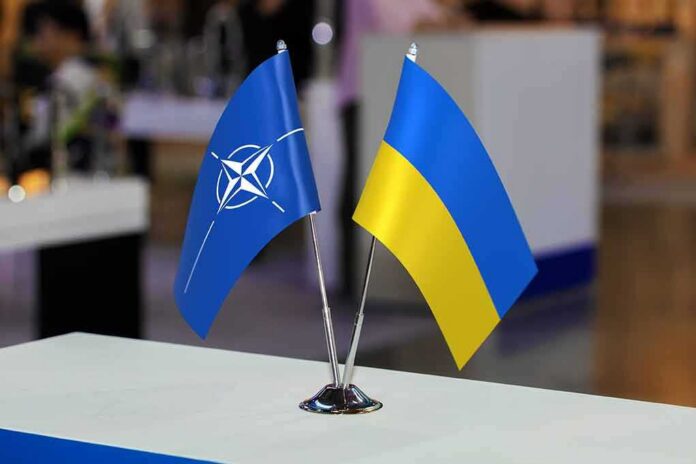
After meeting Vladimir Putin in Moscow, two United States envoys sat down with Volodymyr Zelenskyy in Dublin as Europe rushed to secure a real seat at the next Ukraine peace talks — a shift that could change who makes the rules and who pays the price.
Story Highlights
- United States envoys met Putin in Moscow, then Zelenskyy in Dublin, to line up next steps.
- Zelenskyy urged Europe to name official negotiators by the end of November.
- Kremlin aides signaled limits, warning Europe’s current stance risks “endless war”.
- European leaders back “robust” security guarantees for Ukraine in any deal.
U.S. Shuttle Diplomacy Links Moscow And Kyiv
United States envoys Jared Kushner and Steve Witkoff met President Vladimir Putin in Moscow, then traveled to meet President Volodymyr Zelenskyy in Dublin. The goal was to prepare the next round of peace talks and test whether Europe will join the table. Reuters reported the Moscow meeting and said the next session could include European representatives, pending agreement on format and roles. The schedule underscored a tight American-led push to narrow gaps after slow progress in Abu Dhabi.
Russian officials cautioned that format changes come with conditions. Kremlin adviser Yuri Ushakov argued that Europe’s present policy is “a recipe for endless war,” and that Moscow has not confirmed the precise setup for European participation. Earlier, Russian Foreign Minister Sergey Lavrov dismissed direct European involvement in Abu Dhabi, saying they could wait outside the core talks. Those remarks showed how hard it will be to move from side consultations to real negotiating seats.
Zelenskyy Presses Europe To Choose Negotiators Now
President Zelenskyy asked European countries to pick a representative or team for peace talks by the end of November. He said the war is in Europe, and that Europe should be a regular part of negotiations, not just briefed afterward. His call ties to practical issues. Europe would be expected to help underwrite security guarantees, fund reconstruction, and support enforcement if a ceasefire holds. Those roles require a voice at the table where terms are set.
European leaders have already endorsed firm commitments to Ukraine’s security in any settlement. The European Council backed a “comprehensive, just and lasting peace,” supported by reliable security guarantees for Ukraine. A separate coalition statement from Paris described plans for politically and legally binding guarantees to deter renewed attacks and to anchor a deal. Those pledges mean Europe will likely pay and police parts of any agreement, which strengthens the case for formal participation.
Competing Formats Reflect Bigger Questions
Russia’s team has pushed for a tighter core, often United States–Russia–Ukraine only. Reports from the Abu Dhabi meetings said European officials took part in side consultations with Kyiv and Washington but did not join the main session. Moscow also floated a broader European security debate first, before the war’s nuts and bolts, which could slow progress on near-term steps like ceasefire lines and monitoring rules. These format fights mirror a common problem in wartime talks: who must sit in to make a deal stick.
Europe pushes for seat at Ukraine peace talks but lacks unified voice https://t.co/DMI5h2k1WK
— Voice Cyprus News (@voicecyprusnews) November 13, 2026
For many readers, the stakes are simple and real. If Europe joins, it shares both costs and accountability for what comes next. If Europe stays out, the burden may fall more on American taxpayers and troops down the line, or the deal may lack enforcers with skin in the game. Both left and right worry that distant elites design deals others must live with. Clear roles, named representatives, and public terms can help check that fear and keep promises measurable, not vague.
Sources:
youtube.com, president.gov.ua, consilium.europa.eu, data.consilium.europa.eu, english.nv.ua, defensenews.com, cbc.ca, miamiherald.com, news.ssbcrack.com
© patriotspotlight.org 2026. All rights reserved.