
Ukraine’s cheap, garage-built drones are pushing one of the world’s biggest navies into retreat and forcing everyone to question how long billion‑dollar warships — and the governments that fund them — can survive in a world of $1,000 machines.
Story Snapshot
- Ukraine’s low-cost naval and aerial drones have damaged or destroyed a large share of Russia’s Black Sea Fleet, forcing Moscow to pull ships away from Ukrainian shores.
- Many of these drones are built from commercial parts and can cost as little as a used car, yet they threaten ships, jets, and critical trade routes worth billions.
- Russia’s fleet has moved from Crimea to ports deeper inside Russian territory, showing how small drones can reshape control of key seas and grain routes.
- The drone war highlights a deeper problem for all governments: huge defense budgets and elite-led strategies are being outplayed by cheap, flexible tech.
Ukraine’s Drone Campaign Against Russia’s Navy
Since 2023, Ukraine has leaned heavily on small, unmanned sea drones to hit Russian warships, fuel tankers, and naval bases across the Black Sea and nearby waters. These drones, often guided by satellite links and simple cameras, carry explosive loads and ram into Russian ships. Ukrainian and independent reporting say they have damaged or destroyed about two dozen Russian warships, including landing ships and missile carriers. That is roughly a third of Russia’s Black Sea Fleet, a major blow for a country that long claimed sea dominance.
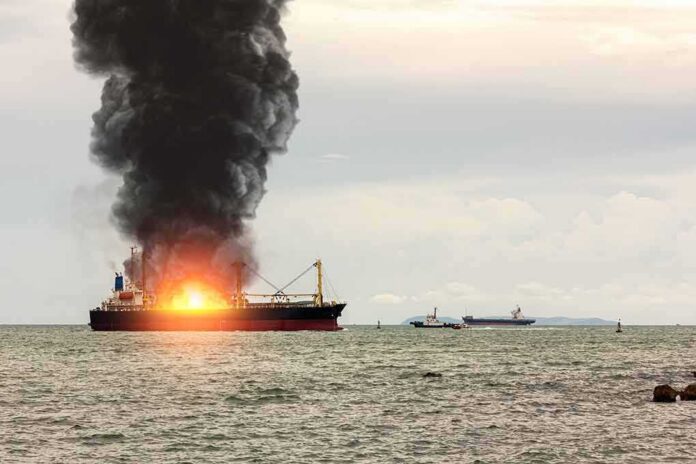
Ukrainian attacks have not focused only on warships. Drone strikes have hit oil tankers and so-called “shadow fleet” vessels that Russia uses to move fuel and goods around sanctions. By targeting these supply lines, Ukraine is trying to choke the flow of fuel, ammo, and equipment to Russian forces in Crimea and southern Ukraine. This is classic economic warfare done with bargain tools. When a cheap drone forces a costly tanker off the route, it raises insurance costs and risks for every ship tied to Russia’s trade.
How Cheap Drones Beat Billion-Dollar Warships
Many of Ukraine’s naval drones cost somewhere between the price of a car and a small house, typically in the $200,000 to $300,000 range. Some lighter strike drones and first-person-view systems can be built for a few hundred to a few thousand dollars using parts bought online. These low prices matter in a long war. Ukraine can afford to lose drones and quickly build more, while each Russian ship or aircraft lost represents tens or hundreds of millions in sunk cost and years of work.
Analysts note that, by 2024, about one-third of Russia’s Black Sea Fleet had been damaged or destroyed by Ukrainian drones and other strikes. Engineers first weaponized ordinary motorboats with commercial satellite links for about $100,000 each, then moved to more advanced designs. Ukraine’s Magura and “Sea Baby” drones now carry heavier warheads and use improved guidance, making them capable of striking far across the Black Sea and even hitting aircraft. This kind of innovation shows how smaller nations can punch above their weight when they focus on flexible, low-cost tools instead of giant prestige projects.
Russia’s Retreat and the Fight Over Sea Control
The steady drumbeat of drone attacks has pushed Russia’s navy away from Ukraine’s coast. Under constant pressure, Moscow moved the core of its Black Sea Fleet from Sevastopol in occupied Crimea to ports like Novorossiysk on Russia’s own shoreline and even to bases in Abkhazia, far to the southeast. These ports are hundreds of miles from their old headquarters, making it harder for Russia to threaten Ukrainian cities, block grain exports, or project power across the Black Sea as it once did.
This shift is not just military trivia. Control of the Black Sea routes affects global food prices, energy trade, and shipping insurance for companies far from the battlefield. When cheap drones can force a navy to retreat, they also shake markets, contracts, and the policies of far-off capitals. Reports say that by late 2023 and into 2024, Russia had largely abandoned close patrols off Crimea because drones made those waters too dangerous. That means the balance of power at sea is now set less by ship size and more by who can adapt faster with small, smart weapons.
What This Reveals About Modern War and Government Priorities
For many Americans and Europeans watching from afar, this drone war reinforces an old fear: the people in charge keep pouring money into giant systems that are easy targets for cheap technology. Russia spent billions building and maintaining its fleet. Now, a poorer neighbor is humiliating those ships with devices that sometimes cost less than a sports car. Western governments are also watching and asking if their own aircraft carriers and destroyers could face the same fate in future conflicts.
Think tanks and defense experts warn that Ukraine’s success is forcing hard questions in capitals like Washington, London, and Paris. If drones worth tens of thousands can cripple ships worth hundreds of millions, what does that say about how defense budgets are planned and who benefits from them? Many citizens already believe the “deep state” and defense industry are more focused on contracts and careers than on smart, cost-effective protection. The Black Sea drone war gives those doubts fresh evidence, as smaller, more flexible systems outperform gold-plated hardware.
Shared Concerns Across the Political Divide
Conservatives who worry about wasteful globalism and endless foreign spending see in this story another warning: elites built huge fleets that now look outdated against cheap robots. Liberals who worry about inequality and the gap between the powerful and everyone else see vast sums spent on hardware that cannot protect civilians or stop war from spreading. Both sides can look at Russia’s struggles and ask if their own governments are any wiser.
Ukraine’s drone campaign shows that smart, focused innovation can check a larger aggressor. It also shows how late many leaders were to understand this new kind of war. As drones grow more advanced and spread to other conflicts — including attacks on ports, tankers, and even beach resorts — ordinary people are left wondering if anyone in power is truly prepared. The rise of $1,000 and $10,000 drones against billion-dollar fleets is not just a military story; it is a test of whether modern governments can keep up with change or remain stuck protecting their own deep-state priorities.
Sources:
reuters.com, youtube.com, yahoo.com, time.com, bbc.com, navalnews.com, apnews.com
© patriotspotlight.org 2026. All rights reserved.