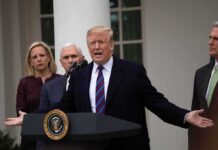

The Trump administration is threatening California election officials with federal criminal liability if they count mail ballots from roughly 20,000 people the government says are likely noncitizens — but a similar federal claim in Nevada recently turned out to be completely wrong.
Quick Take
- The Department of Justice (DOJ) sued California on October 15, 2026, seeking a court order to stop counting ballots from about 20,000 flagged voters.
- Federal officials gave Los Angeles County a password-protected thumb drive with names and only 48 hours to review it.
- A DOJ official warned officials to “segregate — not cancel” the ballots, but also raised the threat of legal action.
- California’s top election officials say the DOJ has not shared the data or methods behind its claim.
- In Nevada, a similar federal list of 185 suspected noncitizens was reviewed and all 185 turned out to be citizens.
Federal Lawsuit Targets California Mail Ballots
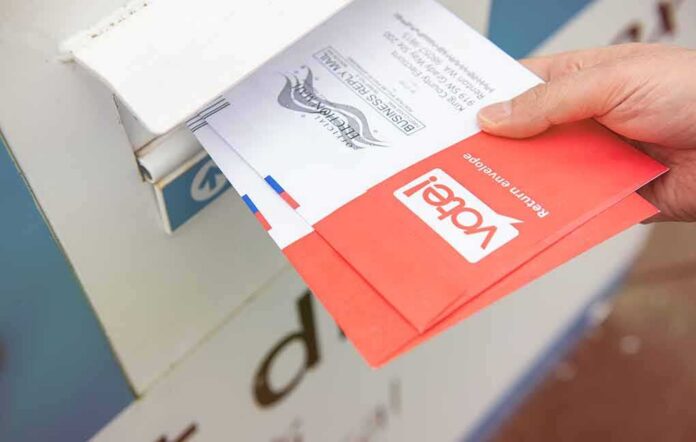
The United States government filed a lawsuit against California on October 15, 2026. It asks a judge to block the state from counting vote-by-mail ballots tied to people the government calls “likely noncitizens” until their citizenship can be confirmed. The Department of Homeland Security says it found the roughly 20,000 names by comparing California’s voter rolls against its own internal records.
Acting Deputy Attorney General Trent McCotter told officials to “segregate — not cancel” the flagged ballots while citizenship is checked, rather than throw them out outright. That framing matters because it shows the DOJ’s formal ask was narrower than some public reaction suggested — even as separate messaging raised the possibility of criminal consequences for officials who count the ballots anyway.
A Password-Protected List and a 48-Hour Clock
Before suing, the DOJ sent Los Angeles County Registrar Dean Logan and Secretary of State Shirley Weber a password-protected thumb drive holding the names it flagged. Letters demanded a review within 48 hours and warned that legal action could follow if officials didn’t comply. That tight timeline landed in the middle of active mail voting, just weeks before Election Day.
Logan said his office never opened the drive. He said using it would break the county’s data-privacy and security rules, and he does not consider it a safe way to handle sensitive voter information. He also said the DOJ’s letter never specified how many individuals were actually involved or what records the file contained.
California Officials Push Back With Specific Complaints
Weber said the federal government has not backed up its claim with real evidence. “The federal government hasn’t provided evidence to support its allegation that 20,000 names on the state’s voter rolls are of noncitizens,” she said, adding that Homeland Security still has not shared its underlying data or methodology. She noted a similar pattern this past summer, when federal officials claimed 190,000 California voters were noncitizens but never released the data behind that number either.
Logan echoed that concern, saying any move to strip someone’s voting eligibility must rest on “verifiable information, not assertions of unconfirmed data matching”. Those statements don’t disprove the federal claim outright, but they do raise real questions about whether California had enough information to act within the government’s deadline.
Nevada’s Review Found Zero Noncitizens
The strongest reason for skepticism may come from Nevada. Federal officials there flagged 185 people as possible noncitizens using a similar data-matching approach. When Nevada officials actually reviewed the list, every single one of the 185 turned out to be a legally registered citizen. That track record gives California officials a concrete, documented reason to demand proof before acting on the federal list.
🚨 BREAKING: Trump’s DOJ warns LA County that knowingly counting noncitizen ballots could mean federal criminal liability. Over 20K suspected noncitizens flagged. Why oppose citizenship verification? 🤔 https://t.co/uFsGavYfyl
— Johnsen mark (@Johnsenmarsiqu) October 17, 2026
Research on large-scale voter-data matching backs up that caution. Studies from election-data experts and the Brennan Center have long found that comparing databases this way often produces false positives — people wrongly flagged — because records rarely include perfect, unique identifiers. Confirmed cases of noncitizen voting, when they are actually proven, remain extremely rare nationwide.
What Happens Next
A federal court will now decide whether to order California to pause tabulation of the flagged ballots while the lawsuit proceeds. No judge has yet ruled on whether the 20,000 names are accurate, and the DOJ has not released the detailed matching data that would let outside reviewers check its work. For now, the dispute leaves voters, county officials, and courts to sort out claims that neither side has fully proven in public.
Sources:
nypost.com, justice.gov, politico.com, fortune.com, news.bloomberglaw.com, usnews.com, cnn.com, latimes.com
© patriotspotlight.org 2026. All rights reserved.