
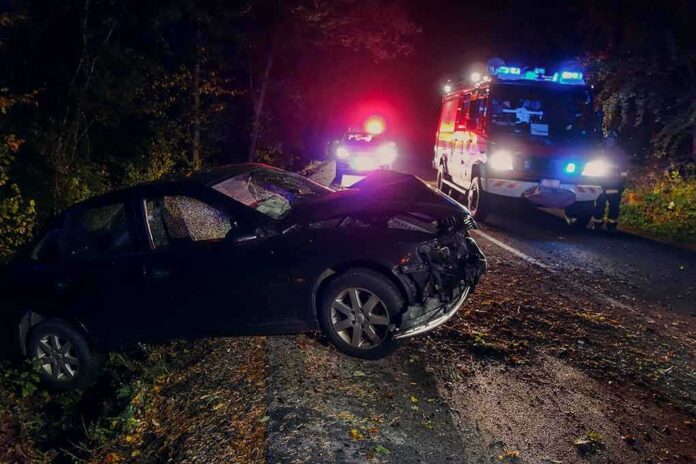
A Silicon Valley founder now faces murder charges after prosecutors say his Tesla hit more than 140 miles per hour and killed a mother and daughter.
Quick Take
- Police say the crash happened in San Jose and left two people dead.
- Prosecutors allege the Tesla was traveling 142 miles per hour before impact.
- The case turns on driver conduct, not a claimed Tesla defect.
- The public record in the supplied material does not include the full charging file or forensic report.
What prosecutors allege
Zachary Chernicky, 31, has been arrested and charged with two counts of murder after the December 2, 2025, crash in San Jose, California. Prosecutors say he drove his Tesla at more than 140 miles per hour before plowing into stopped traffic, setting off a fiery wreck that killed a mother and her young daughter. The speed claim is central because it is the main fact used to support the murder case.
The supplied reporting does not include the complaint, probable-cause affidavit, or crash reconstruction. That means the public record here confirms the charge and the alleged speed, but not the full evidence package behind them. On that narrow record, readers can see the accusation, but they cannot yet test every step in the prosecution’s chain of proof.
Why the case is drawing so much attention
This crash fits a pattern that keeps pulling Tesla cases into public fights over blame, technology, and accountability. In other Tesla-related fatal-crash cases, investigators and prosecutors have leaned on vehicle data, driver-assistance records, and witness accounts to separate alleged driver misconduct from claims of malfunction or automation failure. That is why the legal question matters more than the brand name. The courtroom has to answer what the driver did, not what social media assumes.
Public reaction is also likely to be sharp because the case blends wealth, Silicon Valley status, and a violent highway death. Those elements can make the story feel bigger than a single crash, especially for readers already frustrated with elites who seem insulated from the consequences of reckless conduct. But the key legal issue remains simple: did the evidence show reckless driving strong enough to support murder charges?
What remains unknown in the public record
The supplied materials do not show telemetry downloads, event data recorder files, skid analysis, toxicology results, or witness statements. They also do not show whether braking, steering, road design, or any vehicle problem played a role. That leaves important gaps in the public understanding of the crash. The allegation is serious, but the record provided here still lacks the primary documents that would let outside observers measure the strength of the state’s case.
Silicon Valley developer accused of murder after investigators say Tesla reached 142 mph before fatal crash https://t.co/BoMHHVXecP #FoxNews NOTHING GOOD Happens in California ! California is a State of Evilness/Criminals and Corruptions ! TRUE ☝️
— arlrust (@arlrust777) July 21, 2026
That gap matters in any high-profile case, but it matters even more when the story is being told through a sensational headline. A vivid phrase like “145 mph horror crash” can shape opinion before the facts are fully tested. For now, the firmest verified points are the charge, the alleged speed, and the reported deaths. Everything else will depend on what investigators and prosecutors eventually release in court.
Sources:
nypost.com, foxnews.com, theguardian.com, ketv.com
© patriotspotlight.org 2026. All rights reserved.