
Washington once blocked a key ally from flying the F-35 over fears the Russian S-400 could study its stealth—proof the system is treated as a real threat, not hype.
Story Snapshot
- Pentagon removed Turkey from the F-35 program after it bought Russia’s S-400, citing stealth-security risks.
- Analysts say detection is not the same as a weapons lock; the S-400 may “see” a stealth jet but still struggle to target it.
- Open-source estimates put potential F-35 targeting distances in the tens of miles, not hundreds.
- No verified combat has tested the S-400 against F-22 or F-35, keeping key claims unproven.
Why The S-400 Became A Flashpoint With U.S. Allies
In 2019, the Pentagon began removing Turkey from the F-35 program after Ankara bought Russia’s S-400 air defense system. U.S. officials warned the S-400 could collect data on F-35 low-observable features if both systems operated together. That risk went beyond politics; it was about protecting sensitive technology. Congress and the Department of Defense framed the move as necessary to prevent espionage and safeguard the F-35’s edge.
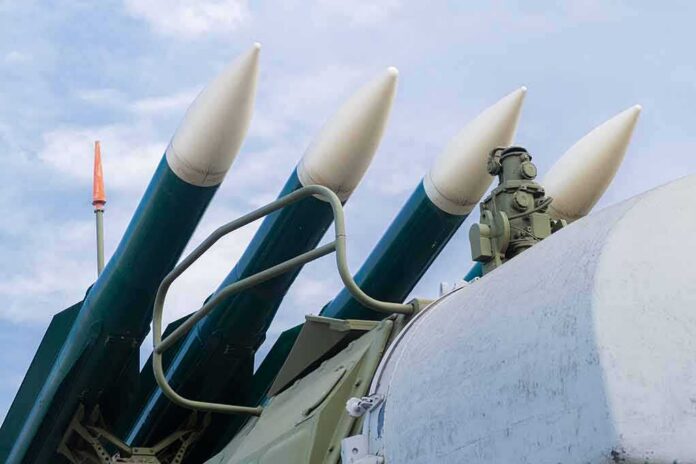
The dispute showed how Washington rates the S-400. If it were only a paper tiger, the United States would not have ejected an ally from a trillion-dollar fighter program. The S-400 is designed as a layered, networked defender. It uses long-range search radars to spot targets and a separate tracking and guidance radar to steer missiles. That division signals a full “kill chain” approach, not a single sensor trick.
How The S-400 Kill Chain Challenges Stealth
Russia advertises long reach. The 40N6 missile is promoted for engagements out to roughly 380 to 400 kilometers against large targets. The system’s search radar is credited with detecting aircraft at several hundred kilometers. Those figures impress on paper. Yet they reflect best-case conditions and larger radar targets, not a fifth-generation fighter designed to cut radar returns and break tracking continuity.
Analysts stress an important gap. Low-frequency surveillance radars can sometimes detect that “something” is in the sky. But that is not enough to shoot. A missile needs a precise, stable track, which usually comes from higher-frequency fire-control radars. Stealth shaping and materials focus on defeating those radars. That is why many experts describe the core S-400 problem as locking and guiding, not simply noticing a contact.
What Open Sources Say About Ranges And Limits
Public estimates suggest realistic targeting distances against an F-35 or F-22 may be measured in tens of miles. An analysis citing Aviation Week placed detection of an approaching F-22 at about 21 kilometers and an F-35 at about 34 kilometers under certain conditions. Those are snapshots, not doctrine, but they track with the broader idea: detection can occur earlier than the point where a weapon-quality lock is possible.
Commentary from a former U.S. Navy operations specialist and technical write-ups echo that distinction. They argue the S-400’s low-frequency radars may spot stealth aircraft but likely cannot guide a kill without help from the system’s X-band engagement radar. Some estimates suggest a viable lock might occur around 20 to 30 miles, depending on many factors. Those numbers are unverified, but they help frame expectations below the headline marketing claims.
What Has Not Happened In Combat
No verified combat engagement has pitted an S-400 against an operational F-22 or F-35. That leaves both sides leaning on tests, modeling, and manufacturer claims. Commentators note that Russian range statements target larger, less stealthy objects. Until a real fight tests the full chain—detect, track, classify, guide, intercept—performance against fifth-generation jets remains an open question in the public record.
For citizens on the right and left, this debate points to a deeper concern. Americans pay for advanced jets and air defenses through rising budgets. Yet the clearest data is still locked away. Officials ask the public to trust their judgments while allies get punished for crossing lines the public cannot fully see. That tension feeds the belief that decisions serve institutions first, and taxpayers second.
What This Means For U.S. Power And Policy
Stealth remains a strategy to cut the defender’s odds at every step, not to be invisible. The S-400 remains a strategy to stitch sensors and missiles into a tight shield. The contest is about the kill chain, not a single range number. U.S. actions toward Turkey show leaders take the S-400 seriously. Open sources suggest the system may struggle to lock and guide at long range against stealth. Real combat data is missing, so public claims deserve careful, narrow reading.
Bottom line: The S-400 is not magic, and the F-35 and F-22 are not ghosts. Each side is trying to tilt the math. Wise policy separates marketing from measured risk. That means guarding stealth secrets, investing in electronic attack and stand-off weapons, and refusing to buy into easy slogans—whether they claim a “stealth smasher” or a “can’t be seen” jet. Citizens should expect that level of honesty from leaders, and clear proof when billions are at stake.
Sources:
war.gov, congress.gov, 19fortyfive.com, reuters.com, globalsecurity.org, militarymachine.com, theaviationgeekclub.com, defenseone.com
© patriotspotlight.org 2026. All rights reserved.