
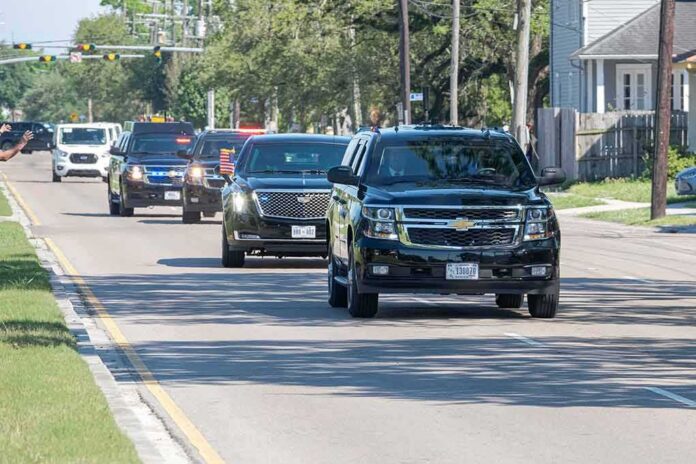
Bad weather grounded the president’s aircraft, so the White House ordered a high-speed motorcade across state lines to keep the Oklahoma rally on schedule.
Story Snapshot
- Storms blocked air travel from Texas to Oklahoma, prompting a last-minute ground convoy.
- President Trump told supporters the team could not use a helicopter or plane and would drive instead.
- The White House cited an 85-mile route from Denton, Texas, to Durant, Oklahoma, by motorcade.
- The trip shows how presidential travel shifts fast under weather and security rules.
What Triggered the Motorcade
White House officials said severe weather forced a switch from air travel to a motorcade after President Trump’s event in Denton, Texas, bound for a rally in Durant, Oklahoma. Reporters tracking the trip described the ground route as about 85 miles, with arrival running late due to conditions. The specific problem was the inability to safely use a helicopter or plane for the short hop. That constraint made a protected convoy the practical way to keep the rally on the calendar.
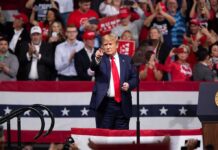
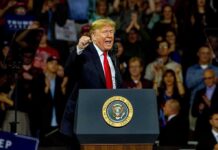
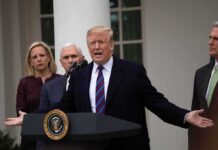
President Trump told the Oklahoma crowd that staff urged canceling because they could not fly the route. He said they would drive instead to make the event happen. His remarks matched the White House account that storms blocked the flight window and forced the ground move. The message to supporters was clear: the rally would go on despite delays. The framing emphasized persistence and a fallback plan that still delivered a late-evening program.
How Presidential Travel Adapts Under Pressure
Presidential travel relies on layers of planning that include airspace controls, backup routes, and secure ground options. When weather reduces safe flying, the United States Secret Service and federal aviation teams shift to an alternate plan designed in advance. Federal Aviation Administration procedures prioritize presidential flights but do not override safety. When conditions close the door to aircraft, a motorcade is the built-in answer to keep the day’s schedule moving with protection and control.
Federal rules and practice put safety first. The Federal Aviation Administration manual directs air traffic leaders to give priority to presidential movements, yet that priority cannot beat unsafe weather. Security teams map roads, hospitals, and staging points weeks ahead to prepare for fast pivots. Those steps aim to reduce disruption while guarding the president. Thursday’s shift from air to road fit those standard playbooks and showed the system responding to late-breaking weather limits.
Impact on Communities and Why Both Sides Care
Motorcades move fast, but they bring wide ripple effects. Police close ramps and intersections, slowing local traffic and commerce. Residents see flashing lights, sirens, and long lines of vehicles pass while their commutes stall. Some call it necessary security. Others see it as another sign that elites move freely while everyday people wait. Both views sit in the same scene: a protected convoy racing to a rally while towns adjust on short notice to the gridlock it creates.
President Trump wrapped up a long evening rally in Durant, Oklahoma, after traveling by motorcade from a Texas factory stop because weather blocked flights. He spent roughly an hour and a half on stage supporting Republican midterm candidates, then left the platform moving to… https://t.co/L81kUC40Wx
— Rahul Soni (@shivison048x) October 2, 2026
The Oklahoma detour also speaks to a larger worry that unites right and left. People feel that government is clumsy and reactive, not steady and fair. A weather call should be simple, yet it takes layers of agencies, rules, and resources to reroute one trip. Supporters welcomed the rally going forward. Critics pointed to disruption and cost. The bigger truth is that the system did what it was built to do, but it did so in a way that reminds many how distant power can feel.
Sources:
facebook.com, apnews.com, nbcnews.com, ranker.com, businessinsider.com, faa.gov, inquirer.com
© patriotspotlight.org 2026. All rights reserved.