

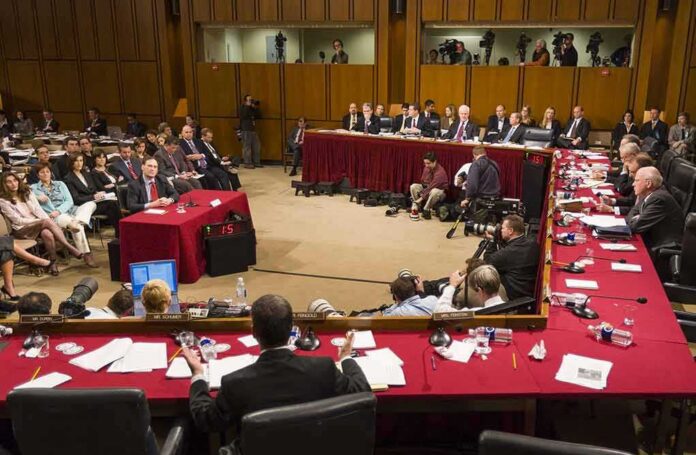
Anthony Fauci’s repeated use of the Fifth Amendment turned a Senate hearing into a direct fight over pardon power, self-incrimination, and political oversight.
Quick Take
- Fauci declined to answer more than 100 questions and repeatedly invoked the Fifth Amendment during the hearing.
- Senator Rand Paul had subpoenaed Fauci, making the appearance compulsory rather than voluntary.
- Republicans argued that Biden’s pardon weakened Fauci’s Fifth Amendment claim for pre-2025 conduct.
- The dispute is now a legal and political test of how far a presidential pardon reaches.
Fauci Refused To Answer Questions At A Heated Senate Hearing
Anthony Fauci repeatedly invoked his Fifth Amendment right during a Senate hearing on COVID-19 origins and the federal response. Reporting from NBC News, PBS, Reuters, and The Wall Street Journal says he declined to answer more than 100 questions. Fauci said he acted on the advice of counsel and wanted to avoid giving testimony that Republicans could later use in a perjury case.
The hearing was chaired by Republican Senator Rand Paul, who had subpoenaed Fauci after Fauci declined to appear voluntarily. That detail matters because it made the session a formal oversight fight, not a casual exchange. Paul and other Republicans framed Fauci’s silence as proof that he was hiding information about the pandemic response and his earlier public statements.
The Pardon Changed The Legal Stakes
The sharpest dispute came from President Joe Biden’s preemptive pardon, which covered Fauci’s conduct from 2014 through January 19, 2025. Republican senators argued that the pardon stripped away the main reason Fauci could fear federal prosecution for those years. PBS reported that Senator Josh Hawley said a pardoned witness has no Fifth Amendment protection for the covered conduct.
That argument is not the same as a court ruling. Legal coverage in PBS, CNN, and other outlets noted that a pardon does not cover future acts, state charges, or new crimes such as false statements made during the hearing itself. Those limits explain why some legal experts said Fauci still had at least some basis to invoke the privilege, even while Republicans called that claim unsupported.
Why The Exchange Became A Political Symbol
Fauci’s opening statement gave Republicans a clear line of attack. He said he feared his answers could help build a perjury case against him, and he pointed to what he described as Senator Paul’s hostile posture toward him. That gave the hearing a sharper edge than a routine oversight session. It also helped turn the exchange into a symbol for both sides: one side saw self-protection, the other saw evasion.
🚨 SENATE PANEL MOVES TO HOLD FAUCI IN CONTEMPT.
A Senate committee has voted to hold Dr. Anthony Fauci in contempt of Congress after he invoked the Fifth Amendment more than 100 times during a tense hearing on COVID‑19. The GOP‑led panel, chaired by Sen. Rand Paul, approved the… pic.twitter.com/ykPBlVeDKC
— The Content Factory (@tcf_updates) August 7, 2026
The public reaction reflects a bigger Washington pattern. A committee uses subpoena power, a witness invokes the Fifth, and lawmakers then argue over whether the silence is legal caution or concealment. In this case, the pardon made the fight more unusual, because it raised a technical question about whether a witness can still claim fear of prosecution after clemency. That is why the episode quickly became less about one hearing and more about who controls the story.
Sources:
facebook.com, nbcnews.com, aljazeera.com, cnn.com, youtube.com, wsj.com
© patriotspotlight.org 2026. All rights reserved.