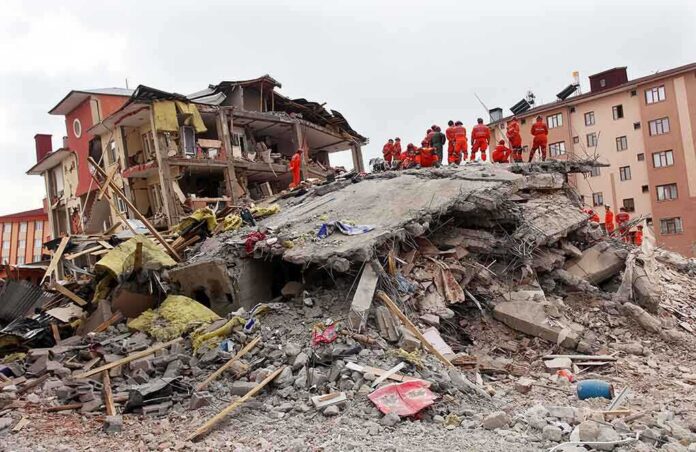
A 7.4-magnitude earthquake flattened buildings across western Colombia, and rescue workers are now digging through the rubble with their bare hands and buckets to find survivors.
Story Snapshot
- A 7.4-magnitude earthquake struck western Colombia, hitting Cali and Pereira the hardest.
- Rescue teams and everyday volunteers are searching collapsed buildings by hand, using human chains to move debris.
- Colombia’s government activated specialized search-and-rescue units and declared a state of emergency.
- Death tolls reported by different outlets range widely, from around 100 to more than 200, showing how fast-moving the crisis still is.
Rescuers Dig Through Rubble By Hand
Rescue workers and civilians are searching collapsed buildings across western Colombia after the powerful quake hit on August 10. In Cali, residents and rescue teams moved through broken concrete and twisted steel while ambulances lined streets near fallen buildings. Volunteers formed human chains to pass debris out of the wreckage as they looked for anyone still trapped inside.
The search stretched into the night and beyond. Colombian volunteers and trained rescuers kept sifting through rubble with bare hands and plastic buckets, working in dozens of cities and towns across the region. Officials said the effort was not slowing down, even as exhaustion set in among crews who had been digging for more than a day straight.
Government Sends In Specialized Teams
Colombia’s disaster agency, known as UNGRD, activated four specialized Urban Search and Rescue teams from Bogotá, Envigado, Yopal, and Medellín. The National Army also sent rescue platoons trained to work inside collapsed buildings. These units joined local firefighters and volunteers already digging through debris to find people trapped under fallen concrete and steel.
President Abelardo de la Espriella declared a national state of emergency and said rescuing people trapped under rubble was now the government’s top priority. The declaration frees up money and resources faster, letting local officials call in outside help without waiting on normal budget approval steps.
Death Toll Estimates Still Shifting
News outlets have reported very different casualty numbers since the quake hit, and that gap shows how fast-changing disaster reporting can be. Some reports cited around 111 to 132 deaths in the first day, while later figures from other outlets climbed past 169, and some social media posts referenced tolls over 200. The differences likely reflect the time each report was filed, not disagreement over what happened.
More than 1,600 buildings were damaged in the quake, leaving many families without safe places to return to even after rescues finish. Hospitals in the hardest-hit areas were also damaged, making it harder for medical teams to treat people pulled from the wreckage.
Small Victories Amid The Wreckage
Rescue crews have pulled survivors out alive, offering brief moments of relief inside a grim search. In Cali, responders freed a baby and her mother from beneath a five-story building that had collapsed. Photos from the scene show rescue workers cutting through debris a full day after the quake struck, still searching for anyone who might be alive underneath.
🚨Colombia 🇨🇴
The death toll from the devastating 7.4-magnitude earthquake has risen to at least 224, as search and rescue operations continue amidst the rubble. #Colombia #Earthquake pic.twitter.com/26ddBQTlCc
— sustainme.in®️ (@sustainme_in) August 11, 2026
The scale of destruction and the shifting casualty counts point to a disaster response still unfolding in real time. For families waiting near the rubble, the priority remains simple: finding loved ones before rescue windows close. Colombian officials have not said when the active search-and-rescue phase will end.
Sources:
youtube.com, today.com, abcnews.com, lemonde.fr
© patriotspotlight.org 2026. All rights reserved.