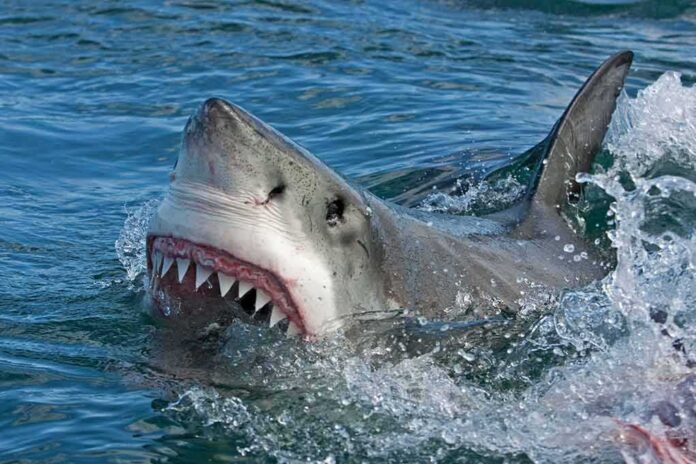
On a busy Florida beach, a young dad-to-be says he punched a shark to save his pregnant fiancée and walked away with a torn-up foot that shows how thin the line can be between a family vacation and a life-changing emergency.
Story Snapshot
- A Georgia man in his early 20s was bitten on the foot by a shark while wading off Daytona Beach Shores, Florida, near the Dunlawton Beach Approach.
- He says he moved his pregnant fiancée toward shore and then fought the shark off, turning a rare wildlife scare into a story about everyday courage.
- Beach Safety officials treated him on scene and took him to a nearby hospital, where doctors performed surgery and warned recovery could take about three months.
- The case highlights both how uncommon shark bites are and how media and officials share limited details, leaving many people feeling they never get the full picture when emergencies strike.
Shark bite turns vacation into emergency for Georgia couple
On July 25, Georgia resident Jacorey High was enjoying the waves with his fiancée near the Dunlawton Avenue beach approach in Daytona Beach Shores when a shark suddenly bit his left foot and ankle. Volusia County Beach Safety officials say the attack happened shortly before 5:30 p.m. as High waded in waist-deep water, a common spot for tourists who think they are still close enough to shore to be safe. The couple’s beach visit turned into a medical emergency in seconds.
According to High’s interview with local Atlanta television, the shark came at them in shallow water while they were on vacation from Henry County, Georgia. He and his fiancée were expecting a child, making the trip part celebration and part break from daily stress. Instead, they joined a small but frightening group of people who learn firsthand that Florida’s warm waters are also home to large wild animals. The attack hit just as national outlets were promoting Shark Week.
Protecting a pregnant fiancée and fighting off the shark
High says his first reaction was to get his pregnant fiancée out of the water, not to think about his own safety. He told reporters that he pushed her toward shore before turning to deal with the shark that had latched onto his leg, describing “pure adrenaline” and shock. A beach safety report cited by local news says the animal released its initial hold and then bit him again, forcing him to punch it in the nose to make it swim away. That quick decision likely ended the attack.
Family members and local broadcasts have repeated the detail that he stepped between the shark and his fiancée as it approached. For many viewers, that detail turns a random accident into a story about loyalty and bravery, the kind of values people say they rarely see rewarded in politics or government anymore. At the same time, the fiancée’s own statement and full incident reports have not been widely released, so the public mainly hears his version and a short official summary. That gap feeds general mistrust about how authorities share information.
Serious injuries, surgery, and a long road back
Beach Safety officers treated High at the scene for non-life-threatening but serious injuries to his left foot and ankle before transporting him to a nearby hospital. He was taken to Halifax Health Medical Center, where doctors operated on his foot to repair torn ligaments and tendons from his upper left ankle down to the middle of his sole. In interviews, High said the shark “tore up” his foot, and doctors warned him he would need about three months to recover before he could return to work.
Man hospitalized after presumed shark bite in Daytona Beach Shores 🦈
Pure adrenaline and true heroism off the coast of Central Florida. 22-year-old Jacorey High was wading in waist-deep water near the Dunlawton Beach Approach when a 4-foot shark clamped down on his left foot. pic.twitter.com/vkhQ6tawOg
— SafeboundMedia (@safeboundmedia) July 27, 2026
Some follow-up reporting notes he was discharged two days after the attack but still could not walk or put weight on the injured foot. That kind of injury can mean a long stretch off the job, physical therapy, and new medical bills, all at a time when many families already feel squeezed by health costs and insurance fine print. The story touches a nerve for both conservatives and liberals who say the system does little to help working people hit by sudden, freak events, while the well-connected seem to land on their feet.
Rare shark bites, limited data, and growing public distrust
Marine life experts say shark attacks like this remain rare, even in busy summer season waters off Florida. One aquarium spokesperson told FOX 5 Atlanta there are an estimated 60 to 65 unprovoked shark bites worldwide each year, far fewer than many people assume when they see dramatic clips online. Yet these rare cases get heavy coverage, because the mix of danger and heroism draws clicks and ratings. That coverage often arrives faster than detailed reports from officials or doctors.
In High’s case, most of what the public knows comes from a short beach safety statement, brief hospital details, and his own interviews on television. The shark’s species was not identified, and full medical records, 911 audio, and responder notes are not available to ordinary viewers. For Americans who already feel the government and big media hide key facts, that pattern is familiar: a tidy headline, a clip of a frightened victim, and many unanswered questions about risk, response, and support. The story shows real courage in a crisis, but it also reminds people how hard it is to get the full truth when something goes wrong.
Sources:
nypost.com, foxnews.com, youtube.com, miamiherald.com, abcnews.com
© patriotspotlight.org 2026. All rights reserved.