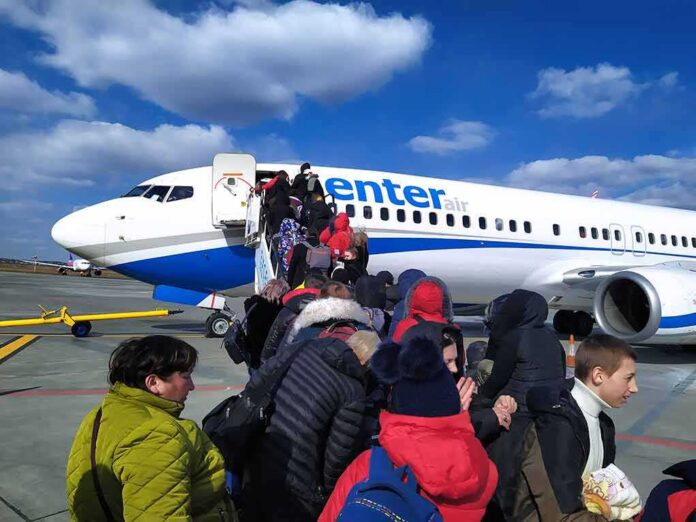
A Flydubai pilot stabbed his captain mid-flight toward Israel, yet passengers and crew helped force a safe landing in Saudi Arabia.
Story Snapshot
- Israeli Prime Minister Benjamin Netanyahu said a copilot stabbed the captain on a Dubai–Tel Aviv flight.
- Passengers and crew entered the cockpit and restrained the attacker as the jet descended.
- The plane diverted and landed safely in Tabuk, Saudi Arabia; all passengers survived.
- The episode highlights rare but real insider threats and gaps in cockpit security.
What Happened Aboard Flight FZ1073
Israeli Prime Minister Benjamin Netanyahu said a Flydubai copilot stabbed the captain on a flight from Dubai to Tel Aviv and “apparently tried to crash the plane.” Reports say passengers and crew entered the cockpit, subdued the attacker, and enabled the aircraft to land safely in Tabuk, Saudi Arabia. Netanyahu publicly praised the wounded captain’s actions and called the episode a severe security incident, citing the effort that allowed control to be regained and lives saved.
News outlets reported the jet descended thousands of feet before stabilizing and diverting to Prince Sultan bin Abdulaziz Airport in Tabuk. Both pilots were hospitalized after the landing, while passengers exited safely, according to multiple accounts that tracked the diversion and emergency response. Israeli officials said two additional Flydubai pilots on board assisted with the landing after the attacker was restrained and the cockpit secured. Saudi authorities began questioning the suspect after the landing.
Why This Incident Matters For Flyers
This event shows how a single insider in the cockpit can create a fast-moving emergency. Such attacks are rare but not new. Past cases include crew interference that forced diversions and urgent landings, which safety experts track as a distinct risk class. Media summaries point to this pattern and warn that early narratives often form before full investigative reports arrive, even as the basic facts here are broadly consistent across outlets.
Emergency transponder codes often confuse the public, but pilots use them to flag threats and get instant help. Aviation guides explain that code 7500 signals hijacking or unlawful interference, while 7700 signals a general emergency. Crews can select these codes quickly to alert controllers and trigger priority handling, which can include military escorts and runway readiness at diversion airports.
Security Gaps And Shared Public Frustration
Airlines hardened cockpit doors after the September 11, 2001 attacks, yet this case shows danger can still come from inside the locked flight deck. Analysts say the incident raises new questions about pilot screening, jump-seat rules, and how crews manage cockpit entries during crises. Coverage notes renewed calls for better mental health checks and improved protocols that let crews respond faster without risking control of the aircraft.
Israeli Prime Minister Benjamin Netanyahu met passenger Yaniv on Wednesday and praised him as he helped restrain a pilot during the reported cockpit attack aboard a Flydubai flight bound for Tel Aviv. Yaniv was among the passengers who entered the cockpit and helped restrain the… pic.twitter.com/3oKAetdrHH
— News9 (@News9Tweets) October 1, 2026
Americans across the spectrum worry that officials react after a scare but do not fix root causes. Flyers want clear standards, not vague promises. Many see an elite system that talks about safety yet leaves gaps that front-line people must fill in the worst moments. Here, quick action by an injured captain, passengers, and extra pilots prevented a mass-casualty crash. Their courage mattered more than bureaucracy. That is a lesson regulators should act on, not just study.
Sources:
facebook.com, theguardian.com, bbc.com, jpost.com, arabnews.com, pbs.org, thehill.com, centraloregondaily.com, latimes.com
© patriotspotlight.org 2026. All rights reserved.