

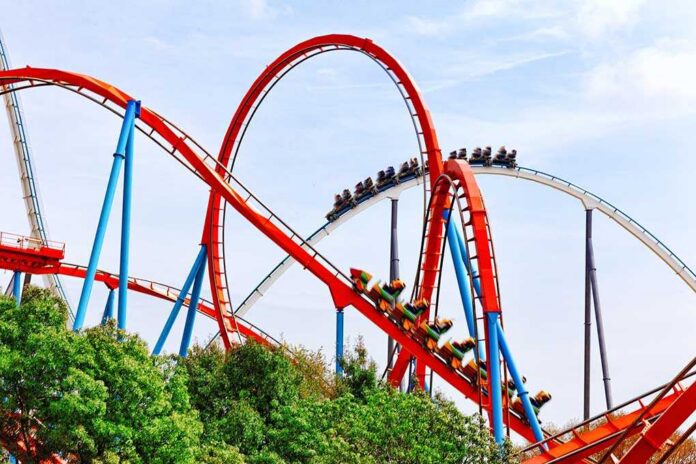
Three new lawsuits say Six Flags Magic Mountain’s X2 roller coaster left riders with traumatic brain injuries, adding more than 100 similar claims and forcing the ride to stay closed while scrutiny grows.
Story Highlights
- Three new lawsuits allege X2 caused catastrophic brain injuries to riders.
- Attorneys say over 100 more people reported brain injuries tied to X2 in the last two years.
- Six Flags says X2 is inspected daily and its forces should not injure a normal rider using it as instructed.
- California regulators are reviewing the ride; X2 has been closed since mid-July.
What The New Lawsuits Claim
Attorneys announced three lawsuits that accuse Six Flags Magic Mountain of running X2 despite a pattern of severe head and brain injuries. The filings claim the ride’s design and operation exposed riders to dangerous rapid acceleration and deceleration, leading to subdural hematomas and other trauma. Lawyers say more than 100 additional riders have come forward in the last two years with similar stories, forming a larger wave of claims that could expand into more cases soon.
Medical professionals cited in coverage linked some of the reported injuries to rapid acceleration and deceleration events consistent with a ride like X2, which could explain brain bleeds in otherwise healthy people soon after riding. A series of prior cases, including a wrongful death suit that settled before trial, adds weight to concerns that this is not a one-off issue but a repeating pattern. Still, each case turns on medical records and engineering evidence that courts must weigh.
Six Flags’ Safety Defense And The Regulatory Review
Six Flags has said it does not comment on active cases, but its past court filings argue X2 undergoes daily inspections and follows industry standards. The company maintains that a normal rider who follows instructions should not suffer a traumatic brain injury from the ride’s forces. The park points to multiple layers of safety review, including company engineers and outside inspectors. State regulators are also reviewing X2, which remains closed after July 12.
Manufacturers and defense experts have previously argued that X2 cannot generate the forces needed to cause a traumatic brain injury in certain cases. One filing cited a biomechanical expert who concluded that the ride’s forces did not match the claimed injuries in a past lawsuit. Supporters of the ride also note the many thousands who rode without issues. That view urges caution before treating clusters of claims as proof of a defect without full technical review.
Why This Case Taps A Deeper Public Frustration
California law requires quick reporting of serious amusement ride injuries and anticipates regulator checks when major incidents occur. That process can take time and often becomes a fight over data. Parks and manufacturers control maintenance logs, design files, and test records. Injured riders must build a case from medical timelines and what they experienced. That gap fuels suspicion that powerful players sit on key facts while families carry the cost of uncertainty.
Legal Lens: Over 100 people are suing Six Flags after suffering brain injuries on the X2 roller coaster. 😔
If you rode X2 and experienced headaches, memory problems, or any head injury, get checked out and document it. The conversation with us is always free.… pic.twitter.com/MekDRE2VOu— Chain | Cohn | Clark (@chainlaw) September 24, 2026
For many Americans, this clash hits a nerve. Families want safe thrills, clear warnings, and honest answers. They see big companies and layers of oversight, yet still face closed doors and “no comment” when harm occurs. Plaintiffs’ lawyers now group claims to force disclosures and answers. Courts and regulators will decide if X2 crossed a safety line. Until then, the ride is silent, and so are many records that could settle the question for good.
Sources:
washingtontimes.com, cnn.com, latimes.com, abc7.com, 6abc.com, dordicklaw.com, ibtimes.com.au, tmz.com
© patriotspotlight.org 2026. All rights reserved.