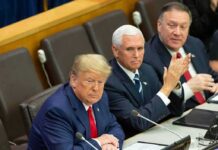

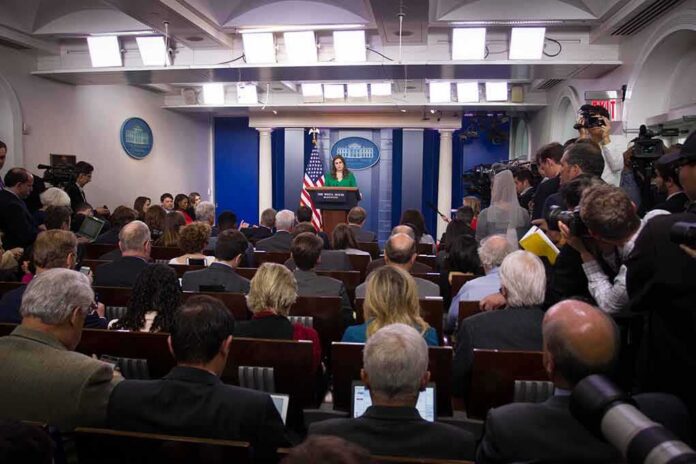
At a tense White House news conference, President Trump flatly denied any rift with Vice President JD Vance and called Vance’s “Iran war” election analysis “very accurate.”
Story Snapshot
- President Trump said he was not upset with JD Vance and agreed the Iran war drove up prices.
- CNN’s Kaitlan Collins asked about reported anger; Trump rejected that premise on camera.
- Trump said staff can have opinions, signaling space for internal debate without a feud.
- Evidence of private disagreement is not in the record; coverage framed the exchange as conflict.
What Trump Said On The Record
On November 20, 2026, President Trump faced a question about reports he was unhappy with Vice President JD Vance’s post blaming Republican midterm losses on the Iran war. Trump answered that he was not unhappy. He called Vance’s statement “very accurate” and said the war drove up prices. He also said people who work for him have a right to their opinion. CNN’s live updates documented that exchange and his denial of anger.
Right-leaning outlets highlighted those same on-camera quotes to argue there was no rift. They stressed Trump’s line that Vance’s point about price spikes was accurate and that staff can disagree. Those stories framed the question as an effort to spark division. But the strongest confirmed facts are Trump’s recorded denial and his agreement on the price effect of the war. Intent behind a reporter’s question is harder to prove from clips alone.
Where The Media Friction Came From
CNN anchor Kaitlan Collins framed Vance’s post as notable because, in September, Vance had avoided calling the Iran operation a war. That contrast fed interest in whether the White House was split. At the news conference, Collins asked Trump about reported anger at Vance’s claim. CNN’s own reporting also recorded Trump’s pushback and agreement with Vance’s point about prices, even as it noted his separate view about the election dynamics.
This back-and-forth fits a common media pattern: turning policy differences into a personal clash. Academic work finds journalists often use conflict frames because they draw attention. That does not mean a feud exists. Here, the public record shows one clear thing: Trump denied being upset and validated Vance’s cause-and-effect link between the war and higher prices. Claims about a wedge rely more on commentary than on new facts.
What We Still Do Not Know
The record is thin beyond the public exchange. There is no transcript from a private meeting that shows whether Trump and Vance argued behind closed doors. There is no internal memo or call log released that settles any disagreement. That gap matters. It means we should not assume harmony or conflict beyond what was said on camera. The strongest ground is still the on-record denial and the agreement on the price impact claim.
There is also an open question about how much the Iran war, inflation, and energy prices drove the midterm map. History shows presidents’ parties often lose ground when approval is soft. Analysts have linked midterm results to job approval and the economy across many cycles. Those forces can sit alongside Vance’s price point and Trump’s separate claim that his absence from the ballot mattered, without proving a schism at the top.
Why This Resonates With Voters On Both Sides
Many Americans see Washington as a place where media drama drowns out real answers on prices, war, and wages. This exchange tapped that nerve. The president and vice president both pointed to factors that hit family budgets and party fortunes. The press angled for signs of a split. But the bigger story for most people is simple: costs went up, and leaders argue about why. Citizens deserve clear data and less theater, whichever party is in charge.
JD Vance Laughs Awkwardly as Kaitlan Collins Questions Trump Over Iran War Tweet #IranWar #TrumpNews #JDVanceLaughs #CNN #WhiteHouse #USPolitics #IranConflict #BreakingNews #PoliticalNews pic.twitter.com/JylONvwQLB
— M World (@themworldnews) November 21, 2026
The takeaway is not that reporters should avoid tough questions or that leaders should hide differences. It is that the country needs facts that explain cause and effect. On this point, we have one firm piece of agreement at the top: the Iran war raised prices. The next step is testing how much that mattered, compared with long-running trends like presidential approval. Until more records emerge, claims of a deep rift rest on commentary, not evidence.
Sources:
redstate.com, transcripts.cnn.com, edition.cnn.com, brookings.edu
© patriotspotlight.org 2026. All rights reserved.