United Nations officials say armed gangs stormed a church area in Kenscoff, Haiti, killing at least 47 people and kidnapping more than 50 others, in one of the year’s worst attacks on displaced families.
Story Snapshot
- United Nations reports at least 47 killed and more than 50 kidnapped in Kenscoff.
- Victims included people who fled violence and sought shelter in a church compound.
- United Nations says 22 were reportedly executed inside the compound.
- Attack reflects a larger wave of displacement and gang control near the capital.
What Happened In Kenscoff
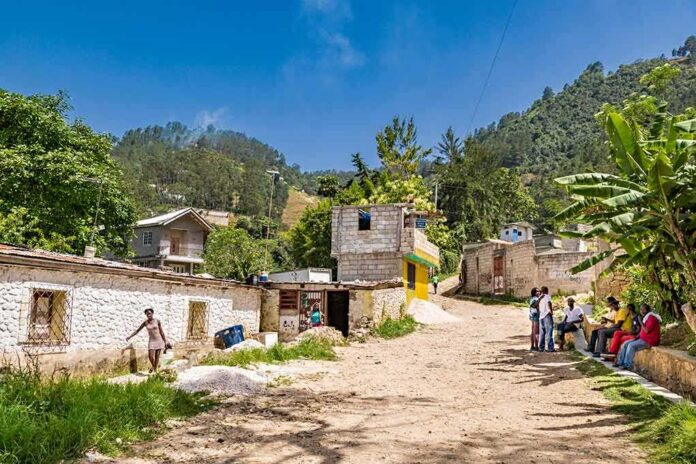
United Nations leaders briefed the world after gangs attacked Kenscoff overnight on August 23 and 24, in the hills south of Port-au-Prince. At least 47 people were killed, including children, and many others were injured. More than 50 people were kidnapped. Many victims had been living in or near a church compound after fleeing earlier violence. United Nations officials said 22 people were reportedly executed inside the compound where they had sought safety.
Local and international groups described a night of fear and fire. Reports said armed men moved through the community, shot residents, and took hostages. Families who thought church grounds would be safe were among the dead. Aid workers said the attack matched a pattern seen this year: gangs striking where displaced families gather because there is shelter, water, or food. That pattern has fueled anger and mourning across Haiti.
Why This Fits A Wider Crisis
United Nations agencies and rights groups say gang coalitions control much of the capital region and key roads. That control has pushed displacement to record levels. Around one and a half million people across Haiti lack stable shelter because of gang violence, according to recent United Nations figures. Kenscoff sits near these contested zones, making it vulnerable to raids and kidnappings by heavily armed groups seeking money, power, and fear as tools of control.
Analysts link the Kenscoff massacre to a consistent trend of mass attacks around Port-au-Prince. The targets are often homes, markets, and places of refuge like churches or schools. The goals are to seize territory, punish communities, and extract ransoms. When the state cannot protect people, civilians flee, and gangs expand farther into the hills and farming areas. That is how a once quieter area like Kenscoff became a battleground.
Accountability, Protection, And The Missing Center
Human rights groups called for justice and protection after the Kenscoff killings. They urged faster support for survivors and clear steps to guard other displacement sites. United Nations officials condemned the executions and kidnappings and pressed for stronger security and aid. Haiti’s struggle shows a hard truth that worries citizens in many countries: when institutions fail, the most vulnerable pay first and pay most, while armed groups act with near-total freedom.
A recent massacre in Kenscoff, near Port-au-Prince, killed at least 47 people and more than 52 people were abducted. The UN says some victims were killed after taking refuge in a church.#HAITI pic.twitter.com/NpohqnjHBG
— Sarå (@aimdow) August 29, 2026
For Americans watching from afar, the lesson is blunt. Borders and oceans cannot shield us from the effects of collapse next door. Gang control in a nearby nation means more migration pressure, risk to trade lanes, and a larger bill for aid and security later. Leaders often promise order, but without honest budgets, clear priorities, and steady enforcement, the cycle repeats. People on the right and left can agree: safety starts with a government that keeps its word and protects the innocent.
Sources:
pjmedia.com, persecution.org, haitilibre.com, dppa.un.org, dw.com, fides.org, aljazeera.com, nytimes.com, worthynews.com
© patriotspotlight.org 2026. All rights reserved.