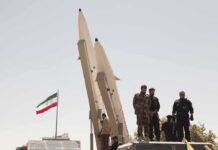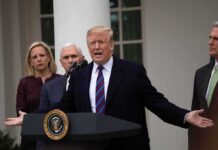
America’s top general has privately urged senior officials to find an “off-ramp” from the Iran war, warning that more strikes could backfire and airpower alone cannot meet U.S. goals.
Story Highlights
- CNN reports Gen. Dan Caine pressed for a de-escalation path in recent weeks.
- He reportedly briefed John Ratcliffe, Marco Rubio, and Vice President JD Vance.
- Airpower limits and escalation risks shape his warning.
- Caine’s office pushed back on anonymous-leak characterizations.
What CNN’s Reporting Says Happened
CNN reported that General Dan Caine, the Chairman of the Joint Chiefs of Staff, told senior advisers to President Trump that the United States needs an “off-ramp” from the war with Iran. The reporting cites three sources familiar with the matter and says he warned that options to escalate could backfire, and that airpower alone is unlikely to achieve the President’s stated objectives. The network aired a follow-up segment repeating the same core claims about risk and limits on military options.
The report also named the senior officials who were reportedly briefed. According to these accounts, Central Intelligence Agency Director John Ratcliffe, Secretary of State Marco Rubio, and Vice President JD Vance were among the recipients of Caine’s private counsel. Several downstream outlets amplified CNN’s claims, describing a push for an “off-ramp” and a sense that the conflict had reached a crossroads inside the administration.
Why The Push Matters: Escalation Risks And Airpower Limits
The central argument rests on two points: escalation risk and the limits of airpower. CNN’s sources said further strikes may not force Iran to yield and could widen the conflict in ways the United States does not want. The follow-on broadcast echoed that air campaigns alone rarely secure political outcomes without ground, maritime, or diplomatic leverage to match them. This view does not end debate, but it matches long-standing military lessons about the gap between destroying targets and changing enemy behavior.
Public signals from earlier months line up with this cautious framing. The New York Times reported that Caine had defined the military mission in narrow terms during public appearances, even as lawmakers pressed him and Defense Secretary Pete Hegseth about bigger war aims, such as opening key waterways and ending the conflict. Narrow mission scope often reflects a desire to match means to ends, which reduces the chance of a slide into wider war without clear gains.
Pushback, Denials, And The Anonymous-Source Pattern
Caine’s spokesperson declined to discuss private talks and criticized anonymous, agenda-driven characterizations, according to coverage that summarized CNN’s story and responses around it. That reaction fits a well-known Washington pattern: leaks describe internal dissent, then officials dispute the framing. The question often becomes not whether conversations occurred, but whether the leak captures the full context or exact words used in sensitive meetings.
It's a good thing that Gen Dan Caine is looking for an off ramp to end the war with Iran. But he and others involved should be prosecuted for their roles in the illegal war.
The war was launched in violation of UN Charter Art. 2 (use of force against the territorial integrity…
— Laurence (Larry) Boorstein (@LarryBoorstein) August 9, 2026
Most follow-on stories rely on CNN’s reporting rather than independent documents or named witnesses. Times of Israel, Political Wire, and others repeat the same core claim about seeking an “off-ramp,” adding little fresh proof. That cascade can narrow public understanding to one sourcing thread. Still, the claim’s specifics—the named officials briefed, the risk of backfire, and the limits of airpower—create a testable picture for Congress and watchdogs to pursue through hearings and records.
What This Reveals About Washington And The War
These reports show the strain between urgent action and careful strategy. Senior leaders often face pressure to “do something,” while the military warns about costs, logistics, and second-order effects. The public sees a familiar split: elected leaders make big promises; the chain of command urges limits. Many Americans, on the right and left, view this as another sign that Washington talks tough but plans thin, leaving troops and taxpayers to bear the risks when goals and tools do not match.
If accurate, Caine’s message signals a search for leverage beyond bombs: tighter goals, clearer diplomacy, and realistic timelines. If not, the leak still underscores public doubt about how wars end. Either way, citizens deserve clarity about aims, exit paths, and measures of success. Congress can demand unclassified briefings on objectives, thresholds for talks, and the specific conditions that would define an “off-ramp.” That transparency would honor the people who serve and the people who pay for these choices.
Sources:
youtube.com, cnn.com, timesofisrael.com, politicalwire.com
© patriotspotlight.org 2026. All rights reserved.