
Russia’s sudden diesel export ban turns a battlefield of drones into a global fuel shock that everyday people will pay for at the pump.
Story Snapshot
- Russia has imposed a full ban on diesel exports to shore up domestic supplies after Ukrainian drone strikes damaged refineries.
- Deputy Prime Minister Alexander Novak claims the situation is “challenging but under control,” while shortages and long gas lines say otherwise.
- This move fits a wider pattern: export bans may briefly calm prices at home but often spike costs and chaos abroad.
- The crisis highlights how distant wars, sanctions, and political games by elites can threaten ordinary families’ access to affordable fuel.
Russia’s diesel ban and the war behind it
Russian leaders have now banned diesel exports to keep more fuel inside the country after weeks of growing shortages tied to Ukrainian drone strikes on refineries and fuel depots. President Vladimir Putin and Deputy Prime Minister Alexander Novak discussed the ban in televised meetings, saying the goal is to stabilize the domestic market and avoid broader inflation. Novak called the situation “challenging but under control,” even as reports show rising prices and rationing at gas stations.
Ukrainian attacks have knocked out parts of Russia’s refining capacity, forcing Moscow to slow or halt exports of gasoline, jet fuel, and now diesel. To keep fuel flowing at home, officials say refineries have “maxed out capacity,” delayed routine maintenance, and tapped reserves that were not supposed to be used so quickly. At the same time, Russia has quietly turned to imports, bringing in gasoline cargoes from India and more supplies from Belarus, an unusual step for a major energy exporter that usually sells to others instead of buying from them.
Short-term fix, long-term shock for global markets
Export bans like Russia’s diesel move are not new; other major producers, including the United States and India, have considered or used similar measures during past fuel crunches. Studies of those policies show they sometimes cool prices at home for a short time but often raise costs abroad and can even backfire, feeding higher global prices that circle back to hurt the banning country. Analysts warn that global diesel inventories are already low, so losing a top supplier like Russia risks another worldwide fuel shock on top of recent energy crises.
For Americans and Europeans, these shifts are another reminder that energy policy is now a weapon, not just an economic tool. When leaders in Moscow, Washington, Brussels, or Beijing pull these levers, they rarely feel the pain directly. The cost shows up instead in higher trucking bills, more expensive groceries, and bigger heating and transport costs for working families. That story looks familiar to both conservatives who resent green mandates and liberals worried about inequality: ordinary people carry the burden while global elites and state-owned companies keep playing power games.
What this means for farmers, truckers, and families
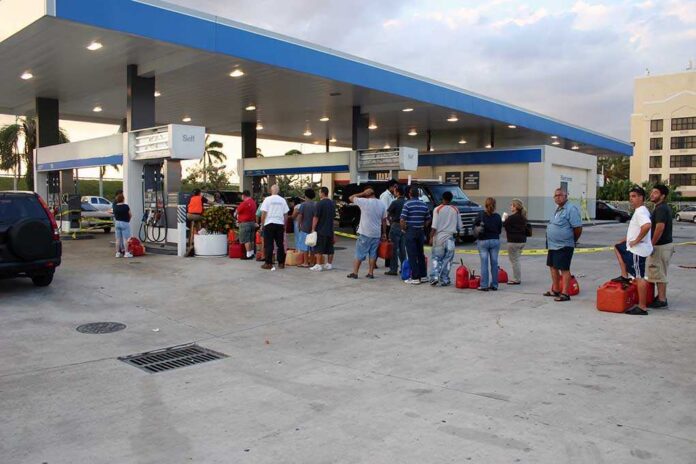
Diesel is the fuel that moves food, goods, and people: farms use it for tractors, trucks haul freight with it, and many buses and trains depend on it. Russian media already report lines at gas stations and tighter rules on fuel sales in regions like Crimea and Siberia as supplies run thin. If the export ban pushes world diesel prices higher, similar pressure can hit truckers, shippers, and farmers far from the front lines, including here in the United States, Europe, and many developing countries that buy fuel on global markets.
Just in: Russia announces diesel export ban, New York diesel futures soar over 10%.
According to reports from CCTV News and other media, the Russian government disclosed on Wednesday that it has begun to implement a diesel export ban. Affected by this news, New York diesel…
— Alpha Wire (@AlphaWireNewsAi) July 8, 2026
History shows that when energy crises hit, governments often reach first for blunt tools like export bans, price caps, or new taxes. These moves can look tough on television but rarely fix deeper problems such as aging infrastructure, lack of refinery investment, complex sanctions rules, and political infighting. People on both the right and the left in America see the pattern: leaders talk about “stability” while hiding shortages, delays, and rising bills that make the basic promise of hard work leading to a better life feel harder to believe.
A warning sign about energy, war, and the deep state
Russia’s diesel ban shows how quickly war, sanctions, and secretive energy decisions can ripple into everyday life everywhere. Ukrainian drones strike refineries, sanctions limit access to modern equipment, Moscow hides the true scale of damage, and then a sudden export ban threatens to spike global prices. At each step, powerful insiders make choices in closed rooms, while citizens only see the result when they fill their tank or buy groceries. That fuels growing anger at “deep state” elites who seem focused on control, not service.
For American readers, this crisis is not just a distant foreign story; it is another example of why many no longer trust big promises from either party about energy independence or a fair economy. When fuel becomes a weapon and export bans become routine, the people who get hurt first are not oligarchs or bureaucrats, but truck drivers, small business owners, rural families, and workers living paycheck to paycheck. Watching Russia scramble to patch over a crisis caused by war and poor planning is a reminder that our own leaders, from Congress to federal agencies, cannot keep treating energy policy as a game without risking similar pain at home.
Sources:
themoscowtimes.com, opis.com, government.ru, youtube.com, reuters.com, linkedin.com, globalbankingandfinance.com, energyintel.com, oilprice.com, bloomberg.com, facebook.com, mckinsey.com, energypolicy.columbia.edu
© patriotspotlight.org 2026. All rights reserved.