
Ukraine’s drones have hit Russia so hard that the “energy superpower” is now importing fuel and losing ground on the battlefield.
Story Snapshot
- Ukraine’s year-long drone campaign against Russian refineries has cut fuel production and triggered nationwide shortages.
- President Vladimir Putin has publicly admitted a “certain shortage” of fuel and ordered imports to plug the gap.
- Russia, once a dominant energy exporter, is now buying gasoline from countries like Belarus and India to keep its own cars and tanks running.
- Western analysts say the fuel crunch is slowing Russia’s military logistics while Ukraine regains ground at the front.
Ukraine’s Drone War Turns Russia’s Energy Strength Into a Weakness
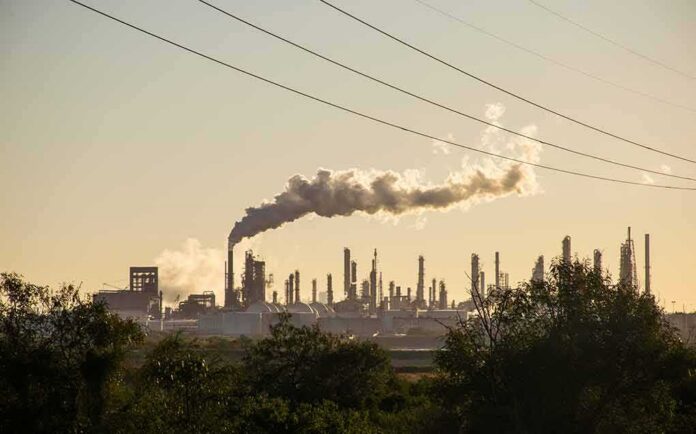
Over the past year, Ukrainian forces have shifted their focus from only front-line targets to Russia’s energy heartland, striking refineries, fuel depots, and terminals hundreds of miles inside Russian territory. These long-range drone attacks have knocked out key refining units and forced “unscheduled shutdowns,” cutting Russia’s ability to turn crude oil into usable gasoline and diesel for civilian use and the military. For a country that has long sold itself as an energy giant, this is a direct hit to both pride and power.
Major news outlets and independent analysts now describe a spreading fuel crisis inside Russia, with rationing, long lines at gas stations, and steep price hikes reported across dozens of regions. One widely cited estimate says attacks have reduced Russia’s refining capacity by roughly a quarter, leading to about a 15% shortfall between fuel supply and demand. That gap shows up in everyday life: people waiting hours to fill their tanks, bus routes cut back, and farmers worrying they cannot get enough diesel for harvest.
Putin’s Rare Admission: Russia Needs to Import Fuel
For months, the Kremlin tried to downplay the impact of the strikes, insisting that Russia could repair facilities quickly and that the situation was “under control.” That tone changed when President Putin appeared on Russian state television and admitted that Ukrainian attacks are “obviously creating problems” and causing a “certain shortage” of fuel in multiple regions. He still claimed the crisis was “not critical,” but the fact he spoke about it at all signaled that the shortages had become too big to hide.
Putin and his officials have now confirmed that Russia is preparing to import gasoline to ease the crunch. Kremlin spokesperson Dmitry Peskov told reporters that talks are “actively being held” with foreign suppliers, and imports will go ahead if prices are acceptable. Industry and security analysts say Russia has already turned to friendly states such as Belarus and India, with tens of thousands of tons of gasoline reportedly shipped and plans for hundreds of thousands more each month.
From Export Powerhouse to Fuel Buyer
Only a year ago, many observers believed Putin had the momentum: Russian forces were grinding forward in Ukraine, and Western support for Kyiv looked shaky and slow. Russia used its oil and gas leverage to pressure Europe and fund its war, boasting about record export revenues even under sanctions. Today, the picture is very different. Russia has been forced to extend gasoline and diesel export bans, accept lower income from energy sales, and spend scarce cash importing the very fuel it once shipped abroad in huge volumes.
This reversal matters beyond the battlefield. When a petro-state like Russia cannot guarantee fuel for its own citizens, it raises questions about basic competence and priorities inside its government. Ordinary Russians stuck in gas lines see billions spent on war while their own daily needs go unmet. For Americans watching from afar, the story feels familiar: a powerful central state claiming everything is fine while regular people pay the price in higher costs, shortages, and broken promises.
How Fuel Shortages Hit Russia’s War Effort
Putin insists that Ukrainian energy strikes “have absolutely no effect on the situation at the front,” but Western military experts disagree. They point out that fuel is the lifeblood of modern armies: every tank, truck, and supply convoy depends on steady flows of gasoline and diesel. When refineries go offline and rail lines must carry imported fuel instead of ammunition, logistics become slower, more fragile, and easier for Ukraine to disrupt.
🇺🇦⚔️🇷🇺 Ukraine struck deep inside Russia overnight into July 29, hitting the Ryazan oil refinery (Rosneft, ~5% of Russia's refining) and a major Wildberries warehouse — part of a wave that also hit refineries in Perm and Taganrog, a Black Sea Fleet fast-boat base in Crimea, and a… pic.twitter.com/e2NTRNoLKk
— 🔥🗞The Informant (@theinformant_x) July 29, 2026
Reports from the front suggest that Russia’s recent advances have stalled, while Ukraine has managed to retake some ground and stabilize key sectors. Ukraine’s deep strikes force Moscow to choose between front-line needs and civilian demand at home, a tradeoff that raises political costs every time a Russian driver sits in a day-long fuel line. In that sense, the drone campaign is not just about explosions; it is about turning Russia’s own economic model against it and exposing how vulnerable even big powers are when critical infrastructure fails.
Sources:
19fortyfive.com, cnn.com, aljazeera.com, bbc.com, latimes.com, wsj.com, en.wikipedia.org, yahoo.com, sfchronicle.com, theguardian.com, reuters.com, youtube.com, rferl.org
© patriotspotlight.org 2026. All rights reserved.