
U.S. Marines boarded a ship trying to run the American naval blockade of Iran while U.S. warplanes destroyed multiple bridges inside Iran — including the country’s largest suspension bridge — in one of the most aggressive escalations of the 2026 Iran war.
Story Highlights
- U.S. Central Command (CENTCOM) forces boarded the tanker Wen Yao in the Gulf of Oman after it tried to break through the naval blockade of Iranian ports.
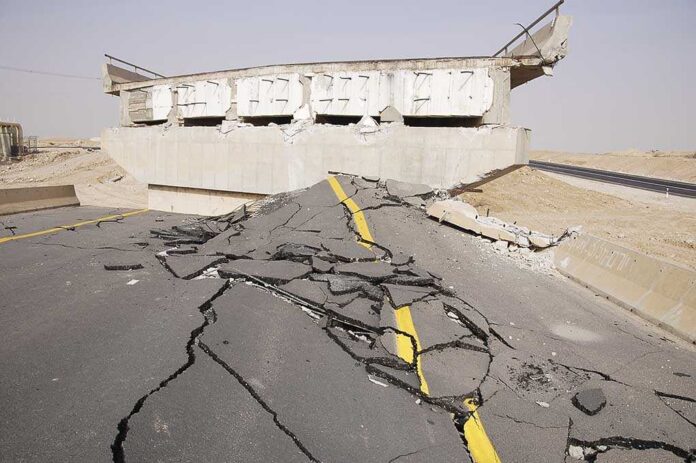
- The U.S. Air Force struck Iran’s B1 Bridge — the largest suspension bridge in Iran — connecting Tehran to the city of Karaj, killing at least eight people and injuring nearly 100.
- U.S. forces also struck two railway bridges and dozens of other military targets, including radar sites, missile positions, and air defense systems.
- President Trump warned Iran that the U.S. “hasn’t even begun to dismantle what remains” — signaling more strikes could follow.
Marines Board Tanker Trying to Break the Blockade
U.S. Marines boarded the oil tanker Wen Yao in the Gulf of Oman after the vessel attempted to pass through the American naval blockade of Iranian ports. U.S. Central Command confirmed the boarding. The blockade, which applies to all ships heading to or from Iran regardless of their nationality, was reimposed after Iran attacked commercial ships trying to pass through the Strait of Hormuz. The United Arab Emirates called Iran’s tanker attacks “brazen,” and one person was killed in those strikes.
The blockade covers Iranian ports and the waters around the Strait of Hormuz — one of the most important shipping lanes in the world. About 20% of the world’s oil passes through the strait. U.S. officials say the goal is to stop Iran from using the waterway as a weapon against commercial shipping. Iran has called the strait a “red line” and seized several vessels in response. Traffic through the strait dropped sharply after the latest round of strikes, with maritime data firm Kpler reporting only 23 tankers and cargo vessels passing through in a single day.
Bridge Strikes Cut Deep Into Iran
On Thursday, U.S. warplanes hit the B1 Bridge near Tehran in two separate bombing runs, a senior U.S. official confirmed. The bridge — a 136-meter-tall suspension structure valued at roughly $400 million — links Iran’s capital to the nearby city of Karaj and was set to open this year. The strikes caused part of the bridge to collapse. Iranian state media reported eight deaths and at least 95 injuries. President Trump shared video of the collapse and warned that more strikes would follow.
The Air Force also struck two railway bridges during a broader Wednesday night operation, a U.S. official told Axios. Those strikes hit coastal radar sites, anti-ship missile positions, and air defense systems as well. British Broadcasting Corporation (BBC) Verify confirmed that U.S. and Israeli airstrikes hit at least three bridges, two steel plants, and a pharmaceutical facility over a two-week period. Separately, reports indicated U.S. forces also struck a strategic railway bridge at Chabahar port — a key link connecting Iran to China and Russia.
The Bigger Picture: What This Conflict Means
U.S. Central Command struck 80 targets on Tuesday and 90 more overnight Wednesday. The strikes have continued for at least six consecutive days and include missile storage sites, drone depots, naval forces, and logistics hubs. Trump warned Iran’s leaders that strikes on bridges and power plants would continue until they agree to end the conflict. Iran has threatened to halt all energy exports from the region — a move that could send global oil prices soaring and hit American consumers at the pump.
5 AM Top-of-the-Hour News
“(Natural Sound) ”
U-S forces launching aircraft and precision munitions against Iranian military targets, in the latest round of airstrikes early THIS MORNING(Thursday), hitting targets further north as American forces also fired into a ship accused of… pic.twitter.com/c7P429oNBo— Worldwide News Network (@WorldwideNNX) July 16, 2026
For Americans already frustrated by years of high energy costs and government mismanagement, the stakes here are real. The Strait of Hormuz is the chokepoint through which a huge share of the world’s oil flows. A prolonged conflict there — with ships being seized, bridges falling, and both sides escalating — puts pressure on global energy markets that eventually lands in American wallets. Whether you supported the military action or opposed it, the cost of getting this wrong falls on ordinary people, not the decision-makers in Washington.
Sources:
redstate.com, cbsnews.com, theguardian.com, youtube.com, wsj.com, today.com, facebook.com, ynetnews.com, bbc.com, pbs.org, gulfnews.com, en.wikipedia.org, aljazeera.com, dropsitenews.com, maritime-executive.com, cnbc.com, newlinesmag.com, npr.org, latimes.com, washingtonpost.com, nbcnews.com
© patriotspotlight.org 2026. All rights reserved.