
President Trump accused two of America’s biggest oil companies of getting rich off a war he started, and now he wants them to hand cash back to drivers at the pump.
Story Snapshot
- Trump said ExxonMobil and Chevron made “too much money” during the Iran war and should cut retail gas prices.
- Chevron’s profit hit about $12 billion and Exxon’s reached roughly $14.5 billion in the second quarter, both tied to the conflict.
- U.S. crude oil prices averaged near $95 a barrel during the war, up from about $66 before it began.
- Neither company has publicly answered Trump’s specific demand to lower prices for consumers.
Trump Turns On Companies He Once Defended
Trump told reporters at the White House on August 3 that ExxonMobil and Chevron “are making too much money based on a shortage” and said “I don’t like it.” He demanded the companies “give some of that back to the public” by cutting retail gas prices for drivers. The comment marks a sharp break from Trump’s usual alliance with the oil industry, which spent heavily to help elect him.
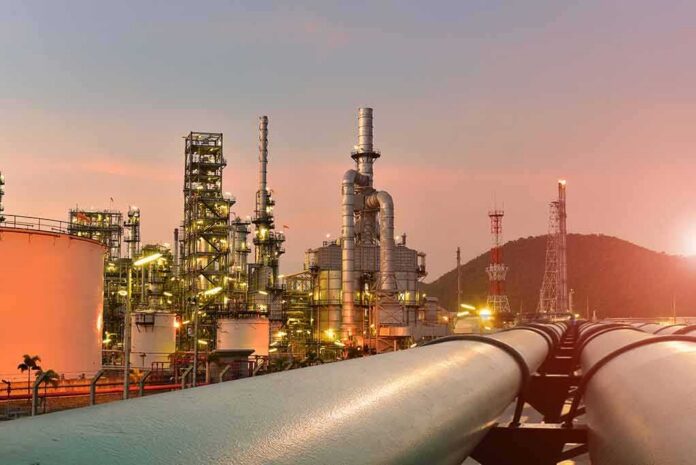
The Iran war began in early 2026 and quickly disrupted global oil supplies. Exxon pointed to a nearly nine percent drop in worldwide oil capacity because of war-related damage and shipping risks. Chevron benefited from higher crude prices and bigger refinery profit margins during the same stretch. Both companies reported second-quarter earnings on July 31, just days before Trump’s public criticism.
The Numbers Behind the Windfall
Chevron’s net income climbed to about $12 billion for the quarter, while Exxon’s reached roughly $14.5 billion, both driven by rising oil prices tied to the war. Combined, the two companies pulled in over $26 billion in three months. Financial analysts had projected the surge before it was announced, showing the earnings jump wasn’t a surprise invented after the fact but a trend tracked in real time as the conflict unfolded.
Crude prices tell part of the story. U.S. oil averaged about $95 a barrel between March and June, a huge jump from roughly $66 before the war started. Across the industry, major producers were expected to collect close to $31 billion in profits for the quarter. That broad price spike, not just decisions by Exxon or Chevron alone, pushed earnings higher industry-wide.
Why Lower Prices Aren’t Guaranteed
Trump’s demand raises a basic question: can Exxon and Chevron actually control what drivers pay at the pump? Retail gas prices depend on wholesale markets, refining costs, distribution, taxes, and local competition, not just decisions made at corporate headquarters. Reporting on the profit surge does not show a direct lever either company can pull to instantly cut prices nationwide, which leaves Trump’s demand short on a clear mechanism for how it would actually happen.
Chevron CEO Mike Wirth has defended the price increases as a response to real supply risk, not company greed. He pointed to threats near the Strait of Hormuz, the Red Sea, and the Black Sea, warning that damaged energy infrastructure from ongoing conflicts could take months or years to fix. Wirth also cited a 20 percent jump in Chevron’s U.S. oil production and record refinery output as drivers of the company’s revenue, not just higher prices alone.
Trump says oil companies are ‘making too much money’, asks them to lower fuel prices
Trump accused ExxonMobil and Chevron of making excessive profits from higher fuel prices during the Iran war and urged the oil giants to lower prices for consumers.
Read More:…
— Moneycontrol (@moneycontrolcom) August 4, 2026
No government agency has issued a formal finding that Exxon or Chevron broke pricing laws or engaged in unlawful price gouging. Trump’s statement is a public accusation, not the result of a Department of Justice investigation, an audit, or a court ruling establishing consumer harm. That gap matters. Without an official enforcement finding, critics can dismiss the claim as political pressure rather than a proven case of wrongdoing.
This dispute reflects a pattern that repeats whenever oil prices spike from war or supply shocks: profits jump fast, drivers feel the pinch at the pump, and politicians accuse companies of profiteering. Whether that’s fair market behavior or something worse depends on details the public record here doesn’t fully settle, including how much of the profit came specifically from the war versus normal shifts in production and refining margins.
For everyday Americans watching gas prices climb while corporate profits soar, the frustration is real regardless of which side wins the argument. Many voters across the political spectrum already believe powerful institutions, whether in government or big business, look out for themselves first. This clash between a sitting president and two of the nation’s largest oil companies is likely to deepen that suspicion no matter how it resolves.
Sources:
youtube.com, usatoday.com, commondreams.org, coingape.com, nypost.com
© patriotspotlight.org 2026. All rights reserved.