

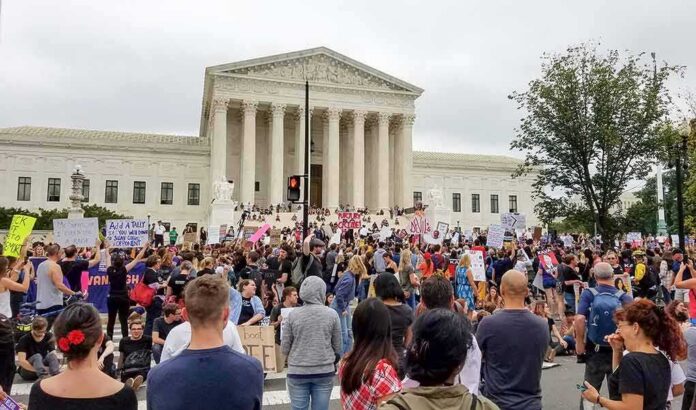
At a New York City protest, Bruce Blakeman accused Mayor Zohran Mamdani of “intentionally” leaving Little Italy off an immigrant map, turning a cultural slight into a political flashpoint.
Story Snapshot
- Blakeman says the map’s omission of Little Italy was deliberate, elevating a symbolic fight.
- The dispute centers on a city immigrant-enclaves map that highlighted 30 areas but excluded Little Italy.
- Profiles show Mamdani’s agenda is immigrant-focused, which raises the stakes of the omission debate.
- The public record lacks the map’s document history, leaving intent unproven for now.
What Sparked The Clash: A Map And A Missing Neighborhood
Republican gubernatorial candidate Bruce Blakeman confronted Mayor Zohran Mamdani over a city immigrant-enclaves map that highlighted about 30 areas but did not include Little Italy. Blakeman called the omission “intentional” at a New York City event, turning a community complaint into a statewide campaign theme. The map became a symbol to many. Some saw respect for newer immigrant groups. Others saw a slight toward one of the city’s most famous old-world gateways. That tension fueled the crowd and the cameras.
Public artifacts like maps carry weight because they tell people who counts. When a map lifts up newer enclaves and leaves off a storied one, many feel erased. That feeling crosses party lines. Conservatives see “woke” favoritism and rewriting of heritage. Liberals see selective recognition and elite stagecraft. Both sides see a City Hall that too often markets narratives instead of fixing basics. This is why a design choice can snowball into a trust crisis in days.
What We Know, And What We Do Not
On the record, Blakeman made his charge in public, and the controversy drew coverage and pushback. The available sources confirm the omission and the confrontation. But the record does not include the actual map file, its draft lineage, or internal messages showing why Little Italy was missing. Without those items, intent remains unproven. That gap matters. A deliberate erasure is one story. An inherited or incomplete draft is another. Until officials release the history, the debate rests on rhetoric.
Mayor Mamdani’s agenda centers on affordability, protections for immigrants, rent policy, and social programs, according to major profiles. That framing makes the map more sensitive. Supporters argue the mayor uplifts communities long ignored. Critics say his office picks winners and losers while core services falter. Both readings draw energy from the same absence: clear documentation about how this map was made. When records are missing, people project intent. That is how culture fights become proxy wars over competence and values.
Why This Matters Beyond One Neighborhood
Maps, curricula, and monuments spark “recognition disputes.” They appear small but cut deep. They tell a story about who belongs. New York has faced these fights before. They spread fast when a visible artifact can be read as slighting a major group. Here, Italian American advocates say Little Italy’s absence rewrites the city’s journey. Newer communities want fair space too. Leaders must balance both. If City Hall cannot show its work, it invites more clashes and wastes time that should fix housing, safety, and jobs.
For readers outside New York, this fight still rings familiar. Many Americans feel officials serve donors, not neighborhoods. They see polished rollouts, thin follow-through, and little transparency. That pattern is not partisan. It is structural. When a city cannot post a clean map with a clear paper trail, people doubt bigger claims on taxes, transit, or policing. Trust breaks first at the edges, on items like this, then spreads to the core. Rebuilding trust starts with documents, not talking points.
What Accountability Looks Like Now
City officials can end the doubt with simple steps. First, release the full map file history, including drafts, timestamps, and author notes. Second, share any outreach records that list which communities were consulted before release. Third, compare the current map to earlier versions used by prior administrations. Fourth, post a timeline for revisions with named staff owners. These steps are basic government hygiene. They help residents judge process, not spin, and reduce the space for partisan heat.
GOP gov hopeful Bruce Blakeman rips Mamdani over 'intentional' Little Italy snub from immigrant map during NYC event https://t.co/eTFPxophzK pic.twitter.com/iw1RqgtP7C
— New York Post (@nypost) August 1, 2026
Campaigns will keep using this dispute. Blakeman gains a concrete example to argue for respect and transparency. Mamdani can still recover by showing records and correcting the map if needed. The broader lesson is simple: cultural recognition should not be a zero-sum game. Newer enclaves and older ones both built New York. A fair map should reflect that reality. When leaders show their work, they serve everyone. When they do not, small slights become big divides that help no one.
Sources:
© patriotspotlight.org 2026. All rights reserved.