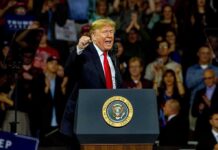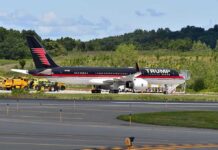

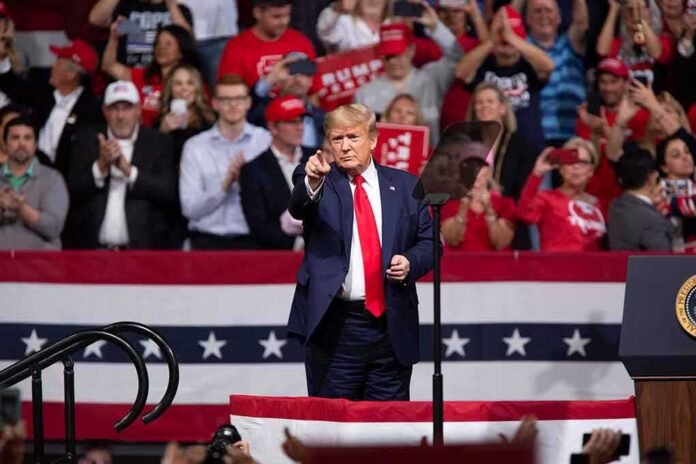
President Trump packed two Western rallies into one day to defend Republican control as midterms near.
Story Snapshot
- Trump rallied Republicans in Bullhead City, Arizona, and Kalispell, Montana, on Wednesday.
- The Arizona stop aimed to boost Rep. Andy Biggs’s bid against Democratic Gov. Katie Hobbs.
- C-SPAN and local outlets documented the Montana rally at Majestic Valley Arena.
- The push fits a long pattern: presidents fight midterm losses by hitting the trail.
Two Stops, One Message: Hold the Line
President Trump spent Wednesday on a Western swing, stopping first in Bullhead City to back Arizona Republicans and Rep. Andy Biggs’s run to unseat Democratic Gov. Katie Hobbs. Reporters on site described the airport rally and quoted Trump asking voters to “pretend I’m on the ballot”. From Arizona, Trump traveled to Kalispell, Montana, for an evening event aimed at boosting the state’s Republican ticket, including a closely watched U.S. House race that Republicans hope to hold.
Local coverage placed the Montana event at the Majestic Valley Arena north of Kalispell, with doors opening in the afternoon and the program running into the evening. The public schedule named Trump’s appearance time and highlighted security and traffic plans, including road closures that slowed access near the venue. National outlets and C-SPAN listed the stop as a midterm rally for the Montana GOP, confirming the event’s focus on energizing supporters ahead of November.
Targets and Stakes in Arizona and Montana
Arizona offered the campaign a safe red setting to rally the base and raise support for statewide and local candidates. Bullhead City sits in a Republican stronghold where turnout work can matter as much as persuasion. The rally’s stated goal was to lift Biggs and down-ballot Republicans against Democrats led by Gov. Hobbs. In Montana, the program featured congressional candidate Aaron Flint, whom one outlet described as locked in a toss-up race with Democrat Sam Forstag, raising the night’s stakes.
ABC News framed the back-to-back rallies as part of a broader effort to blunt expected losses that often hit the president’s party in midterms. That reading tracks with long-term election data. For most of the past 80 years, the president’s party has lost seats in midterm House races, and the average losses across many cycles have been sizable. Campaigns answer that history by pushing travel, media, fundraising, and turnout drives in the final weeks.
What the Rallies Can and Cannot Prove
The day’s reporting confirms the basic facts: two rallies, two states, named venues, and a clear goal to help Republican candidates on the ballot. The sources identify locations, schedules, and themes and document that Trump spoke for an extended period in Arizona. The coverage does not provide hard measures of impact, such as total attendance, donation spikes, or polling shifts tied to either event, so any claims of electoral effect remain unproven in these reports.
Live updates: Trump holds rallies in Montana and Arizona as part of Western midterm tour https://t.co/bx1KlCBYNO
— Raffaele La Ciura (@LaCiuraRaffaele) October 15, 2026
The split strategy fits common campaign logic. Arizona offered energy, attention, and money in friendly terrain. Montana offered a chance to shape a close race. Supporters on the right see rallies as a way to fight media bias, mobilize voters, and push back on what they call elite control. Voters on the left often see these events as hardball politics that reduce services and target immigrants. Both sides agree on one thing: leaders must deliver real results. Midterms test that promise.
Sources:
youtube.com, boston25news.com, clickorlando.com, dailyinterlake.com, c-span.org, washingtonexaminer.com, azfamily.com
© patriotspotlight.org 2026. All rights reserved.