
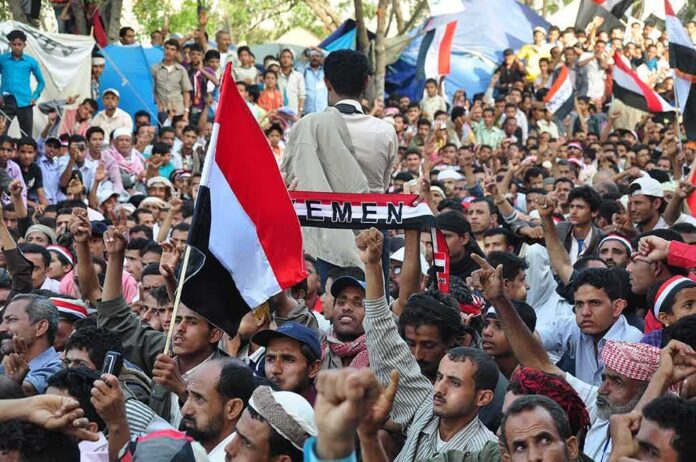
Yemen’s internationally recognized leader has ordered a nationwide mobilization, urging citizens to join the armed forces to push back Iran-backed Houthi control and restore state institutions.
Story Snapshot
- Yemen’s Presidential Leadership Council called for citizens to enlist and support state defense.
- The move seeks to restore government control and counter Houthi gains across key areas.
- The council was formed to unify anti-Houthi forces but has struggled with internal divisions.
- Control of the Red Sea coast and Bab el-Mandeb Strait raises global trade and energy stakes.
Official Call to Mobilize and Enlist
President Rashad Mohammed al-Alimi, who leads the Presidential Leadership Council, called for a general mobilization. He urged Yemenis to join security and military ranks through official channels. He framed the drive as a defense of the Republic and a path to restore state institutions. The message echoed past pledges to pursue a just peace while rejecting sectarian rule. The council posted the remarks on its official site, which carries statements and speeches by the president.
Al-Alimi’s government seeks to reclaim authority in areas held by the Houthi movement. The council says mobilization will support forces on the ground and signal national resolve. The call comes as front lines shift and local alliances matter. The president has also praised support from Yemeni communities abroad. That support includes aid and advocacy shaped around state restoration and ending the Houthi coup, according to allied diplomatic channels and statements.
Why This Call Matters Now
Reuters describes the Presidential Leadership Council as the internationally recognized authority. It was set up to unify anti-Houthi forces after years of war. Yet the council faces pressure as the Houthis retain major population centers and strategic ground. Recent fighting along the Red Sea coast and near the Bab el-Mandeb Strait has raised alarms. Control there affects shipping and oil routes that link Asia, Africa, and Europe. That raises costs and risk far beyond Yemen’s borders.
Analysts and policy groups note a pattern in Yemen’s conflict. Leaders announce mobilization when the state’s reach shrinks and rival groups harden lines. These drives aim to boost morale, recruitment, and unity. But past efforts often hit limits due to factional rifts, weak institutions, and local power networks. The Presidential Leadership Council was meant to fix those gaps. Reports say progress has been uneven as separate armed groups keep their own chains of command.
Strains Inside the Anti-Houthi Camp
Independent reviews describe how southern groups, tribal forces, and region-backed units do not always coordinate. That weakens central direction and quick response. It also blunts gains after local advances. A Congress research brief said the council announced a joint military committee to align forces with partners. That step shows intent to streamline command. But it also shows how hard that work is during an active and shifting war.
🚨 YEMEN CALLS FOR GENERAL MOBILIZATION AGAINST HOUTHIS
Yemen’s internationally recognized government is urging citizens to enlist through official channels as Houthi forces advance around the Red Sea and Bab al-Mandeb.
PLC chairman Rashad al-Alimi also offered a general… pic.twitter.com/41SWSbCoWH
— Mossad Commentary (@MOSSADil) September 26, 2026
Sana’a Center reporting details how rival southern and regional agendas shape events. It highlights new councils and development visits that seek to build local ties. Those moves can help services and buy-in. They can also create more lanes of influence. In this context, the new mobilization is both a manpower push and a political signal. It says the recognized government wants to restore law, pay salaries, and deliver governance after the fighting ebbs.
What This Means for Readers at Home
Events in Yemen can hit American wallets and safety. Fighting near the Red Sea can disrupt shipping, raise delivery times, and push up prices. Energy cargoes also pass the same lanes. When routes face threats, insurance and fuel costs rise. That often filters into higher costs for goods and gas. Leaders in Washington face pressure to secure trade lanes without getting stuck in another long war. That tension is part of a wider debate over U.S. power, spending, and strategy.
Americans across the political spectrum share doubts that federal leaders manage crises well. Many worry that elites make choices that help themselves, not families at home. Yemen is one more test. It blends border security, energy flows, and the risk of wider war with Iran. Clear goals, tight oversight, and honest updates can help rebuild trust. Voters want results: safe trade routes, lower costs, and no blank checks for overseas failures or endless conflict.
What to Watch Next
Watch whether enlistment numbers rise in government-held areas. Look for signs that the council can merge units under one command. Track fighting near Mocha, Hanish islands, and routes that link to Bab el-Mandeb. Those points shape global shipping risk. Also monitor any talks that could freeze lines or open aid corridors. If the council turns mobilization into real unity on the ground, the balance could shift. If not, the conflict may grind on at great human and economic cost.
Sources:
thegatewaypundit.com, hudson.org, nashwannews.com, mofa-ye.org
© patriotspotlight.org 2026. All rights reserved.