

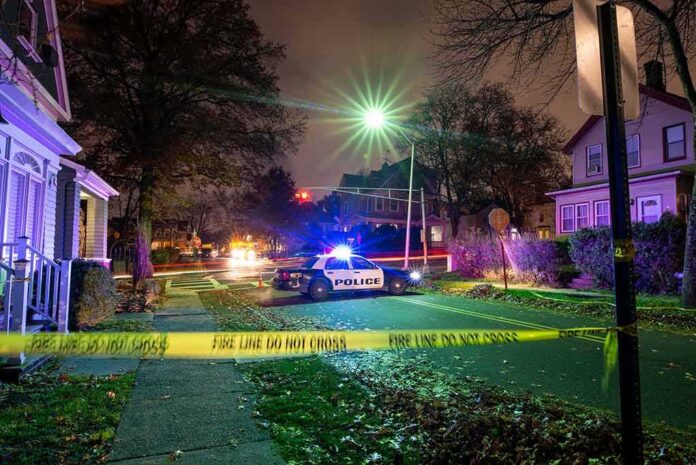
Police say a toddler in only a diaper cried for help from a second-story balcony in Boulder, and her father was arrested the next day amid a child-neglect and drug probe.
Story Snapshot
- Officers reported finding a young child alone late at night on a balcony, wearing only a diaper.
- Police said marijuana and drug items sat within the child’s reach inside the home.
- The father was arrested a day later; police reported seizing cash and suspected cocaine.
- Colorado law treats child abuse as acts or omissions that create a substantial risk of harm.
What Police Reported Happened In Boulder
Boulder police received a late-night report about a child calling for help from a second-floor balcony. Responding officers said they found the toddler outside wearing only a diaper. Inside the home, officers reported marijuana and drug paraphernalia on a coffee table within the child’s reach. The father was not at the residence during the initial contact. Police arrested him the next day and reported finding cash and suspected cocaine during that arrest, according to the outlet’s account.
The media reports do not include the arrest affidavit or the exact list of charges. The story does not state how long the child was alone. The child’s age also appears in different ways across reports. These gaps matter for context. Still, the visible risks described by police—an unattended toddler on a balcony and drugs within reach—were enough for an arrest and a criminal investigation to proceed in Boulder County.
How Colorado Law Frames Risk To Children
Colorado’s child-abuse and neglect framework covers both acts and omissions that place a child at risk. The state defines abuse or neglect to include conduct that creates a “substantial risk of impairment” to a child’s health or development. That means the state does not need to prove injury to take action. Leaving a very young child unattended, especially near hazards or drugs, can meet that standard even if no physical harm is documented yet.
Courts and agencies often move fast when small children face clear hazards. Police only need probable cause to arrest. The public sometimes confuses that with proof beyond a reasonable doubt. In child-safety cases, vivid details can fix a story in people’s minds long before court records are public. That is why the missing affidavit and unclear timeline are notable limits. They do not undo the arrest, but they do narrow what we can say for sure right now.
Why This Case Resonates Beyond One Family
Parents across the spectrum worry that basic systems fail to protect kids and support families. Many readers see leaders talk tough while real fixes move slowly. When a toddler is found alone at night, people ask where the safety net broke. Did neighbors, landlords, or support services have warning signs? Did the case involve drugs that often track with untreated addiction and spotty oversight? These are fair questions that the public record has not yet answered here.
Multiple courts have ruled that police have no duty to protect civilians. Here are the three seminal cases:
1. DeShaney v. Winnebago County Department of Social Services, 489 U.S. 189 (1989)This is the foundational modern case. Four-year-old Joshua DeShaney suffered severe,…
— Battle Dwarf (@AngryBDG) August 3, 2026
Balanced coverage means holding two truths at once. First, police describe a dangerous scene that justifies swift action to protect a child. Second, the law still requires evidence to back every count in court. The next steps should include the release of the affidavit, clarity on the child’s exact age and condition, and lab confirmation of any seized drugs. Those records will show what the state can prove and what help this family and child may need long term.
Sources:
© patriotspotlight.org 2026. All rights reserved.