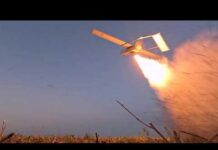

Russia unleashed an unprecedented swarm of 600 drones and dozens of missiles across Ukraine in a single 12-hour assault, marking a terrifying new threshold in modern warfare tactics that left four dead, including a young girl.
Story Highlights
- Russia deployed 600 drones in one coordinated 12-hour attack—the largest drone swarm assault in the conflict
- Four civilians killed, including a child, with dozens more injured across multiple Ukrainian cities
- Kyiv bore the brunt of the “brutal” September 28th bombardment targeting civilian infrastructure
- The massive scale represents a dangerous escalation in drone warfare tactics that could reshape future conflicts
Dawn of the Drone Swarm Era
The assault shattered previous records for drone deployment in a single military operation. Russian forces coordinated waves of unmanned aircraft alongside traditional missiles, overwhelming Ukrainian air defenses through sheer volume. Military analysts immediately recognized this as a watershed moment—not just another attack, but a glimpse into the terrifying future of warfare where hundreds of drones can darken the sky simultaneously.
Ukrainian emergency services scrambled throughout the 12-hour window as explosions rocked Kyiv and other major cities. The sustained nature of the bombardment meant civilians faced repeated air raid alerts, with many spending the entire night in shelters. The psychological impact proved as devastating as the physical destruction, as residents realized they were witnessing a new level of technological warfare.
Civilian Casualties Mount as Infrastructure Crumbles
Among the four confirmed deaths, the loss of a young girl particularly shocked the international community and highlighted Russia’s apparent disregard for civilian protection. Dozens more suffered injuries as residential areas bore the impact of the massive coordinated strike. The targeting pattern suggested a deliberate strategy to maximize disruption to daily life rather than focus solely on military installations.
Ukrainian officials condemned the assault as a war crime, emphasizing how the scale and civilian targeting violated international humanitarian law. Emergency responders worked around the clock, but the widespread nature of the damage strained resources across multiple cities simultaneously. The attack demonstrated how mass drone deployments can overwhelm even well-prepared emergency response systems.
Strategic Implications of Mass Drone Warfare
Defense experts immediately grasped the profound implications of Russia’s 600-drone deployment. Traditional air defense systems, designed to intercept individual missiles or small aircraft formations, struggled against such overwhelming numbers. This assault proved that drone swarm technology had evolved from experimental concept to battlefield reality, fundamentally altering military strategic calculations.
The timing suggests Russia aimed to exhaust Ukrainian defenses and demoralize the population through sustained terror. By spreading attacks across a 12-hour period, Russian forces maximized the psychological impact while testing the limits of Ukraine’s defensive capabilities. This represents a calculated escalation designed to demonstrate Russia’s growing drone arsenal and willingness to deploy it without restraint against civilian targets.
International Response and Future Warfare Concerns
The unprecedented scale prompted immediate international condemnation and renewed calls for advanced air defense systems capable of countering mass drone attacks. Military observers worldwide studied the assault’s implications for their own defensive strategies, recognizing that traditional countermeasures prove inadequate against such overwhelming numbers. The attack essentially served as a terrifying preview of future conflicts where drone swarms could overwhelm any defense.
Western allies face mounting pressure to provide Ukraine with more sophisticated anti-drone technologies specifically designed for mass attacks. The September 28th assault demonstrated that conventional air defense systems, regardless of their sophistication, cannot reliably protect against coordinated swarms of hundreds of drones. This reality forces a complete rethinking of air defense strategies and the urgent development of new countermeasures capable of addressing this emerging threat.
Sources:
Russia Hammers Kyiv in 12-Hour Drone and Missile Assault