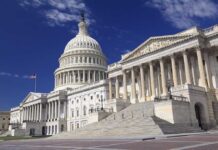

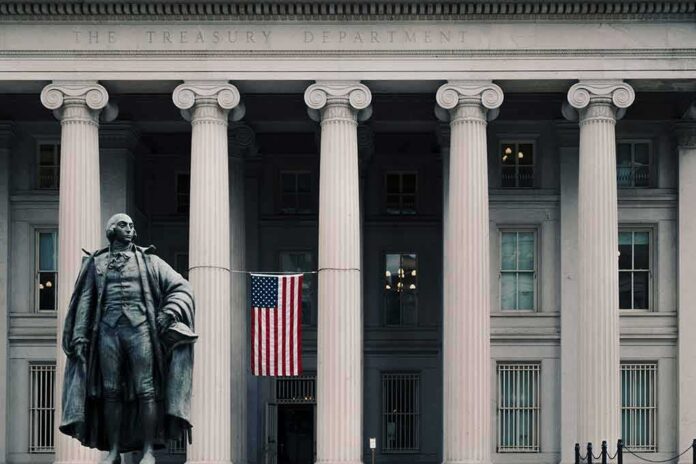
A foundation tied to Chinese businessman Philip Qiu bought a building about 650 feet from the White House for $8.4 million, raising security alarms over foreign ownership so close to the president’s residence.
Story Highlights
- Deed records show a July 21, 2026 sale of the Securities Building to the Philip Qiu and Family Foundation for $8.4 million.
- Reports describe Qiu as linked to Chinese state security and earlier work with Shanghai police, heightening scrutiny.
- Former intelligence officials warn such a site could aid surveillance near the White House, though no misuse is documented.
- Federal reviews of foreign property focus more on military sites, leaving a gray area for downtown Washington properties.
What Happened: A Sensitive Property Changes Hands
Deed-based reporting states the Securities Building, a historic office block near the White House, sold on July 21, 2026, for $8.4 million to the Philip Qiu and Family Foundation. Coverage places the site about 650 feet from the White House grounds. That short distance is unusual for a foreign-linked buyer and has sparked talk of potential security risks. The reports do not describe any current unlawful use at the building. The focal point is who bought it and where it sits.
Additional reporting identifies Philip Qiu as having held roles within Chinese security or intelligence-connected structures, including prior work as a Shanghai police detective. Those descriptions, drawn from translated bios and records cited by outlets, form the core of the concern. The buyer was not an anonymous company. It was a named family foundation linked to Qiu. That detail matters for beneficial ownership and control. It suggests a stable tie between the owner and the building, not a brief pass-through.
Why It Matters: Proximity and the National Security Lens
Former officers and analysts warn that a site this close to the White House could enable surveillance or intelligence collection, even if no proof of such use is public. Proximity can increase risk because line of sight, radio signals, and foot traffic density can all be leveraged. Federal watchdogs have long said that foreign-owned properties near sensitive facilities may pose security risks. That is why proximity has become a key screen in federal reviews and mitigation efforts.
However, current federal authority prioritizes locations near military bases and designated sensitive sites for real-estate reviews. The Committee on Foreign Investment in the United States (CFIUS) has clear power to act on many base-adjacent deals. Downtown Washington properties do not always fit neatly into those rules. The 2024 CFIUS report highlights proximity risks, but it centers on military and other specified sites, not routine downtown parcels. This leaves a policy gap in the nation’s capital.
The Owner’s Public Profile and Prior D.C. Presence
Qiu has maintained a visible public profile in Washington. A museum page lists him as founder and chair of the Chinese American Museum and says he launched the Philip Qiu and Family Foundation in 2014 to support cultural and educational causes. A 2023 China Daily profile said the museum operated from a mansion about five blocks north of the White House, showing that Qiu-linked projects have been near the area for years. Those facts complicate any claim that simple presence equals secret intent.
🚨BREAKING: A Chinese Communist Party-linked official with special forces sniper training has purchased a historic building just 650 feet from the White House grounds.
According to a Daily Caller News Foundation investigation, the Philip Qiu and Family Foundation bought the… pic.twitter.com/dAOwWlpeEU
— Lynn Bowen (@bohound54) August 17, 2026
The dispute lands in a moment when many Americans believe powerful insiders protect their own and ignore clear risks. People on the right point to foreign influence and national security threats. People on the left point to money shaping access and rules that leave loopholes. Both see a system that reacts late. This case shows how the government has stronger tools for military zones but fewer answers for a private building steps from the president’s home. That gap invites distrust and demands clarity.
What To Watch Next: Oversight, Use, and Transparency
Watch for any federal or city filings tied to renovations, antennas, or security systems at the site. Those records can show intended use. Look for congressional letters or agency statements about foreign ownership near the White House, which could test current limits on reviews. Track tenant lists and leasing patterns, which could reveal whether the site becomes cultural, commercial, or closed office space. Clear, public steps can reduce risk and rebuild confidence without painting routine activity as a proven threat.
Sources:
pjmedia.com, ground.news, x.com, chinascope.org
© patriotspotlight.org 2026. All rights reserved.