
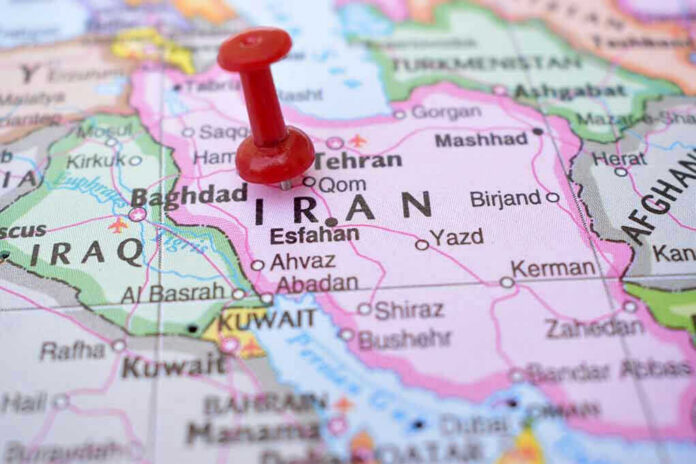
President Trump announced on Truth Social that Iran has undergone a “very productive Regime Change” and the United States will collaborate with Tehran to excavate and remove deeply buried enriched uranium stockpiles, while prohibiting all future uranium enrichment—a bold expansion of truce terms that raises questions about what actually changed in Iran’s government and whether this cooperative excavation is feasible.
Story Snapshot
- Trump declares Iran underwent “regime change” on April 8, 2026, without specifying what changed in Tehran’s leadership structure
- U.S. commits to joint excavation of enriched uranium buried by summer 2025 B-2 bomber strikes at Natanz and Isfahan facilities
- Space Force satellite surveillance confirms nuclear material remains untouched since strikes entombed it deep underground
- Zero uranium enrichment policy imposed as economic negotiations continue, with Iran seeking sanctions and tariff relief
Trump’s Unverified Regime Change Claims
President Trump’s April 8, 2026, Truth Social statement characterized Iran’s government transition as a “very productive Regime Change” without providing details about leadership alterations, power transfers, or confirmation from Iranian officials. The announcement accompanied promises to excavate what Trump termed “deeply buried (B-2 Bombers) Nuclear ‘Dust'”—enriched uranium stockpiles entombed by joint U.S.-Israeli strikes in June 2025. This framing raises legitimate concerns: if Americans are expected to trust government claims about foreign regime changes, shouldn’t citizens receive transparent evidence rather than vague declarations? The pattern of officials announcing major geopolitical shifts without substantiation exemplifies the disconnect many feel between Washington’s pronouncements and verifiable reality.
Excavation Challenges Following Military Strikes
The summer 2025 B-2 bomber strikes targeted Iran’s nuclear facilities at Natanz and near Isfahan, burying approximately 440.9 kilograms of 60% enriched uranium deep underground rather than destroying it outright. Military analysts at the Center for Strategic and International Studies characterized physical removal as “incredibly risky,” requiring specialized personnel and robotics to access material now entombed beneath collapsed structures. U.S. Space Force satellites have monitored the sites continuously since the strikes, with Trump confirming “nothing has been touched” under surveillance. The technical complexity of this excavation—extracting weapons-grade material from bombed-out underground facilities—suggests a timeline measured in months or years, not weeks, assuming Iran genuinely cooperates and the operation doesn’t expose workers to radiation hazards.
Economic Negotiations and Nuclear Disarmament Terms
The excavation agreement extends a two-week truce between Washington and Tehran, with economic negotiations reportedly underway regarding sanctions relief and tariff reductions for Iran. Trump’s declaration that there will be “no enrichment” of uranium eliminates Iran’s capacity for civilian nuclear energy development under current terms, a restriction that conflicts with Tehran’s long-standing insistence on peaceful nuclear rights under international law. Israel, which participated in the 2025 strikes, maintains zero tolerance for any Iranian enrichment capabilities. This creates a diplomatic tension: Iran seeks economic recovery following military strikes and years of sanctions, while the U.S. and Israel demand complete nuclear dismantlement. The International Atomic Energy Agency, previously documenting Iran’s stockpiles, could verify removal and potentially down-blend recovered material, but no confirmation of IAEA involvement has emerged.
Precedent for Surveilled Disarmament Operations
Trump’s approach establishes a novel framework for nuclear disarmament: military strikes to render facilities inaccessible, continuous satellite surveillance to prevent material recovery, followed by cooperative excavation under threat of resumed hostilities. This differs fundamentally from traditional arms control agreements like the Joint Comprehensive Plan of Action, which Iran and world powers negotiated before Trump’s 2018 withdrawal. The current model relies on overwhelming U.S. military and surveillance dominance rather than multilateral verification systems. For Americans skeptical of endless foreign entanglements, this raises practical questions: how long will U.S. forces monitor Iranian compliance, at what cost, and what prevents future administrations from abandoning these terms as Trump abandoned the JCPOA? The pattern of Washington’s revolving-door foreign policy—where each administration reverses its predecessor—leaves citizens wondering whether any international agreement reflects genuine strategy or merely presidential theater.
The success of this excavation hinges on factors beyond Trump’s control: Iran’s actual cooperation, the technical feasibility of safely removing deeply buried radioactive material, and whether the claimed “regime change” represents genuine political transformation or simply Tehran’s pragmatic response to military defeat and economic pressure. Center for Strategic and International Studies experts noted that diplomatic solutions typically require compromises on enrichment rights—precisely what Trump’s zero-enrichment policy excludes. Without transparency about Iran’s leadership changes or detailed excavation plans, Americans face another instance of trusting government assurances about complex foreign operations where verification remains difficult and the full story may not emerge for years.
Sources:
Trump declares Iran ‘regime change,’ vows no enrichment and nuclear removal – Turkey Today
Trump says US will dig up uranium buried in Iran – Rediff
Trump says will be no enrichment of uranium in Iran – The Daily Star
Options for the United States to Resolve the Iran Nuclear Challenge – CSIS