A federal judge struck core National Firearms Act rules for untaxed firearms, and the Justice Department let the first injunction take effect.
Story Highlights
- A Texas court invalidated several National Firearms Act provisions as applied to untaxed firearms and issued a permanent injunction.
- The judgment paused for seven days to allow appeal; the Justice Department did not immediately appeal before the stay expired.
- Nearly 50 Republicans urged Attorney General Todd Blanche to accept the ruling and expand it by rulemaking.
- The order binds the parties, not the whole country, leaving confusion and room for fast reversal on appeal.
What the Court Decided and Why It Matters
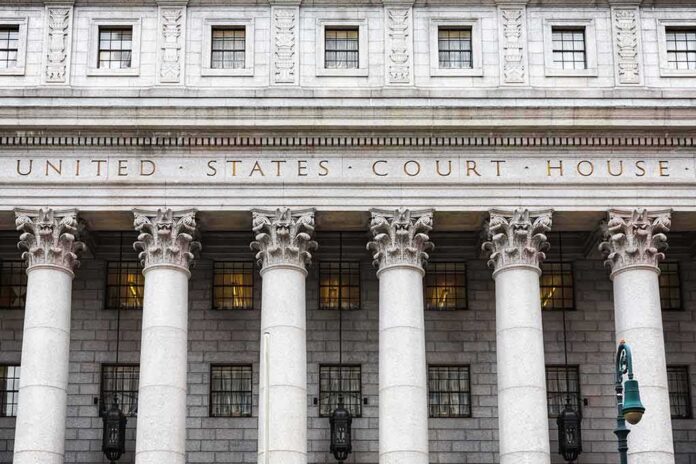
On August 5, 2026, a federal judge in Texas ruled that several National Firearms Act provisions cannot be enforced against untaxed firearms and permanently enjoined the Justice Department and the Bureau of Alcohol, Tobacco, Firearms and Explosives from applying them to the plaintiffs. The court said Congress exceeded its Article I powers after lawmakers reduced related taxes to zero, changing the legal basis for the law’s paperwork and approval rules. The decision focused on taxing power, not a broad Second Amendment ruling.
The final judgment identified specific code sections and implementing rules that could not be enforced against covered parties. Those include parts of sections 5812, 5822, 5841, and 5861 of Title 26 of the United States Code. The judge stayed the ruling for seven days to give the government a chance to seek relief in the appeals court. That brief pause signaled an expectation of rapid appellate steps rather than a long round of district court motions.
How the Justice Department Responded
By the time the seven-day stay lapsed, the Justice Department had not filed an appeal or obtained a new stay, allowing the injunction to take effect for the plaintiffs and related customers. Reporting described the department as holding off on an appeal while time remained to act, which created legal and political uncertainty. Because there was no simultaneous Justice Department statement explaining the choice, observers were left to read the court docket and media reports for clues.
Republican lawmakers quickly tried to shape the next steps. Representative Andrew Clyde led almost 50 House and Senate Republicans in a letter on August 12 urging Attorney General Todd Blanche to accept the ruling, decline appeal, and apply it nationwide through rulemaking. Their message framed the outcome as a chance to reset a New Deal-era law they say outlived its legal footing when Congress zeroed out the taxes. That push aligned with other recent cases where the department stepped back from defending gun limits.
Limits of the Ruling and What Could Change Next
The injunction is not nationwide. It binds the government as to the plaintiffs, their members, and customers where specified. The National Firearms Act remains on the books for everyone else. A fast appeal or a stay from a higher court could narrow or pause the ruling’s effects at any time. This narrow reach differs from some headlines that suggest the law is “over,” which risks public confusion about what actions are actually lawful today.
The court’s reasoning rests on Congress’s power to tax. The judge highlighted how the law’s registry and approval system had been justified as tax administration, yet Congress cut the related taxes to zero. That undercut the government’s legal theory, at least for untaxed firearms. The court did not reach a final Second Amendment holding. That framing can dampen claims of a sweeping gun-rights victory but still marks a major shift in how courts view the law’s foundation.
Competing Safety Claims and the Implementation Battle
Gun-control advocates argue that silencers and other National Firearms Act items are unusually dangerous and tied to crime, and that federal rules protect public safety. They back continued registration, background checks, and other steps. They were disappointed as the Justice Department held off on appealing this case. Some state leaders promised to keep strict state rules in place even if federal enforcement narrows, signaling a patchwork ahead.
Trump's DOJ Will Reportedly Support End Of National Firearms Act After 92 Years https://t.co/u9G1WhgPwa
— zerohedge (@zerohedge) August 15, 2026
For owners, dealers, and manufacturers, the path forward hinges on guidance from the Bureau of Alcohol, Tobacco, Firearms and Explosives and any appellate moves. Covered parties may see faster transfers or fewer approvals, while others remain under the old system. That uneven reality fuels distrust across the spectrum. Many see a federal system that changes by lawsuit, not by open debate, and that leaves regular people guessing about the rules.
The Bigger Picture: Power, Process, and Public Trust
This fight is not only about guns. It is about how far Congress’s powers reach and what happens when an old tax-driven scheme loses its tax. Courts are testing those limits case by case. Voters on the right and the left share a deeper worry: federal leaders and agency lawyers seem to make huge policy calls without clear public input. When rules swing on a short deadline and backroom briefs, trust erodes, and everyday Americans pay the price in uncertainty.
Sources:
zerohedge.com, wnd.com, clyde.house.gov, derya.us, bt-usa.com, zionpatriot.com, cnn.com, silencershop.com, nytimes.com, atf.gov
© patriotspotlight.org 2026. All rights reserved.