
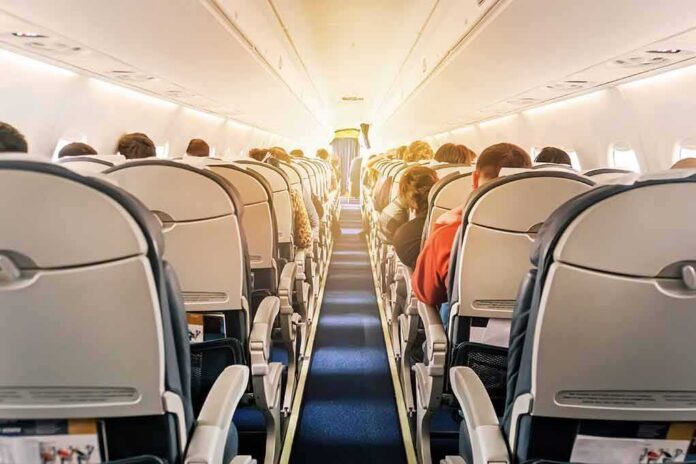
Four Frontier Airlines flight attendants fell sick midair after a strange odor was reported, forcing a Florida-bound flight to divert and land safely.
Story Snapshot
- The flight diverted after crew reported illness linked to an unusual odor; the plane landed safely.
- No passengers requested medical care, and Frontier arranged a replacement aircraft and crew.
- Officials have not identified the source of the odor; investigations in similar cases often find no hazard.
- Airline procedures show diversions for medical events are uncommon but not rare in commercial flying.
What Frontier Says Happened Onboard
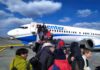
Frontier Airlines said a Florida-bound flight diverted after four flight attendants became ill following reports of an unusual odor in the cabin. The airline said the aircraft landed safely and parked at a gate. Frontier reported that no passengers asked for medical help after landing. The airline said it arranged a replacement aircraft and crew to complete the trip, which aligns with normal recovery steps after a diversion for crew health or duty-time limits.
Frontier has faced odor or fume complaints in past events. In one case in 2021, the airline cited both a medical issue and a fume event in explaining a diversion to El Paso. The flight landed safely, and responders checked the aircraft after arrival. Such responses are routine when crew report dizziness, strange smells, or headaches, even when later checks do not confirm a toxic source.
Why Diversions Happen And How Often
Medical diversions are a known part of airline operations, though they are not frequent. A review in the Journal of the American Medical Association found around 4.4 percent of in‑flight medical emergencies result in a diversion. Guidance for doctors and crews places diversion rates in a similar 4 to 7 percent band, depending on symptoms and risk factors. Pilots decide to divert to protect life and safety, even if symptoms later improve.
When a flight diverts for a medical issue, crews can “time out” under federal duty rules. That can force the airline to bring in a relief crew or a different aircraft. Frontier followed this playbook in a prior diversion to Bermuda, where the airline brought in a replacement crew and later completed the trip. That example shows why recovery can take hours after an unplanned stop.
How Odor Reports Are Handled After Landing
Airport and airline responders treat odor or fume complaints with caution. Crews report symptoms to the captain, who coordinates with operations and medical support. After landing, ground teams may inspect the aircraft and, if needed, call in hazardous materials experts. In many cases, no dangerous source is found, yet the safety steps are still necessary because crews felt unwell during flight. Frontier’s account here fits that standard response pattern.
For passengers, the practical question is what happens next. Frontier’s customer rules explain how rebooking and refunds work after disruptions. Refunds apply when a traveler does not take the rebooked flight, does not travel on the delayed flight, and does not choose credit instead. Travelers who accept the new flight normally are not due a refund, but they should keep receipts and records to pursue any customer service claims.
Why This Matters To Flyers Across The Aisle
People on both the left and right want airlines and regulators to put safety first and tell the truth fast. This diversion shows the system doing what it should: land, assess, replace crew, and continue. Still, the lack of a clear cause can frustrate travelers who face delays and extra costs. Transparent updates, clear refund rules, and steady safety checks help rebuild trust without hiding problems or overpromising outcomes.
Sources:
nypost.com, flyfrontier.com, openanesthesia.org, reddit.com
© patriotspotlight.org 2026. All rights reserved.