

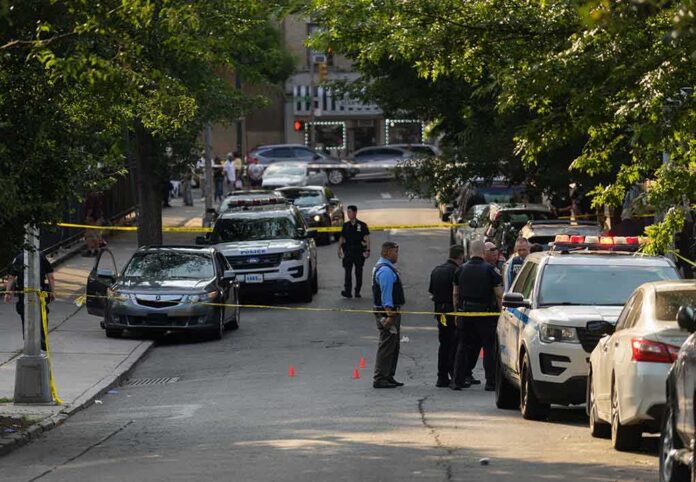
A family dinner in Albuquerque ended in gunfire after an argument over spicy enchiladas, leaving one man dead and another charged with murder.
Story Snapshot
- Police say a dinner fight over green chile enchiladas led to a fatal shooting.
- Court records state the men fought, one tried to walk away, and then shots were fired.
- The suspect was charged with an open count of murder and booked into jail.
- City homicide data lists the arrest tied to the case location and date.
Police Account: Argument, Fistfight, Then Gunfire
Albuquerque police said 22-year-old Ervin Gutierrez argued with his cousin, 25-year-old Nathaniel Cavazos, about the heat of green chile on enchiladas during a Thursday night dinner. Reports say the dispute turned into a fistfight. After the fight, police say Gutierrez pulled a handgun and shot Cavazos several times. Officers responded to an apartment complex in northeast Albuquerque, where Cavazos died at the scene, according to local reporting that cites police statements and court records.
According to an arrest warrant described by national and local outlets, an evening of drinking preceded the argument and fight. The warrant account quoted Gutierrez as saying he did not want to kill his cousin but did not want to be killed himself. Reporters noted a witness statement that the enchiladas should have been equally hot since everyone ate the same dish. These details come from summaries of the warrant and court records, not the raw filings.
Charges, Custody, and City Homicide Log
Jail records and outlet reports state police arrested Gutierrez on Friday evening and booked him into the Metropolitan Detention Center shortly after midnight Saturday. He faces an open count of murder, which allows prosecutors to pursue different degrees as evidence develops. A city homicide statistics listing notes his arrest for the August 27 killing at a northeast Albuquerque address that matches the case scene.
KOAT reported that court records say Cavazos tried to walk away after the fistfight ended. The report states Gutierrez then pulled a gun and fired at least once as the argument continued. KRQE reported police accounts that Cavazos was shot several times. These claims, if confirmed in court, may factor into questions about intent and whether the shooting followed a retreat attempt by the victim.
What We Know, What We Do Not, and Why It Matters
The core facts now on record are straightforward: a family dispute over food heat escalated into a fight and gunfire, a man died, and a cousin faces a murder charge. However, the public record here rests on reporter summaries of police and court documents. The full arrest warrant affidavit, autopsy, ballistics, and body camera video are not provided in the cited reports. Those materials often shape final charges and any defense strategy.
Public health data show that many homicides in the United States begin with arguments, not elaborate plans. Federal surveillance has found about one-third of homicides with known circumstances start as conflicts. This case tracks that pattern, where a simple dispute turns deadly once a gun enters the mix. That reality challenges both parties to look beyond headlines and ask why routine tensions so often become fatal in American life today.
Shared Concerns: Safety, Trust, and a System Under Strain
Families want safe neighborhoods, fair justice, and some faith that leaders focus on real problems. Cases like this deepen a sense that everyday life can tilt toward danger while the system argues about blame. Conservatives see a breakdown in order and personal responsibility. Liberals see the toll of violence and easy access to guns during conflicts. Most agree the basics are failing: de-escalation, mental health support, and swift, transparent justice after tragedy.
What Comes Next in the Case
Prosecutors will test the evidence behind the murder charge, including any statements, scene photos, and gun analysis. Defense lawyers may argue self-defense or a heat-of-passion claim to reduce culpability, depending on facts that surface. A judge will weigh probable cause and release terms. A jury, if it comes to that, will decide intent based on sworn testimony and forensic proof, not headlines about enchiladas. Until then, the charge is an allegation, not a conviction.
Sources:
nypost.com, krqe.com, nbcnews.com, koat.com, cabq.gov
© patriotspotlight.org 2026. All rights reserved.