
Federal prosecutors say a man on supervised release for bank robbery used a realistic “old man” mask to rob two Florida banks weeks apart.
Story Snapshot
- Justice Department charged David Sartin by criminal complaint in two Tampa Bay bank robberies.
- Agents say the robber used a prosthetic “old man” mask and warned tellers about dye packs.
- Searches reportedly found a matching mask, glasses, clothing, and a fake handgun.
- The case highlights repeat methods and why disguises both help robbers and trip them up.
What Prosecutors Allege Happened
The United States Department of Justice (DOJ) says David Sartin faces a federal criminal complaint for two bank robberies in Pinellas County. The first happened at a Largo bank on August 24, 2026. The second happened at a St. Petersburg bank on September 15, 2026. In both, the robber wore a convincing “old man” mask and told tellers not to include dye packs. Prosecutors say Sartin was on supervised release for earlier bank robbery convictions when these new crimes occurred.
Investigators from the Federal Bureau of Investigation (FBI), the Largo Police Department, and the St. Petersburg Police Department worked the case. Surveillance video showed a similar disguise and style across both incidents. Reports describe hats, a sports jacket, gloves or glasses, and a mask with gray facial hair. Agents say those repeating details helped link the cases and guide searches tied to the suspect named in the complaint.
Evidence Agents Say They Found
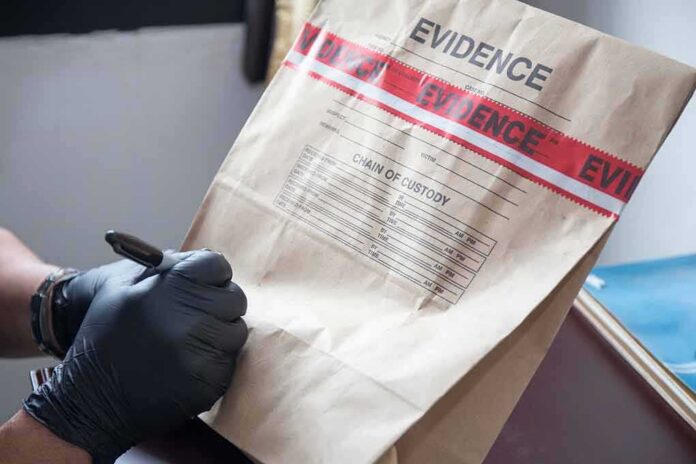
Agents executing searches linked to Sartin say they recovered a realistic “old man” mask with gray facial hair, glasses, clothing that resembled items in the videos, and a fake handgun. Prosecutors cited those items to support probable cause for the charges. The DOJ announcement states a criminal complaint was filed on October 14, 2026, and made public October 16, 2026, laying out the alleged pattern and items seized during the investigation.
Authorities say the disguise details matched what bank cameras captured during the August and September robberies. Media summaries echo the DOJ account, describing the mask, jacket, and headwear as consistent across scenes. Those similarities can be key in robbery cases, where look, wording, and timing often repeat. Still, a complaint is an allegation. Sartin is presumed innocent unless the government proves the case in court.
Why Patterns Matter In Bank Robbery Cases
Police often solve bank robberies by spotting “signatures.” Robbers reuse lines, disguises, and getaways because they think those choices work. That habit helps link cases across dates and locations. Federal Bank Crime Statistics note that investigators identified suspects in hundreds of cases last year, and that full disguises can mask basic traits like race and sex. Even so, the clearance rate for bank robberies remains relatively high over time.
Prosecutors say a man who served 10 years for five masked Texas bank robberies hit two Florida banks in an "old man" mask. Agents found a journal: "God's Best friend is a Bank Robber!" Charged, not convicted. Disguise or alter ego? pic.twitter.com/P8sTu9GjqG
— JackWorld (@JackWrld1738) October 22, 2026
The Tampa Bay case reflects that push and pull. A mask and props can hide a face in the moment. But a unique disguise can also stand out, tie events together, and justify search warrants when details line up. Many readers see this and wonder if the system is working. They see a person with prior convictions, out on supervised release, now accused again. They see multiple agencies doing the job but still racing after repeat crime. The concern crosses party lines.
Public Safety, Accountability, and Trust
People on the right worry about crime, soft consequences, and officials who miss repeat risks. People on the left worry about fairness, due process, and communities hit by both crime and heavy policing. Both sides share a core demand: a system that protects the public and honors the law. Cases like this test that demand. The government must back its claims with solid proof. The court must judge facts, not headlines. The public wants both safety and fairness, without excuses.
What Comes Next
The DOJ says Assistant United States Attorney Belkis H. Callaos is prosecuting. Next steps may include detention and preliminary hearings, discovery, and any motion practice. Prosecutors will present evidence to support the complaint or seek an indictment. Defense counsel may challenge searches, identifications, or the weight of any items seized. The court process will set the record. Until then, the mask, the videos, and the seized items are claims the government must prove in full.
Sources:
© patriotspotlight.org 2026. All rights reserved.