
A medically induced coma, a reported descent into hell, and a claimed escape to heaven now sit at the center of one of the strangest near-death stories in recent memory.
Story Snapshot
- Kathy McDaniel says she spent 18 days in a coma after acute respiratory distress syndrome and later remembered both hell and heaven.
- She says she did not flatline, which she uses to argue the experience happened beyond the brain.
- Her story has spread through interviews, a memoir, and near-death experience groups.
- Skeptics point to mainstream medical views that near-death experiences can come from brain stress, drugs, and trauma.
What McDaniel Says Happened
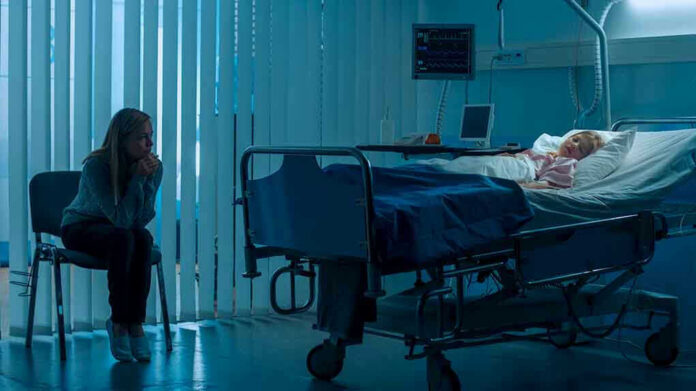
McDaniel says doctors placed her in a drug-induced coma in 1999 after acute respiratory distress syndrome threatened her life. She says the coma lasted 18 days, during which she remembers a fiery city, demon-like figures, and scenes she describes as hell. She also says the experience shifted into a bright setting she calls heaven, where she encountered her deceased fiancé.
Her account is detailed and repeated across interviews, which gives it a strong personal shape even without outside proof of the spiritual scenes. McDaniel also says she wrote a memoir, “Misfit in Hell to Heaven Expat,” and found support from the International Association for Near-Death Studies, where distressing near-death experiences are recognized as a real category.
Why Her Story Resonates
McDaniel’s story fits a known pattern in near-death research. Distressing near-death experiences are less common than peaceful ones, but they are well documented. Researchers have described several forms, including darkness, isolation, fear, and hell-like scenes. That makes McDaniel’s account unusual, but not alone, and it helps explain why some listeners find it hard to dismiss outright.
Her story also taps a deeper public frustration. Many people on both sides of the political divide already distrust powerful institutions, and medical systems are no exception. When a patient says she was dismissed for years, labeled with post-traumatic stress disorder, and left to make sense of a terrifying memory alone, it feeds a wider sense that experts often explain away what they cannot measure.
What the Skeptics Can and Cannot Show
The strongest skeptical point is simple: McDaniel says she did not experience clinical death. The Jerusalem Post report says she never flatlined, and that matters because it leaves room for brain-based explanations. Mainstream medical and neuroscience sources say near-death experiences can arise during oxygen loss, trauma, sedation, and altered consciousness, and that vivid images can feel fully real to the person having them.
That said, the skeptical case in the available material does not bring forward hospital logs, nurse notes, or other records that directly disprove McDaniel’s timeline or the details of her story. The gap leaves two very different readings on the table. One treats the experience as a powerful spiritual event. The other sees it as a memory shaped by a life-threatening illness, medication, and trauma.
What Would Clarify the Record
More medical records would help settle the factual parts of the case. ICU logs, medication records, and nursing notes could confirm the exact length of the coma, whether her heart stopped, and how often she was awake or sedated. Family testimony could also help confirm the timeline around her recovery and the death of her fiancé, which she says appeared in the heaven portion of the experience.
For now, McDaniel’s story stands as a reminder that some of the most emotionally charged American stories live in the space between lived experience and proof. That space is where faith, fear, medicine, and memory collide. It is also where many ordinary people feel most abandoned by systems that speak with confidence but still cannot answer every question about suffering, consciousness, or death.
Sources:
mirror.co.uk, danielstih.com, jpost.com, facebook.com, music.youtube.com, youtube.com, lynnmclaughlin.com, audible.co.uk, reinventimpossible.com
© patriotspotlight.org 2026. All rights reserved.