
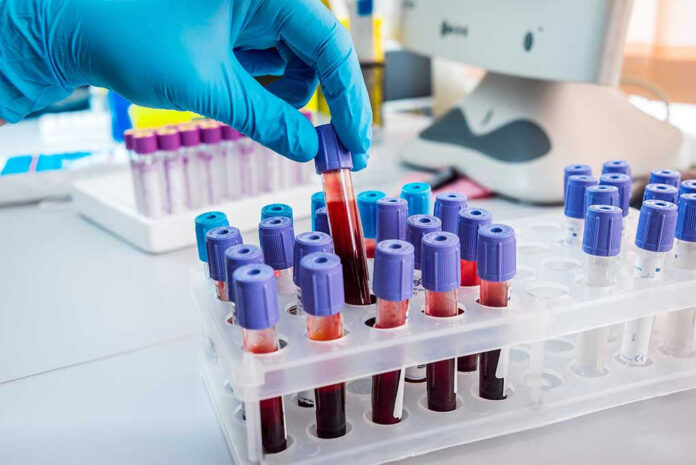
After years of silence, bombshell documents now reveal that USAID quietly sent thousands of viral samples—including bat coronaviruses—straight into the hands of China’s military-linked Wuhan Institute of Virology, all with virtually zero oversight or contractual safeguards.
At a Glance
- USAID’s $250 million PREDICT program shipped nearly 11,000 viral samples—including bat and rodent viruses—to the Wuhan Institute of Virology over a decade.
- No formal safety agreements or chain-of-custody protocols governed these transfers; the samples now sit beyond U.S. reach.
- The Wuhan lab, infamous for poor biosecurity and military ties, later became the epicenter of the COVID-19 outbreak.
- USAID and its partners face intense scrutiny and debarment as congressional probes reveal systemic oversight failures.
- The program’s abrupt end leaves critical pandemic surveillance gaps—and taxpayers rightly demanding answers.
USAID Shipped U.S. Viral Samples to Wuhan: No Oversight, No Accountability
USAID, the very agency that’s supposed to protect American interests abroad, spent a decade funneling thousands of viral samples—including deadly coronaviruses—directly to China’s Wuhan Institute of Virology. That’s right: the same lab now infamous for its military ties, shoddy safety protocols, and starring role in the COVID-19 origin saga. Between 2009 and 2019, under the $210–250 million PREDICT program, USAID-funded contractors collected and shipped nearly 11,000 samples from wildlife and humans in China’s Yunnan Province—a known coronavirus hotspot—over to Wuhan. But here’s the kicker: the entire operation lacked even the most basic chain-of-custody documentation, formal safety agreements, or requirements for sample access. It’s as if our own government said, “Here, take the viruses—just don’t ask us how you use them.”
FOIA lawsuits by watchdog groups like U.S. Right to Know have now unearthed internal memos confirming what many conservatives suspected: USAID’s sample handoff was a bureaucratic free-for-all, with no enforceable contracts or oversight to protect U.S. interests. The viral samples—including those closely related to SARS-CoV-2—were left in China’s custody with no way for U.S. scientists or investigators to access them, even as the world scrambled to understand how the pandemic began. Meanwhile, the lab’s documented ties to the Chinese People’s Liberation Army (PLA), and its subsequent debarment from U.S. funding for stonewalling transparency demands, should have set off every alarm bell in Washington. But, for years, it was all quietly swept under the rug.
Taxpayer-Funded Science or National Security Disaster?
Let’s not sugarcoat it: this wasn’t some innocent scientific exchange gone awry. The PREDICT program was billed as an effort to get ahead of future pandemics by surveilling animal viruses abroad. Instead, it left our country wide open—handing over thousands of potentially dangerous pathogens to a foreign power with a dismal record on biosafety and intellectual property. No U.S.-based facility was ever secured for long-term storage; no contractual obligation ensured our access to the samples. And when the program abruptly ended in 2019, the viral library stayed behind in Wuhan, safe from American oversight and ripe for whatever use the Chinese regime saw fit.
EcoHealth Alliance, the USAID contractor led by Peter Daszak, facilitated much of this collaboration and is now under federal investigation and debarred from further funding. The University of California, Davis, which managed the operations, has offered little explanation beyond bureaucratic shrugs. The result: viral samples that could unlock answers about COVID-19’s origins are now locked away—or worse, weaponized—by those least interested in transparency or American security.
Congress, Experts, and Taxpayers Demand Answers
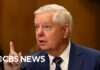
Congressional hearings and independent watchdogs have rightfully blasted this fiasco. Senator Marco Rubio, now Secretary of State, slammed USAID’s global health legacy, arguing its approach has undermined American interests and fueled instability abroad. Internal State Department sources confirm that investigations into these global health grants are “active and ongoing.” But for many Americans, the damage is already done. The viral samples remain in Wuhan, out of reach, while bureaucrats dodge responsibility and the usual suspects in academia and global health circles downplay the risks.
Experts like Rutgers microbiologist Richard Ebright have called out the “PREDICT grift” for what it is: a reckless handoff of sensitive materials with zero contractual safeguards. Legal experts are left shaking their heads at the lack of even basic chain-of-custody protocols. And a Lancet study warns that the abrupt shutdown of USAID’s programs could cost millions of lives globally, as surveillance gaps widen and future pandemics go undetected. Yet, how many Americans are asking why our taxpayer dollars were ever used to subsidize the reckless transfer of deadly viruses to an adversarial power’s military-linked lab?
America’s Global Health Legacy: Hubris, Waste, and Broken Trust
With USAID shuttered and EcoHealth Alliance debarred, the U.S. is left with little to show for its $250 million gamble—except an even deeper trust deficit. The viral samples are gone, the oversight failures laid bare, and American taxpayers are left footing the bill for a program that may have done more to undermine our biosecurity than protect it. The next time some bureaucrat pitches “global health collaboration,” maybe Congress will remember the Wuhan fiasco—and demand real accountability before another dime of taxpayer money vanishes into the abyss of international bureaucracy.
This is not just a story of scientific naiveté; it’s a warning shot about the cost of complacency, the dangers of unchecked bureaucratic arrogance, and the absolute necessity of putting America’s interests—and safety—first.