Virginia Democrats’ push to lock in a lopsided congressional map has turned a routine redistricting fight into a national test of whether elections are being engineered before voters even show up.
Story Snapshot
- Virginia lawmakers passed HB29 to create a new congressional map, then scheduled an April 21 referendum for voters to weigh in.
- A court order issued on a Thursday put the referendum in legal jeopardy, injecting uncertainty into the timeline and outcome.
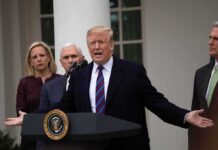
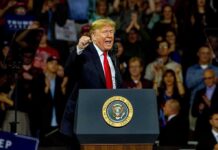
- President Trump and House Speaker Mike Johnson urged Virginians to vote “no,” framing the plan as a partisan power grab.
- Democratic leaders, backed by former President Barack Obama, argued the change is a counter to GOP-led redistricting moves in other states.
Why Virginia’s Map Fight Suddenly Matters to Washington
President Donald Trump’s mid-decade redistricting push has helped turn Virginia into the central battleground in the 2026 map wars. Redistricting usually follows the census, but Trump urged Republican-led states to redraw lines to protect the GOP’s House majority. Democrats responded by moving aggressively in Virginia, a politically mixed state where Trump drew about 46% statewide in 2024, yet the proposed plan could tilt district outcomes dramatically.
Republicans and Democrats are now treating this as more than a state process. With House control described as being “on a knife edge,” a single state’s lines can have national consequences for legislative oversight, investigations, and whether a president can enact an agenda. That reality is fueling unusually high spending, national surrogates, and message discipline—because both parties see maps as the pregame show for who governs after November.
What HB29 Does and Where the Process Stands
Virginia Democrats advanced the new map through the General Assembly as HB29, passing 59-35 in the House of Delegates and 21-18 in the Senate. The plan headed to Governor Abigail Spanberger for signature, with reporting indicating a signature was expected within days. Voters were then scheduled to decide the measure in an April 21 referendum, but a Thursday court order placed that referendum in jeopardy.
That legal uncertainty is critical because timing shapes outcomes. If ballots, early voting, or referendum procedures are thrown into dispute late in the process, the result can shift from a straightforward public decision to a courtroom-driven conclusion. The research available does not provide the final outcome of the April 21 vote or the precise legal rationale in the court order, so the immediate status should be treated as unresolved based on the provided reporting.
The Competing Claims: “Fairness” vs. “Power Grab”
Democratic messaging cast Virginia’s move as defensive—an answer to Trump’s pressure campaign and Republican map-drawing in states like Texas. House Democratic Leader Hakeem Jeffries was described as spearheading broader efforts to counter Trump-backed maps, while former President Barack Obama urged Virginians to support the redistricting, framing it as pushing back against Republicans seeking an unfair midterm advantage.
Republicans countered that the Virginia proposal is unusually aggressive for a state that is not overwhelmingly blue. Commentary cited in the research describes a potential shift toward a 10-to-1 Democratic advantage across Virginia’s 11 districts, despite Trump’s roughly 46% statewide showing. If accurate, that mismatch is the core political argument driving conservative outrage: when district outcomes appear disconnected from voter totals, citizens start suspecting politicians are choosing voters instead of voters choosing politicians.
National Stakes: A House Majority, Policy Leverage, and Public Trust
The near-term stakes are measured in seats and momentum. A Democratic win in Virginia could strengthen their national strategy and politically boost leaders who argue for aggressive counter-mapping. A loss could damage Governor Spanberger, whose approval ratings reportedly dipped as opposition grew. Meanwhile, Republicans pointed to the possibility that Florida Gov. Ron DeSantis could pursue a special session that might net up to five GOP seats, potentially offsetting Democratic gains elsewhere.
The longer-term stakes are about governance and legitimacy. If voters increasingly believe maps are being manipulated through insider processes and big-money campaigns, trust in elections and representative government erodes—even when the tactics are technically legal. Conservatives who already worry about unaccountable “elite” systems see redistricting battles as another example of rules being bent to protect incumbents and political machines. Liberals who distrust corporate influence see the same pattern from the opposite angle.
Here’s How Trump Can Nuke Virginia’s New Gerrymandered Map — And It's Brilliant!https://t.co/zAnlFoNXyZ
— PJ Media (@PJMedia_com) April 22, 2026
Virginia also illustrates why this debate keeps escalating. Once one side normalizes mid-decade map changes, the other side feels compelled to respond in kind, and voters are left watching a tit-for-tat that rarely improves daily life. The research does not lay out Trump’s specific legal strategy beyond public opposition and political pressure, but it does show the core dynamic: both parties are chasing structural advantage in a Congress where narrow margins can decide everything.
Sources:
https://www.trtworld.com/article/e214f44f1134
https://www.commondreams.org/news/virginia-redistricting