Hundreds of America’s highest-ranking military leaders are converging in Virginia, summoned under a veil of secrecy that may redefine the balance of power in Washington—and nobody knows what will happen when the doors close.
Story Snapshot
- Hundreds of generals and admirals ordered to Quantico for a rare, urgent meeting
- Meeting follows sweeping Pentagon leadership shakeups and a controversial rebranding effort
- Agenda remains undisclosed, fueling speculation and concern across government and military circles
- Security and logistical risks raised by gathering so much military leadership in one place
Generals on the Move: The Scale and Secrecy of the Gathering
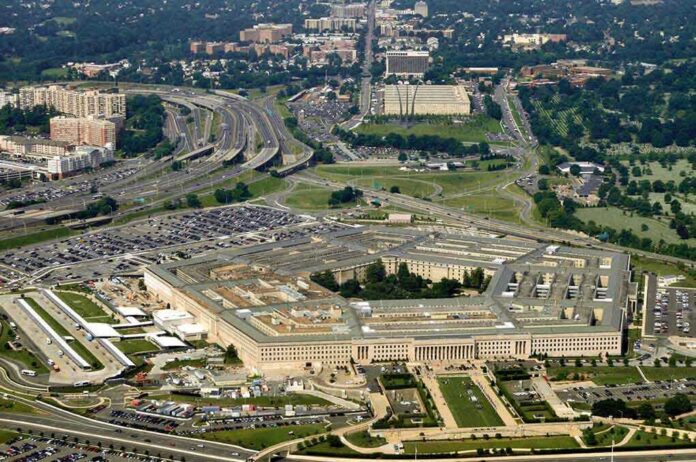
Defense Secretary Pete Hegseth has summoned hundreds of generals and admirals—each carrying the weight of national defense—to a meeting shrouded in secrecy. Not since World War II has the Pentagon attempted anything of this magnitude. The lack of an agenda has led to rampant speculation, from whispered fears of a loyalty test to theories about a radical strategic pivot. Congressional leaders and foreign capitals are watching closely, aware that the stakes may extend far beyond the walls of the Marine Corps base.
Security planners are scrambling. The sheer concentration of top brass in one location sets off alarm bells regarding continuity of government and operational risks. For those who recall the Cold War, the prospect of losing so much command authority in a single catastrophic event is unsettling. Yet, the urgency of the summons suggests Hegseth and President Trump believe the payoff outweighs the peril. The optics alone—a visible assertion of civilian control and unity—may be designed to send a message to both allies and adversaries, as well as to the military itself.
Leadership Purges and the Department of War Rebrand: Context and Consequence
The meeting follows a cascade of institutional changes. Earlier this month, President Trump issued an executive order rebranding the Department of Defense as the Department of War. While technically informal pending Congressional approval, the symbolism is impossible to ignore. Days later, Hegseth slashed the ranks of four-star officers by 20 percent and dismissed fifteen of the Pentagon’s highest-profile leaders, including the Chairman of the Joint Chiefs and the Navy’s top admiral. The timing of these purges raises questions about Hegseth’s motivations—is this a genuine effort to streamline command, or an attempt to reshape military culture and loyalty?
Inside the ranks, anxiety is palpable. Senior officers, some facing abrupt career ends, are left wondering if the meeting will bring new marching orders, public reconciliations, or further reckonings. The defense community is bracing for potential disruption: leadership continuity, morale, and the Pentagon’s relationship with Congress are all in flux. Meanwhile, the broader political context—a looming government shutdown—adds another layer of uncertainty, amplifying the sense that the old rules may no longer apply.
Pentagon, Politics, and the Question of Control
The power dynamics at play are unmistakable. Hegseth and Trump are driving the process, seeking to assert civilian control and perhaps redefine the boundaries of military authority. Vice President JD Vance has downplayed the event, contrasting with Trump’s insistence that this is a “big story” and a “kumbaya moment.” Pentagon spokesperson Sean Parnell confirmed the meeting but withheld details, fueling further speculation about its true purpose.
Congress remains a crucial counterweight, retaining authority over both the department’s formal name and its oversight. Observers note the tension—will Congress support or challenge these changes? For allies abroad, the meeting signals possible shifts in U.S. strategic priorities, with defense contractors and foreign governments alike recalibrating expectations. Internally, the military faces the challenge of maintaining unity and readiness amid unprecedented leadership turnover and institutional uncertainty.
Implications and Open Questions: What Happens Next?
The military is on edge. Command continuity and morale are threatened by both the leadership purges and the potential for surprise announcements at Quantico. Long-term, the meeting could set precedents for civil-military relations and strategic direction. Analysts warn of risks: assembling so many senior officers in one place is rare, and the lack of transparency undermines trust both within the ranks and among the American public.
Expert commentary is divided. Some see the meeting as a routine, if unusually large, leadership conference. Others suspect it is a response to internal dissent—or a prelude to sweeping policy changes. Military historians cannot recall a parallel for such a large, secretive summit. The only certainty is that when these doors close, the future direction of American defense may be decided by a handful of men and women, and the rest of the nation will be left waiting for answers.
Sources:
WBZ NewsRadio: Hegseth calls hundreds of military commanders to Virginia for meeting
ABC News: Hegseth calls rare meeting of large number of generals, admirals