

Even America’s most advanced warships can be sidelined fast when basic shipyard safety breaks down.
Story Snapshot
- A fire broke out aboard the USS Zumwalt on April 19, 2026, while the destroyer was pierside at HII Ingalls Shipbuilding in Pascagoula, Mississippi.
- The crew put the fire out quickly, but three sailors were injured; one was hospitalized and released April 21, and two were treated on-site.
- The Navy says all three were stable as of April 24, 2026, and an investigation is underway to determine cause and damage.
- The incident comes as the Navy modernizes Zumwalt to field hypersonic weapons, a high-stakes upgrade that can be slowed by even a small shipyard emergency.
Fire Erupts During Pierside Modernization in Mississippi
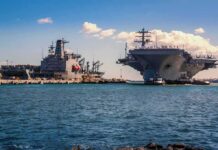
USS Zumwalt, the Navy’s lead Zumwalt-class guided-missile destroyer, caught fire on April 19, 2026, while it was pierside at HII Ingalls Shipbuilding in Pascagoula, Mississippi. Navy officials said the crew responded immediately and extinguished the fire, limiting the incident from becoming a larger shipyard disaster. The service has not released the cause, and it has not publicly described the full extent of damage as investigators continue their work.
The Navy confirmed three sailors were injured in the incident. One sailor was hospitalized and later released on April 21, with expectations of returning to full duty. Two other sailors received first aid on site. As of April 24, all three were reported in stable condition. The public timeline matters because it suggests the immediate medical risk is over, even as the Navy still faces unanswered questions about what went wrong.
Why This Ship Matters: Hypersonics, Stealth, and a High-Cost Program
USS Zumwalt is not an ordinary destroyer, and that is why a shipboard fire—even one contained quickly—draws national attention. Commissioned in 2016 and built by General Dynamics Bath Iron Works in Maine, the ship was designed around stealth shaping and heavy automation. The class became a symbol of acquisition turbulence after cost overruns and a program cutdown to only three ships, turning each hull into a precious asset for future naval plans.
The current shipyard period is aimed at a major modernization that includes integrating hypersonic missiles. That work can involve welding, electrical changes, and other “hot work” tasks in confined spaces—conditions that require strict safety discipline and careful oversight. Reporting to date indicates the fire happened during this modernization window, which helps explain why the Navy is treating the cause-and-damage assessment as a key gating item before work proceeds normally.
Readiness vs. Bureaucracy: The System Stress Test After Any Fire
From a readiness perspective, the immediate win is that trained sailors put the fire out before it spread, protecting lives and preserving a high-value ship at a busy industrial facility. The harder part begins after the flames are out: investigators must determine ignition source, evaluate material damage, and decide what repairs and inspections are mandatory. Until those steps are finished, modernization schedules can slip, and taxpayers absorb the cost of delay.
Recurring Fire Risk Raises Questions About Maintenance Culture
The Zumwalt incident also lands in a year where the Navy has already seen another notable shipboard fire injure sailors—an incident aboard USS Gerald R. Ford in March 2026. Two fires in a short window do not prove a single systemic cause, especially with different ships and circumstances. They do, however, reinforce how maintenance and operational tempo can collide with safety basics, particularly when complex platforms undergo disruptive upgrades.
Politically, the facts on the record point to a familiar tension: Washington can authorize ambitious modernization plans, but the execution relies on day-to-day competence across the Navy-contractor ecosystem. Conservatives and many frustrated independents tend to focus on results—ships delivered, costs controlled, and crews protected—rather than slogans about transformation. With Republicans controlling Congress and the White House in 2026, oversight pressure is likely to come from within the governing majority as well as from Democrats looking for vulnerabilities.
3 sailors injured after fire breaks out aboard USS Zumwalt https://t.co/Hj7YxsY4W2
— John Powe (@JohnPowe14) April 27, 2026
The Navy’s investigation will ultimately determine whether this was an unfortunate one-off or a preventable failure in procedures. For the public, the bottom line is straightforward: three sailors were hurt, a critical ship temporarily became a hazard site, and the service still owes taxpayers a clear explanation of cause, damage, and corrective steps. Until that arrives, confidence in “next-generation” promises will continue to depend on old-fashioned fundamentals—discipline, accountability, and safety.
Sources:
3 sailors injured after fire breaks out aboard USS Zumwalt
Fire Breaks Out on Maine Guided Missile Destroyer Injuring Three Sailors
Fire aboard USS Zumwalt injures three sailors
Three Injured in Fire Aboard USS Zumwalt