
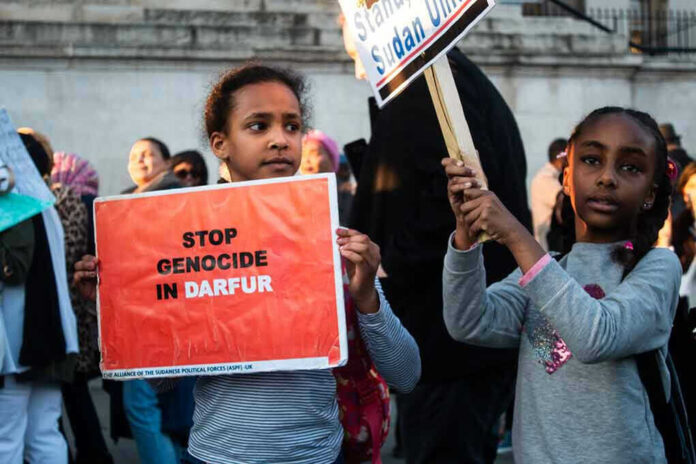
A new wave of violence in Darfur has exacerbated the humanitarian crisis, raising alarm over potential genocide.
Story Highlights
- The RSF has overrun key areas in Darfur, intensifying the region’s instability.
- Allegations of ethnic targeting by the RSF against non-Arab communities persist.
- The humanitarian situation is dire, with famine and displacement rampant.
- Sudan’s government accuses the UAE of supporting the RSF militarily.
RSF’s Aggressive Campaign in Darfur
The Rapid Support Forces (RSF), a formidable paramilitary group, have intensified their offensive in Darfur, seizing control of major cities and towns. This campaign has led to increased violence and devastation in the region. The RSF’s actions have been met with strong resistance from the Sudanese Armed Forces (SAF), but civilians continue to suffer the most, facing severe humanitarian crises.
Reports indicate that the RSF’s attacks have particularly targeted non-Arab communities, further fueling accusations of ethnic cleansing. The international community has expressed concern over these developments, yet effective intervention remains limited. The RSF’s military gains in Darfur starkly contrast with the SAF’s progress in central Sudan, highlighting the country’s deepening divide.
Humanitarian Crisis Worsens
The humanitarian situation in Darfur has reached catastrophic levels, with widespread famine and displacement. Aid organizations face significant challenges in delivering essential supplies due to ongoing conflict and blockades. The United Nations has issued warnings about the dire conditions, yet the international response has been slow and insufficient.
As of 2025, millions of Sudanese civilians are displaced, and the risk of famine persists in several regions. The situation demands urgent international attention to prevent further loss of life and to support those in need. However, political complications and security concerns continue to hinder effective aid distribution.
International Implications and Accusations
Amid the ongoing conflict, the Sudanese government has accused the United Arab Emirates of providing military support to the RSF. This allegation has been taken to the International Court of Justice, highlighting the complex international dimensions of the war. The potential involvement of foreign powers further complicates efforts to achieve a peaceful resolution.
The establishment of a parallel government by the RSF in Darfur suggests a possible long-term division of Sudan. This move challenges the legitimacy of the SAF-backed government and raises concerns about the future stability of the region. As the conflict drags on, the risk of permanent partition looms large, threatening regional stability and peace.
Sources:
Sudan Timeline: Power Shifts in 2025
Timeline of the Sudanese Civil War (2025)