Pope Leo XIV’s unprecedented Vatican summit with Hollywood’s elite signals a dramatic shift from decades of entertainment industry hostility toward faith, offering hope that cinema can once again champion human dignity and moral values.
Story Highlights
- Pope Leo XIV hosted major Hollywood stars including Cate Blanchett and Spike Lee at the Vatican during Holy Year 2025
- The pontiff urged filmmakers to defend cinema against commercial destruction and preserve theaters as community gathering spaces
- Vatican abandons historical control approach, embracing dialogue with entertainment industry to promote shared human values
- Hollywood figures praised the pope’s vision for cinema addressing society’s wounds without sacrificing artistic freedom
Vatican Welcomes Hollywood During Sacred Holy Year
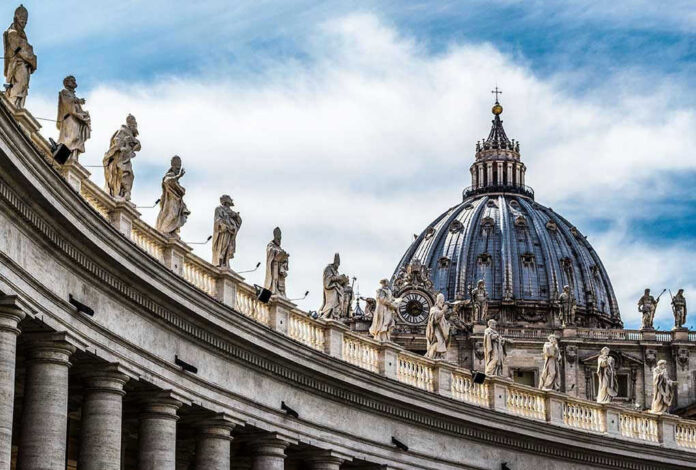
Pope Leo XIV convened an extraordinary gathering titled “World of Cinema” at the Apostolic Palace on November 15, 2025, bringing together acclaimed directors and actors during the Catholic Church’s Holy Year celebration. The U.S.-born pontiff welcomed Oscar winners Cate Blanchett and Spike Lee, alongside stars Chris Pine, Viggo Mortensen, and directors Greta Gerwig and George Miller. This strategic engagement represents the Vatican’s commitment to cultural dialogue rather than institutional control over entertainment content.
The timing during Holy Year—when pilgrims journey to Rome seeking spiritual renewal—underscores the Vatican’s recognition that cinema shapes modern values and moral understanding. Pope Leo explicitly stated his desire to explore how artistic creativity serves the Church’s mission and promotes human dignity through visual storytelling.
Pope Challenges Industry to Defend Cinema’s Cultural Mission
Pope Leo XIV delivered a powerful defense of theatrical cinema against commercial pressures threatening its existence. He warned that “cinemas are experiencing a troubling decline, with many being removed from cities and neighborhoods,” urging filmmakers not to surrender but cooperate in affirming cinema’s social and cultural value. The pontiff’s remarks directly addressed proposed Roman legislation allowing developers to convert fifty movie theaters into shopping malls and hotels.
The pope encouraged filmmakers to embrace complexity over instant gratification, stating they should “defend slowness when it serves a purpose, silence when it speaks and difference when evocative.” This challenges Hollywood’s trend toward formulaic, fast-paced content designed for streaming platforms rather than thoughtful theatrical experiences that bring communities together.
Vatican Abandons Control for Constructive Dialogue
This gathering represents a fundamental shift from the Catholic Church’s historical relationship with Hollywood. In the 1930s, Jesuit priest Daniel Lord created the production code that gave the Church substantial control over film content, including prohibitions against mocking religious figures. That influence collapsed in the 1960s with free speech legal frameworks and modern rating systems replacing institutional censorship.
Professor Colleen McDannell of the University of Utah notes that Pope Leo seeks to “build a positive relationship, rather than a controlling one, with Hollywood,” recognizing that “religion can’t dictate what comes out of Hollywood anymore.” The Vatican now asks where people derive values and moral understanding, acknowledging cinema’s powerful role in shaping contemporary thought about life’s biggest questions.
Chris White, author of “Pope Leo XIV: Inside the Conclave and the Dawn of a New Papacy,” emphasizes this represents “a concerted effort by the Vatican to stay fully engaged in culture” with “no litmus test for the kinds of artists invited,” including controversial figures who have challenged religious themes.
Hollywood Embraces Vatican’s Vision for Meaningful Cinema
Attendees responded enthusiastically to the pope’s message about cinema’s higher calling. Spike Lee characterized the pontiff’s remarks as “a love letter” that was “beautiful, very inspiring, about hope and our work in the cinema.” Cate Blanchett praised the pope for promoting dialogue that “celebrates diversity, instead of fearing it,” emphasizing cinema’s power to unite rather than divide audiences.
The pope urged filmmakers to courageously address society’s deepest wounds, declaring that “violence, poverty, exile, loneliness, addiction and forgotten wars are issues that need to be acknowledged and narrated.” He praised giving voice to “complex, contradictory and sometimes dark feelings that dwell in the human heart” as “an act of love,” positioning cinema as educational without being preachy.
Judd Apatow emphasized the communal importance: “It’s important for people to get together and have common experiences, and a movie theater is one place where we do that in a big way. We need to spend more time in the movie theater and less time on the La-Z-Boy!” This supports the Vatican’s vision of cinema as shared cultural experience rather than isolated entertainment consumption.
Sources:
Pope Leo XIV to meet with Hollywood stars at the Vatican
Pope Leo XIV tells Hollywood stars: Don’t be afraid to confront the world’s wounds