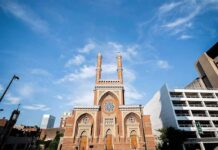
A Nigerian terrorism court has sentenced four Islamists to death for a brutal massacre inside a Catholic church, underscoring both the reality of global jihad and the hard choices free nations face when confronting it.
Story Snapshot
- Federal High Court in Abuja sentenced four men to death by hanging for the 2022 St. Francis Catholic Church massacre in Owo, Nigeria.[1][4]
- Judge ruled prosecutors proved terrorism charges beyond reasonable doubt, relying on eyewitness accounts and other evidence.[2][4]
- A fifth defendant was acquitted for lack of evidence, and defense lawyers say they will appeal.[2][4]
- The attack killed over 40 worshippers during a Pentecost Sunday service, highlighting the ongoing global persecution of Christians.[1][2][3][6]
Islamist Massacre At A Catholic Church Finally Meets A Terrorism Verdict
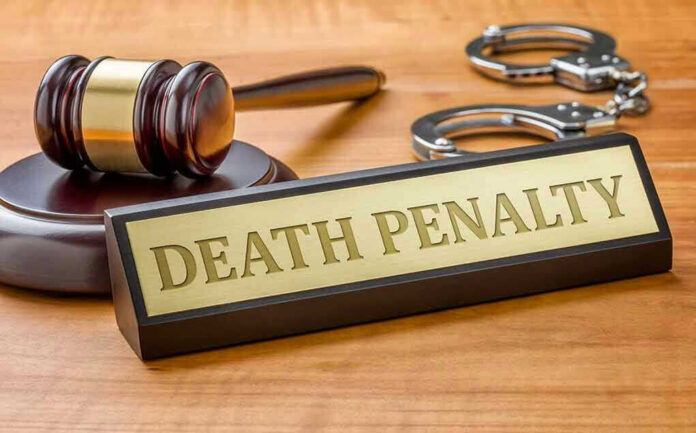
On June 3, 2026, a Federal High Court in Abuja, Nigeria, delivered a long-awaited verdict in the June 5, 2022 attack on St. Francis Catholic Church in Owo, Ondo State, where gunmen and bombers slaughtered more than 40 worshippers and injured over 100 during a Pentecost Sunday service.[1][2][3][6] The court convicted four defendants on terrorism charges and sentenced them to death by hanging, signaling a rare instance of real consequences for a high-profile anti-Christian terror attack.[1][3][4]
Reports from multiple outlets identify the four men as Idris Abdulmalik Omeiza, Al-Qasim Idris, Jamiu or Jimoh Abdulmalik, and Abdulhalim or Abdul Halim Idris, all tied by prosecutors to a broader Islamist network.[2][3][4] The case arose under Nigeria’s 2022 Terrorism Prevention and Prohibition Act, with the court finding them guilty on nine counts, including joining a terror group, planning and carrying out the killings, kidnapping, hostage-taking, and membership in the proscribed Al-Shabaab group reportedly affiliated with the Islamic State West Africa Province.[3][4][6]
How The Court Said Prosecutors Proved “Beyond Reasonable Doubt”
Justice Amaka or Emeka Nwite of the Federal High Court stated that the evidence from the Department of State Services, Nigeria’s domestic security agency, was “neither shaken nor discredited during cross-examination,” and that eyewitness testimony and other materials proved guilt beyond a reasonable doubt.[1][2][4] Television coverage and print reports say the prosecution called 11 witnesses and tendered numerous exhibits, including survivor accounts and testimony from clergy at St. Francis Catholic Church describing the horror inside the sanctuary.[4][5]
Broadcasters also report that the court relied on a package of terrorism evidence that has become standard in such cases: confessional statements, digital and phone records, and other forensic materials, all aimed at placing the men at the scene and within the terror cell.[3][4] The judge ultimately ruled that the massacre qualified as one of the “rarest of rare” crimes justifying the death penalty under Nigerian law, given the scale of the slaughter and deliberate targeting of Christian worshippers mid-service.[3]
One Man Walks Free, Defense Promises Appeal And Raises Fair-Trial Questions
In a notable move, the court discharged and acquitted the fifth defendant, Momoh Otohu or Momodu Abubakar, concluding that the prosecution failed to connect him to the attack, despite earlier suspicions that he may have helped finance the operation.[2][3][4] That acquittal shows the court did not adopt a blanket approach to guilt; it separated the evidence against each man, accepting the case for four but rejecting it for one when the record fell short.[2][4]
Federal High Court Sentences Four Al-Shabaab Terrorists To Death Over Owo Catholic Church Massacre 🔗 Read the full story by clicking below 👇 https://t.co/bPKWUclqLz
— Paradise News (@TheParadiseNg) June 6, 2026
Defense lawyer Abdullahi Muhammad told Nigerian outlet TV360 that his clients would challenge the judgment at the Court of Appeal, signaling that this terrorism case is not over.[1][5] He argued that the prosecution’s handling of co-defendants was inconsistent, complaining that “you brought three people on the same count. Then you remove one. You left others,” and insisting that his clients “did not act it,” language that frames the verdict as a miscarriage of justice in need of higher court review.[1][5]
Justice For Slain Christians Abroad And The Lessons For The West
Public reaction in Nigeria has been intense, with many citizens and Ondo State officials calling the judgment a “landmark moment” and an important step toward justice for families who lost loved ones in the pews.[5] Ondo State governor Lucky Aiyedatiwa openly welcomed the death sentences for the four men linked to the massacre, presenting the ruling as overdue accountability for a community still traumatized by images of bodies on church floors and bloodied walls.
The Owo case reflects a broader reality that American conservatives understand well: Christian communities are on the front line of Islamist terror, from Nigeria’s Middle Belt to the Middle East, while global elites talk about “inclusive” values and downplay attacks on churches.[6] Nigeria’s requirement that the president approve executions, combined with a long unofficial moratorium, means the four death sentences may not be carried out soon, but the convictions themselves still send a message that attacking Christians in worship is not a cost-free act.[2][3][6]
Sources:
[1] Web – 4 Islamists sentenced to death for Catholic church massacre in Nigeria
[2] YouTube – Court sentences four culprits to death by Hanging
[3] YouTube – Four men sentenced to death over 2022 Nigeria church attack
[4] YouTube – OWO CHURCH ATTACK: FOUR SENTENCED TO DEATH, ONE …
[5] Web – In Nigeria, four men sentenced to death for mass murder in a … – УНН
[6] YouTube – Public reactions trail court judgment as four sentenced to death over …
© patriotspotlight.org 2026. All rights reserved.