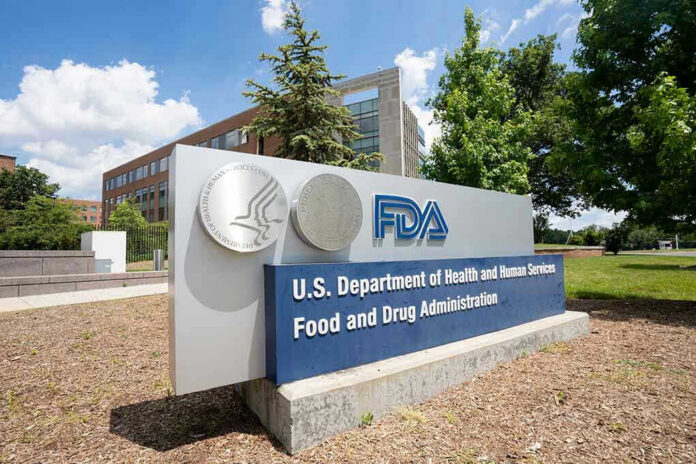
Federal health regulators just handed Big Tobacco a rare victory, authorizing ZYN nicotine pouches as a “lower-risk” alternative to cigarettes while leaving big questions about youth addiction and long-term health on the table.
Story Snapshot
- The Food and Drug Administration (FDA) authorized 20 ZYN nicotine pouch products after an extensive scientific review.
- FDA says ZYN pouches contain far fewer harmful chemicals than cigarettes and most smokeless tobacco, and may lower cancer risk for adults who fully switch.
- Health groups warn the decision helps Philip Morris more than the public, pointing to unknown long-term effects and rising youth use.
- Strict ad limits and a possible future pullback show FDA itself is not fully confident these products will stay “good for public health.”
What FDA Just Did – And Why It Matters
On January 16, 2025, the Food and Drug Administration authorized the marketing of 20 ZYN nicotine pouch products through its premarket tobacco product application process after what it called “extensive scientific review.” This is the first time nicotine pouches, which sit between the lip and gum and deliver nicotine without smoke or tobacco leaf, have cleared this federal hurdle. The agency said these specific 3 milligram and 6 milligram ZYN products met the legal public health standard set by the 2009 Family Smoking Prevention and Tobacco Control Act.
Food and Drug Administration scientists found that ZYN pouches contain substantially lower levels of harmful chemicals than cigarettes and most smokeless tobacco products such as moist snuff and snus. Among 42 harmful and potentially harmful chemicals studied, levels of 36 were too low to measure in the pouches, according to a legal analysis of the review. Based on this, the agency concluded that adult smokers who completely switch from cigarettes to ZYN are expected to face lower risks of cancer and serious heart and lung problems.
Lower Risk Does Not Mean Safe – Or Approved To Help You Quit
Even as the Food and Drug Administration describes these products as lower risk than cigarettes, it stresses that no tobacco product is safe and its order does not make ZYN an approved quit-smoking medicine. Public health groups echo that warning and highlight that none of the oral nicotine pouch brands, including ZYN, have been cleared as a tool to help people quit nicotine. A growing body of research shows that many users do not fully switch but instead use pouches and cigarettes together, limiting any health benefit.
Unlike Food and Drug Administration-approved nicotine gums and patches, nicotine pouches remain tobacco products in the eyes of the law, not medical treatments. A recent medical paper notes that retailers and companies are not allowed to claim that pouches help people quit unless they go through the stricter drug approval process, yet some ZYN promotions have still framed the product as a way to stop smoking, raising concerns about illegal marketing. Critics argue that such blurred messaging keeps people hooked on nicotine while selling the move as harm reduction.
Health Groups, Youth Risk, And The Deep State Question
Major health organizations, including the American Lung Association and academic tobacco control centers, strongly oppose the Food and Drug Administration’s move, arguing that short-term toxicology data are not enough to prove long-term safety for cancer, stroke, or heart disease. They point out that many of these diseases take decades to appear and that ZYN has only been widely used in the United States for a few years, leaving big gaps in real-world health data. These groups say the statutory population-wide benefit standard has not been met.
Researchers also warn that youth and young adult use of nicotine pouches is rising, and they stress that nicotine in any form can harm the developing brain and increase the risk of lifelong addiction. A major anti-tobacco group notes that the long-term health effects of pouches like ZYN remain unknown, even as flavored products such as cool mint and citrus gain popularity. This fuels fears on both left and right that the government again moved faster to protect industry interests than to protect children and working families.
Strict Marketing Limits Hint At FDA’s Own Doubts
To try to manage those risks, the Food and Drug Administration placed tight limits on how ZYN can be advertised on television, radio, and digital platforms, including requirements that ads be carefully aimed at adults 21 and older and that companies track who is actually seeing them. The agency also reserved the power to suspend or withdraw its authorization if youth uptake rises sharply or if new science shows the products are no longer appropriate for public health. Those escape hatches underline how unsettled the science still is.
At the same time, Food and Drug Administration rules do not apply evenly across the country. State laws, such as flavored tobacco bans in places like California, can still block the sale of some or all flavored nicotine pouches, even ones the federal government has authorized. That patchwork adds to a broader feeling shared by many Americans that federal and state agencies are sending mixed signals while big companies navigate the maze with teams of lawyers and lobbyists.
Big Tobacco’s Win And The Bigger Trust Problem
ZYN is made by Swedish Match, which is owned by Philip Morris International, one of the world’s largest tobacco companies. For many critics, this raises familiar worries about financial conflicts and regulatory capture, where the regulator leans too heavily on company data to make calls that affect corporate profits. The Food and Drug Administration’s own documents show it relied largely on manufacturer studies to judge ZYN’s chemical profile, user behavior, and potential benefits for smokers who switch.
That structure feeds a bipartisan concern that powerful corporations and “experts” inside the federal bureaucracy cut deals that regular citizens never voted on. The Food and Drug Administration insists its decision is driven by science and that allowing lower-risk products while limiting youth access will cut disease from smoking over time. Yet health advocates argue that the agency has not clearly shown that real-world consumers understand they must completely switch, not “cut back,” to see meaningful health gains. As with many issues in Washington, Americans are left to decide which experts they trust while the products stay on store shelves.
Sources:
facebook.com, fda.gov, youtube.com, tobacco.ucsf.edu, jamanetwork.com, pmi.com, center4research.org
© patriotspotlight.org 2026. All rights reserved.