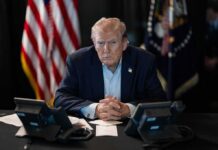

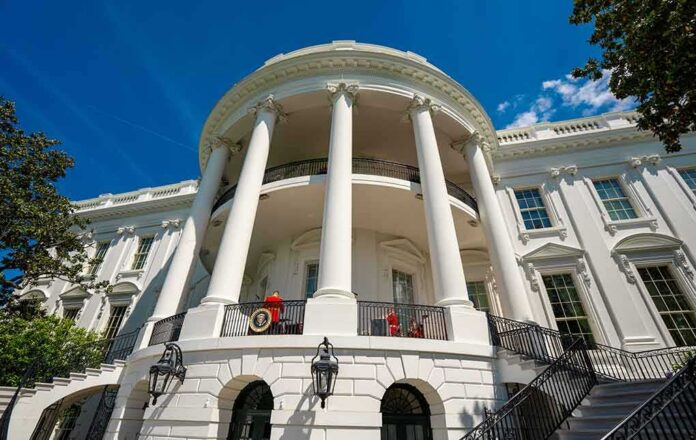
President Donald Trump imposed sweeping 50% tariffs on many Canadian goods under a 1930 trade law, testing the limits of presidential power after recent court defeats.
Story Highlights
- Trump invoked Section 338 of the 1930 Tariff Act to levy 50% tariffs on Canadian imports.
- The move follows Supreme Court rulings that struck down tariffs under emergency powers.
- The White House cites Canadian discrimination against U.S. autos, alcohol, and dairy.
- Legal analysts say Section 338 allows up to 50% duties in targeted retaliation.
What The White House Announced And Why It Matters
The White House said President Trump signed three proclamations imposing 50% tariffs on many Canadian goods. Officials cited Section 338 of the Tariff Act of 1930 and accused Canada of unfair treatment of American autos, alcohol, and dairy. The administration framed the move as targeted retaliation to force fair treatment for U.S. products. This is a major escalation with America’s top trading partner. It raises prices for importers and consumers and puts cross-border supply chains under strain.
The proclamations mark a sharp pivot in legal strategy. Earlier this year, the Supreme Court held that broad tariffs using the International Emergency Economic Powers Act were unlawful. That ruling limited the president’s ability to use emergency powers to tax imports. The administration is now turning to older statutes still on the books to rebuild its tariff wall without relying on emergency authorities. This shift suggests more fights ahead over trade law and executive power.
Section 338: A Dormant Law Back In The Spotlight
Section 338 dates to the Great Depression era. It authorizes the president to raise duties when a country discriminates against U.S. commerce. Legal summaries of the United States Code explain that the president may declare new or extra duties if the public interest is served and discrimination is found. Analysts say the law allows duties up to 50% and aims to answer specific unfair barriers, not to tax all trade broadly. That history explains the 50% rate chosen now.
Trade lawyers have warned for years that Section 338, though rarely used, remained viable. They noted that Congress gave the president this narrow retaliation tool to push back when partners tilt the field. Policy briefs describe it as a “forgotten but intact” authority with teeth when other paths are blocked. By invoking it after court losses on emergency powers, the administration is following a known playbook to keep leverage at the border within older congressional grants.
How This Hits Businesses, Prices, And Jobs
Importers face sudden costs on shipments that were priced months ago. Companies that buy Canadian parts for cars, farm equipment, and food processing could see margins squeezed. Some firms may pass costs to shoppers. Others may cut orders, delay projects, or seek new suppliers. Canada is a top source of consumer goods and industrial inputs. The Boston Globe reported that energy, potash, fish, and some critical minerals were excluded, but many other goods are covered, widening the impact.
in February 2026, the U.S. Supreme Court struck down sweeping global tariffs imposed by trump. The Court ruled that the president cannot unilaterally impose tariffs using emergency powers under the 1977 International Emergency Economic Powers Act (IEEPA).
— Lucy (@Lucy72794184) July 21, 2026
Workers across sectors could feel the change. Supporters say tariffs protect factory jobs by pushing for fair access abroad. Critics warn that higher input costs can lead to layoffs or higher prices at home. Families are already stretched by years of inflation. Many blame Washington’s missteps for rising costs and shaky supply lines. This move adds another pressure point that both small shops and large plants must navigate while they wait for clearer trade rules.
The Legal And Political Fight Now Taking Shape
Courts will likely test the proclamations soon. The Supreme Court decision against emergency tariffs set a clear limit. But Section 338 sits on different ground because Congress wrote it into law long ago. The key legal questions are whether the president’s findings of discrimination meet the statute and whether the 50% duties fit the law’s scope. Analysts at major outlets have already flagged Section 338 as one of the president’s remaining avenues after the court’s ruling.
Lawmakers may also step in. Some members of Congress want to rein in unilateral tariff tools. House Democrats have pressed for limits on Great Depression-era authorities that bypass a full vote. A recent congressional press release called Section 338 a provision that grants large tariff power to the president and urged tighter guardrails. With Republicans in control, Congress may back the White House for now, but pressure to clarify the rules could build if costs mount.
What Comes Next For Consumers And Cross-Border Trade
Companies will seek temporary exclusions, revise contracts, and reroute supply lines. Retailers may raise prices on affected goods. Canadian leaders could announce countermeasures, risking a cycle of tit-for-tat. Cross-border industries like autos and food are tightly linked, so even targeted duties can ripple fast. Consumers should watch labels, plan for substitutions, and expect uneven prices for goods tied to the new lists. If legal challenges advance, some duties could be paused or changed midstream.
Big picture, both the left and the right see a system that favors insiders. Trade shocks often land hardest on regular people who lack lobbyists to win carve-outs. Whether you fear offshoring or price spikes, this fight shows how old laws and modern politics collide. The administration says it is defending fair play. Critics see overreach that raises costs at home. Courts and Congress now hold the next cards. Until they act, businesses and families will carry the load.
Sources:
reason.com, cfr.org, en.wikipedia.org, whitecase.com, scotusblog.com, tradelawdaily.com, usitc.gov
© patriotspotlight.org 2026. All rights reserved.