Iran’s Islamic Revolutionary Guard Corps has effectively seized control of one of the world’s most critical oil shipping lanes, and Europe is finally pushing back with sanctions — but Tehran is dismissing them outright.
Story Snapshot
- The European Union expanded its Iran sanctions regime on May 22, 2026, to target individuals and entities blocking or threatening navigation through the Strait of Hormuz.
- The amended framework allows travel bans and asset freezes against those accused of impeding lawful transit through the strategically vital waterway.
- Iran’s Deputy Foreign Minister publicly dismissed the EU sanctions and declared Tehran will continue its strategy of asserting sovereignty over the Strait.
- Iran warned European nations against sending warships to the Strait, while blaming the United States for creating the crisis in the first place.
EU Formally Expands Iran Sanctions Over Hormuz Blockade
The European Union’s Council formally amended its Iran sanctions framework on May 22, 2026, expanding designation criteria to cover individuals and entities involved in threatening navigation or preventing vessels from entering and exiting the Strait of Hormuz. The updated framework enables travel bans and asset freezes against those held responsible for disrupting one of the world’s most critical maritime chokepoints. The move followed an April political agreement among EU foreign ministers to take coordinated action.
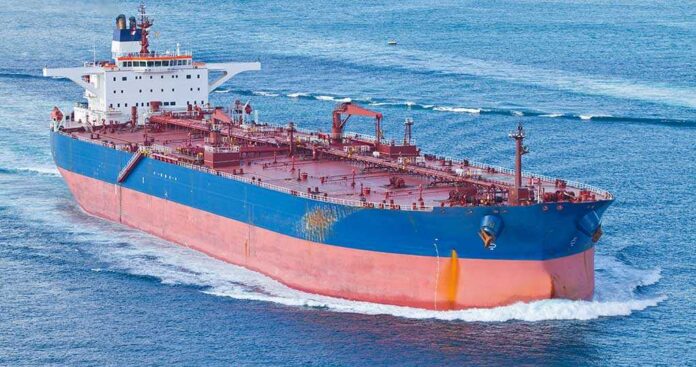
The EU explicitly framed Iran’s conduct as a violation of freedom of navigation and contrary to international law. Roughly 20 percent of global oil supplies and a significant share of liquefied natural gas shipments pass through the Strait of Hormuz annually. Ships were photographed anchored near Larak Island in mid-May 2026, visually underscoring the disruption to global maritime commerce that prompted the sanctions expansion.
Tehran Dismisses Sanctions, Asserts Hormuz Sovereignty
Iran’s Deputy Foreign Minister responded swiftly, publicly dismissing the EU sanctions and stating that Tehran places no value on the measures. Iranian officials reaffirmed their strategy of asserting sovereignty over the Strait of Hormuz and warned European countries against deploying warships to the region. Iran’s posture signals that the sanctions, at least in the short term, have not altered Tehran’s calculus or its willingness to use the Strait as a geopolitical pressure point.
Iranian officials also blamed the United States for creating the underlying crisis, arguing the EU should not hold Iran responsible while acknowledging that U.S. and Israeli military strikes triggered the confrontation. Tehran has publicly linked any maritime de-escalation to a broader set of demands, including a halt to hostilities, nuclear negotiations, release of frozen assets, an end to what it describes as a U.S. naval blockade of Iranian ports, and reparations for strikes against Iranian territory.
Global Energy Markets and Strategic Stakes
The Strait of Hormuz sits between Iran and Oman and serves as the sole maritime exit for oil exports from Saudi Arabia, Iraq, Kuwait, and the United Arab Emirates. Any prolonged disruption sends immediate shockwaves through global energy prices, and markets responded accordingly to news of the blockade. For American consumers who already endured years of inflation driven by reckless government spending, another round of energy price spikes tied to foreign instability is a direct and painful consequence.
EU imposes first-ever sanctions on Iran over threats to freedom of navigation
European Union member states have approved their first sanctions against Iran linked to disruptions to maritime security in the Strait of Hormuz, according to EU foreign policy chief Kaja Kallas.
The… pic.twitter.com/8zVNtJZj3T
— ECSB™ (@ECSBUpdates) June 8, 2026
The EU’s sanctions expansion follows the established pattern of Western multilateral responses to maritime crises: a political agreement precedes formal legal changes, which then enable targeted designations before specific names are publicly released. While the EU has not yet publicly identified the sanctioned individuals, the framework specifically targets those linked to Iran’s Islamic Revolutionary Guard Corps naval operations and related entities responsible for the Strait disruption. Whether the sanctions produce meaningful behavioral change from Tehran remains the critical open question, given Iran’s immediate and dismissive public response.
What This Means for American Interests
The Trump administration has maintained maximum pressure on Iran through military strikes and a naval presence in the region, and the EU sanctions represent rare alignment between Washington and Brussels on a foreign policy threat. Iran’s willingness to weaponize a global shipping lane demonstrates precisely why energy independence and a strong U.S. military posture matter. An Iran emboldened enough to blockade international waters is an Iran that threatens every American who fills a gas tank or pays a heating bill.
Sources:
[1] Web – EU sanctions Iran Guards over closure of Hormuz
[2] Web – EU expands Iran sanctions to target Strait of Hormuz disruption
[3] Web – EU Moves to Sanction Iran over Hormuz Blockade
[4] Web – EU to Expand Iran Sanctions Over Hormuz Blockade – Caspian Post
[5] YouTube – EU to Expand Sanctions on Iran Over Strait of Hormuz Blockade
[6] Web – EU moves to sanction Iran over Hormuz blockade – CNA
[7] YouTube – EU Expands Sanctions Framework To Target Iran Over …
[8] Web – EU expands Iran sanctions framework over Strait of Hormuz actions
[9] Web – EU Broadens Iran Sanctions to Address Threats in Strait of Hormuz
© patriotspotlight.org 2026. All rights reserved.